US, Venezuelan Military Capabilities as Tensions Rise
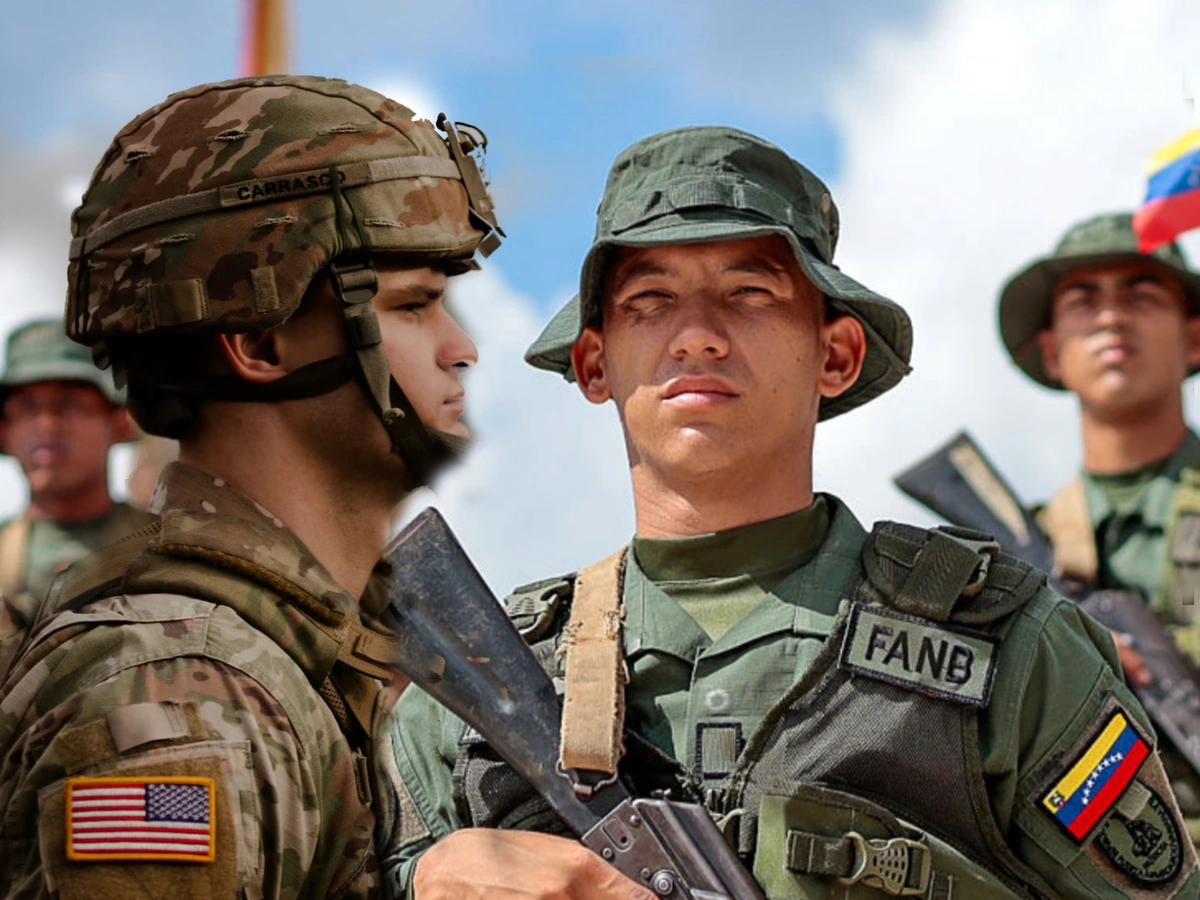
US military buildup in Latin America is the largest since its 1989 invasion of Panama when Venezuela’s standing military consists of around 63,000 army troops, 23,000 National Guard members.
WASHINGTON
Tensions between the United States and Venezuela have escalated dramatically as President Donald Trump declares that Venezuelan leader Nicolas Maduro’s “days are numbered,” intensifying Washington’s campaign against Caracas.
Trump has refused to take military intervention off the table, warning that Maduro can step aside “the easy way” or “the hard way.” In an interview with Politico last week, the US president declined to confirm or deny whether he would send American troops to Venezuela, answering: “I don’t comment on that… I wouldn’t say one way or the other.”
Shortly after those remarks, US forces seized an oil tanker near Venezuela. The White House defended the move, calling the vessel a “sanctioned shadow ship” accused of smuggling restricted oil to Iran’s Islamic Revolutionary Guard Corps.
Days later, Washington tightened the pressure further by announcing a “total and complete blockade” on all sanctioned oil tankers entering or leaving Venezuelan waters.
These actions come amid what analysts say is the largest US military presence in Latin America since the 1989 invasion of Panama. US forces have also been carrying out increasing strikes on vessels in the Caribbean Sea and the eastern Pacific Ocean that Washington claims are involved in drug trafficking.
Since September, US forces have conducted 26 publicly known operations against what they describe as “narco-terrorist” boats, killing 99 people. Trump has vowed to expand the effort to include land-based targets, promising to hit any suspected narcotics networks.
Biggest US buildup in Latin America in 30+ years
Over recent months, the Trump administration has steadily increased military manpower and hardware in the region, sending warships, aircraft and thousands of troops while also strengthening military facilities.
On Nov. 13, US Defense Secretary Pete Hegseth launched “Operation Southern Spear,” aimed at eliminating “narco-terrorists” and defending the US from the flow of illegal drugs.
Calling the Western Hemisphere “America’s neighborhood,” Hegseth vowed US forces would defend it.
According to a November assessment by the Washington-based Center for Strategic and International Studies (CSIS), the US has deployed 11,000 additional troops to the Caribbean, joining roughly 2,700 personnel already stationed there.
Around 150 US special operations soldiers are reportedly operating from the MV Ocean Trader, described by analysts as a central deployment hub. Military reports suggest the converted cargo ship can host helicopters and transport some of the heaviest US ground vehicles.
While the buildup is significant, CSIS believes the current troop levels fall short of what would be required for a full-scale amphibious invasion. The think tank estimates that at least 50,000 troops—ideally closer to 150,000—would be needed to decisively overpower Venezuela’s military.
Beyond US troop strength, Washington has assembled a broad arsenal, including thousands of ground-attack missiles. Among them are roughly 170 Tomahawk cruise missiles—55 of which arrived with the Gerald R. Ford aircraft carrier strike group on Nov. 16.
The Ford, the US Navy’s most advanced carrier, is also equipped with dozens of combat aircraft. Ten F-35 stealth jets are stationed in Puerto Rico, additional fighters are deployed on the carrier itself, and more jets are on standby in southern Florida.
US bomber aircraft based on the American mainland are positioned within range of Venezuela, alongside MQ-9 Reaper drones and AC-130J gunships, CSIS reports.
To support forward operations, the US has upgraded airfields in Puerto Rico and deployed the Iwo Jima Amphibious Ready Group in August. Officials confirmed that a nuclear-powered submarine is also operating in the region. The White House did not release a full accounting of its military presence by publication time.
Venezuela mobilizes as old equipment shows limits
In response, Maduro has ordered what he claims are 4.5 million militia members to prepare for a potential guerrilla conflict should the US move against Venezuela. Analysts believe the real militia numbers are likely far smaller, possibly only in the thousands.
The militia, created by Hugo Chavez in 2009 and named after South American independence hero Simon Bolivar, is intended to support regular forces.
According to CSIS figures, Venezuela’s standing military consists of around 63,000 army troops, 23,000 National Guard members, and 15,000 marines.
However, Venezuela’s military equipment is aging and limited. Much of its arsenal dates back to Soviet designs, including T-72 tanks, Buk-M2E and S-125 defense systems, and Su-30 fighter jets. Venezuela also flies outdated US-made F-16s, many of which are no longer operational.
Analysts say US forces would overpower Venezuela quickly in open combat, a fact Maduro is likely aware of. Instead, he may be preparing for irregular warfare, sabotage operations, and long-term resistance efforts if Washington attempts to remove him by force.
Tensions between the United States and Venezuela have escalated dramatically as President Donald Trump declares that Venezuelan leader Nicolas Maduro’s “days are numbered,” intensifying Washington’s campaign against Caracas.
Trump has refused to take military intervention off the table, warning that Maduro can step aside “the easy way” or “the hard way.” In an interview with Politico last week, the US president declined to confirm or deny whether he would send American troops to Venezuela, answering: “I don’t comment on that… I wouldn’t say one way or the other.”
Shortly after those remarks, US forces seized an oil tanker near Venezuela. The White House defended the move, calling the vessel a “sanctioned shadow ship” accused of smuggling restricted oil to Iran’s Islamic Revolutionary Guard Corps.
Days later, Washington tightened the pressure further by announcing a “total and complete blockade” on all sanctioned oil tankers entering or leaving Venezuelan waters.
These actions come amid what analysts say is the largest US military presence in Latin America since the 1989 invasion of Panama. US forces have also been carrying out increasing strikes on vessels in the Caribbean Sea and the eastern Pacific Ocean that Washington claims are involved in drug trafficking.
Since September, US forces have conducted 26 publicly known operations against what they describe as “narco-terrorist” boats, killing 99 people. Trump has vowed to expand the effort to include land-based targets, promising to hit any suspected narcotics networks.
Biggest US buildup in Latin America in 30+ years
Over recent months, the Trump administration has steadily increased military manpower and hardware in the region, sending warships, aircraft and thousands of troops while also strengthening military facilities.
On Nov. 13, US Defense Secretary Pete Hegseth launched “Operation Southern Spear,” aimed at eliminating “narco-terrorists” and defending the US from the flow of illegal drugs.
Calling the Western Hemisphere “America’s neighborhood,” Hegseth vowed US forces would defend it.
According to a November assessment by the Washington-based Center for Strategic and International Studies (CSIS), the US has deployed 11,000 additional troops to the Caribbean, joining roughly 2,700 personnel already stationed there.
Around 150 US special operations soldiers are reportedly operating from the MV Ocean Trader, described by analysts as a central deployment hub. Military reports suggest the converted cargo ship can host helicopters and transport some of the heaviest US ground vehicles.
While the buildup is significant, CSIS believes the current troop levels fall short of what would be required for a full-scale amphibious invasion. The think tank estimates that at least 50,000 troops—ideally closer to 150,000—would be needed to decisively overpower Venezuela’s military.
Beyond US troop strength, Washington has assembled a broad arsenal, including thousands of ground-attack missiles. Among them are roughly 170 Tomahawk cruise missiles—55 of which arrived with the Gerald R. Ford aircraft carrier strike group on Nov. 16.
The Ford, the US Navy’s most advanced carrier, is also equipped with dozens of combat aircraft. Ten F-35 stealth jets are stationed in Puerto Rico, additional fighters are deployed on the carrier itself, and more jets are on standby in southern Florida.
US bomber aircraft based on the American mainland are positioned within range of Venezuela, alongside MQ-9 Reaper drones and AC-130J gunships, CSIS reports.
To support forward operations, the US has upgraded airfields in Puerto Rico and deployed the Iwo Jima Amphibious Ready Group in August. Officials confirmed that a nuclear-powered submarine is also operating in the region. The White House did not release a full accounting of its military presence by publication time.
Venezuela mobilizes as old equipment shows limits
In response, Maduro has ordered what he claims are 4.5 million militia members to prepare for a potential guerrilla conflict should the US move against Venezuela. Analysts believe the real militia numbers are likely far smaller, possibly only in the thousands.
The militia, created by Hugo Chavez in 2009 and named after South American independence hero Simon Bolivar, is intended to support regular forces.
According to CSIS figures, Venezuela’s standing military consists of around 63,000 army troops, 23,000 National Guard members, and 15,000 marines.
However, Venezuela’s military equipment is aging and limited. Much of its arsenal dates back to Soviet designs, including T-72 tanks, Buk-M2E and S-125 defense systems, and Su-30 fighter jets. Venezuela also flies outdated US-made F-16s, many of which are no longer operational.
Analysts say US forces would overpower Venezuela quickly in open combat, a fact Maduro is likely aware of. Instead, he may be preparing for irregular warfare, sabotage operations, and long-term resistance efforts if Washington attempts to remove him by force.
Related News
You may like




Tom Holland Says Marvel Has a Plan for the Next Spider-Man
August 1, 2026
Elected News
-
Bangladesh Seeks UN Women Support on Digital Harassment and Women’s Empowerment
-

Bangladesh, Australia Discuss Human Trafficking, Irregular Migration and Rohingya Crisis
-

Bangladesh Plans Internet-Free Access to Mobile Banking and Financial Apps
-

DU to Open Undergraduate Admission Applications on 11 November, Tests Begin 5 December


