Eight Varieties of Heavy Minerals Identified in Bangladesh’s Sea Area
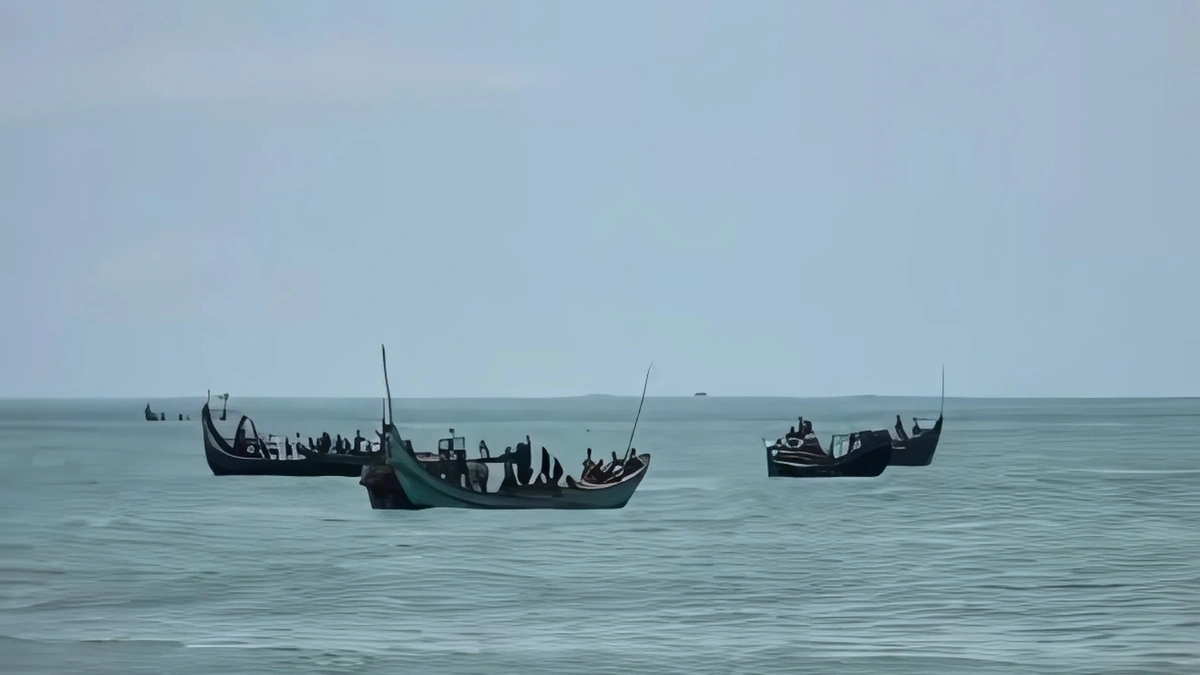
More than a decade has passed since Bangladesh resolved its maritime boundary disputes with neighboring countries, yet the country has barely approached its desired goals in exploiting sea resources. There has been little visible achievement in tourism, natural resources, trade, or energy in the Bay of Bengal. The lack of effective plans for resource extraction is compounded by a shortage of skilled personnel needed to develop these maritime assets.
Due to the absence of a dedicated research vessel, collecting deep-sea data for maritime studies in Bangladesh has been challenging. Nevertheless, using fishing trawlers for research, scientists have identified eight types of heavy minerals in the country’s maritime territory. Valuable resources such as sea urchins, useful in cancer treatment, and king crabs, which have potential for vaccine production, have also been discovered. Plans to acquire a specialized research vessel are already underway.
The Bangladesh Oceanographic Research Institute (BORI) informed Bangladesh Pratidin that it has completed around 84 research programs covering physical oceanography, geological oceanography, chemical oceanography, biological oceanography, environmental oceanography, and climate studies.
Commodore Md. Minarul Haque, Director General of BORI, stated that 55 initiatives across 28 plans are being implemented under the “Blue Economy” framework to develop Bangladesh’s maritime economy. These efforts aim to estimate the financial value of marine resources. Through research, heavy minerals, rare minerals, and other valuable substances in the sea sand have already been identified.
BORI has surveyed nearly 18,000 square kilometers of coastal and shallow sea areas, detecting eight types of heavy minerals, including rare elements like silicon and mica. Additionally, 143 varieties of marine algae (seaweeds) have been recorded at St. Martin’s Island, of which 10 species have commercial value. Three types of seaweed have yielded commercially valuable products such as agar, carrageenan, and alginate. Strategies and areas for commercial seaweed cultivation in coastal and open seas have also been identified.
Commodore Haque added that potential for renewable energy generation has been assessed along the eastern coastal waters (from Chittagong to St. Martin’s Island) by analyzing currents, waves, and physical parameters. A taxonomic list of coral species around St. Martin’s Island has been prepared, and a book documenting 60 coral species has been published. Additionally, crabs have been identified in maritime areas, and research is ongoing to extract cancer-fighting compounds from sea urchins, omega-3 fatty acids from marine fish, fertilizers and cosmetics from jellyfish, among other studies.
He emphasized that Bangladesh currently lacks sufficient skilled personnel and capacity for full-scale maritime resource extraction. Without a research vessel, deep-sea data collection remains impossible. A project to acquire a research vessel, along with 398 specialized scientific instruments for maritime research, is in progress. The vessel and equipment are expected to be operational within the next two years.
So far, research using fishing trawlers has surveyed nearly 18,000 square kilometers of coastal sea areas. These surveys have gathered baseline data, identified existing mineral resources, and conducted detailed studies on seabed sediments, forming the foundation for future maritime development.
Related News
You may like




Tom Holland Says Marvel Has a Plan for the Next Spider-Man
August 1, 2026
Elected News
-
Bangladesh Seeks UN Women Support on Digital Harassment and Women’s Empowerment
-
Bangladesh, Australia Discuss Human Trafficking, Irregular Migration and Rohingya Crisis
-

Bangladesh Plans Internet-Free Access to Mobile Banking and Financial Apps
-
DU to Open Undergraduate Admission Applications on 11 November, Tests Begin 5 December


