How +880 Identifies Bangladeshi Numbers Abroad
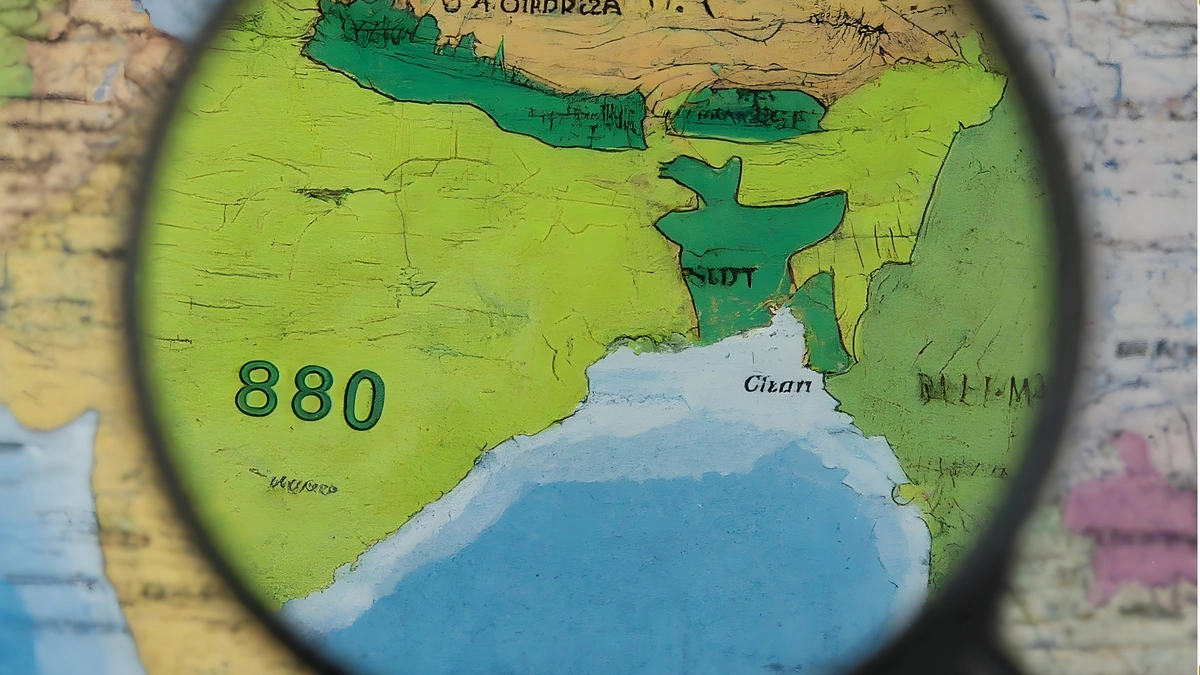
When we call someone, we usually dial numbers like 016, 015, 019, etc. But here’s something interesting even if you skip the ‘0’ at the beginning, the call still goes through! Anyway, we’ll talk about the mystery behind that zero another time. Now, if you’ve ever sent bulk SMS like sending messages to many people at once you probably used an Excel sheet to enter the numbers. And again, even without that starting ‘0’, the message still gets delivered!
So, the real mobile number is the 10-digit number starting with 17, 18, 19, and so on.
Put simply, when we call someone, just the 10-digit mobile number is enough. The zero at the beginning is a special prefix used for local calls. For international calls, this prefix becomes a bit longer.
But what is this code actually for?
If a relative or friend from abroad wants to call you on your mobile, they need to add +880 before your number. Without this, the call won’t connect properly.
Now, the real question is: why?
Why do we have to add a code like +880 before our number when calling from outside the country? How important is this code?
Let’s find out the story behind it.
To understand the whole idea, you can compare a mobile number to a home address. Suppose you want to send a letter to a friend living abroad. What would you write on the envelope? Surely, you wouldn’t just write the house number and street name.
Because with just that, the letter won’t reach the correct house or street. You have to write the area name, city, postal code, and most importantly the country name.
A mobile number works in exactly the same way. It’s a digital address assigned to your mobile phone. The last 8 digits of this number are like your house number. In English, this is called the “subscriber number.” This number is unique and is used specifically to identify you.
The two digits before that are called the operator code for example, 17, 18, or 19.
We know that:
-
17 represents Grameenphone in Bangladesh,
-
18 stands for Robi,
-
19 means Banglalink.
You might have noticed Grameenphone recently started using the operator code 14, and Banglalink is using 13, so mobile numbers can now start with (dropping the initial zero) 13... and so on.
The leading zero is actually part of Bangladesh’s country code +880. Similarly, India’s country code is +91, and the USA’s is +1.
As you guessed, the country code indicates the name of the country. So +880 means Bangladesh.
When someone calls a number from abroad, the full address (country code + operator code + subscriber number) is needed.
Otherwise, amidst billions of phone numbers worldwide, the call will get lost — the system won’t know which country to route the call to.
Where Do Country Codes Come From?
You might have already wondered who decided that Bangladesh’s code is 880, India’s is 91, and the USA’s is 1?
This job is done by the International Telecommunication Union, or ITU. It is a specialized agency of the United Nations. You could jokingly call it the guardian of global telecommunications.
The ITU ensures that telephone systems around the world operate smoothly and efficiently.
One of its divisions, called ITU-T (Telecommunication Standardization Sector), creates global standards for telecommunications.
This division developed a set of rules called E.164. All mobile numbers worldwide are formed according to this standard.
As part of this system, each country is assigned one or more unique country codes.
The Anatomy of +880
Now, let’s take a closer look at what each part of our country code +880 means.
The Plus Sign (+)
First, there is the plus sign (+). Though small, this symbol has a very important role. It is called the “International Access Code.”
When you put this + before a number, you are telling the phone network that the call is going to outside the country.
This symbol is universally recognized around the world.
The Country Code (880)
Next comes 880, which is the country code. Here’s the story behind this number:
The ITU (International Telecommunication Union) divides the entire world into 9 geographic zones.
Among these, zone 8 is reserved for East Asia. Within this zone, the number 80 is specifically assigned to Bangladesh.
So, 880 means Bangladesh in East Asia.
Geographically, Bangladesh is part of South Asia, but for mobile numbering purposes, the ITU groups countries differently:
-
Zone 1 is for North America
-
Zone 2 for Africa
-
Zone 3 for Southern and Eastern Europe
-
Zone 4 for Northern Europe
-
Zone 5 for Latin America
-
Zone 6 for Oceania
-
Zone 7 for Russia and Kazakhstan
-
Zone 8 for East Asia (including Bangladesh)
-
Zone 9 for South and West Asia
So, although Bangladesh is geographically South Asian, in telecom numbering, it falls under zone 8.
How Mobile Calls Are Made Worldwide
Suppose you are sitting abroad and dial a number starting with +880. What happens next?
First, the mobile network in the country you’re in recognizes the plus (+) sign and understands that this is an international call.
Then, it sends the call to that country’s International Gateway (IGW) the door for exchanging international phone calls.
The gateway first reads the country code. Seeing 880, it knows the call’s destination is Bangladesh.
Next, it connects to one of Bangladesh’s international gateways via submarine cable or satellite.
Once the Bangladeshi gateway receives the call, it looks at the next two digits of the number for example, 17. This code identifies the operator, such as Grameenphone.
The call is then routed through Grameenphone’s network, which finds the subscriber number (the remaining part of the mobile number) and connects your phone.
Immediately, your phone rings.
All of this happens within just a few seconds.
Certainly, when you make a call, you don’t think about these steps. It’s the technicians’ job to ensure the process is smooth so you can talk without interruption.
The Mystery of the Leading Zero: Where Does It Go in International Calls?
Here’s a common question: When calling within Bangladesh, we dial numbers starting with 0, like 017... But when calling internationally, after +880, we drop that zero and dial 17... Why?
The reason is that the leading zero is called a “trunk prefix.”
Its job is to help route calls between different cities or networks within the country. It signals to the local network that this is a national-level call.
However, when you use the +880 country code, the plus sign (+) itself acts as that indicator for international dialing.
Therefore, the zero isn’t needed anymore it disappears in international calls.
This is the mystery of the zero why it vanishes when calling internationally.
Related News
You may like



Tom Holland Says Marvel Has a Plan for the Next Spider-Man
August 1, 2026
Elected News
-
Bangladesh Seeks UN Women Support on Digital Harassment and Women’s Empowerment
-

Bangladesh, Australia Discuss Human Trafficking, Irregular Migration and Rohingya Crisis
-
Bangladesh Plans Internet-Free Access to Mobile Banking and Financial Apps
-

DU to Open Undergraduate Admission Applications on 11 November, Tests Begin 5 December


