U.S. tariff cuts on India, what impact will it have on Bangladesh?
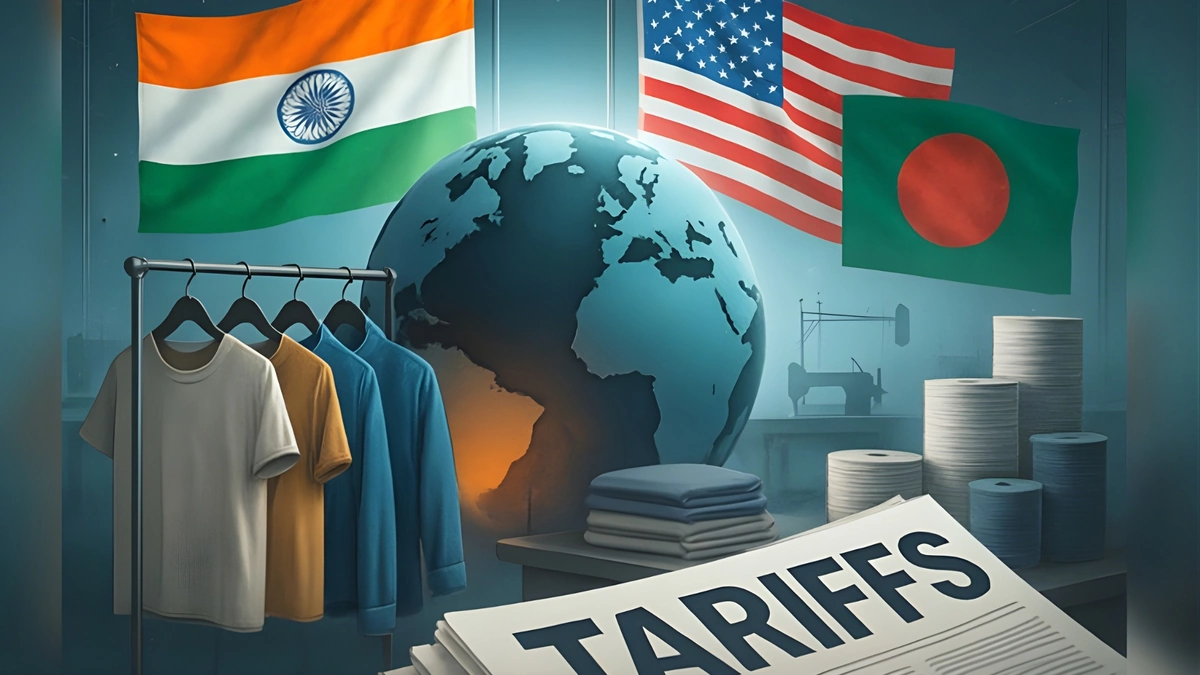
India and the United States are close to signing an agreement to reduce U.S. tariffs on Indian goods from 50 percent to around 15–16 percent a rate lower than the 20 percent tariff currently applied to Bangladeshi products in the U.S. market.
According to a Reuters report citing Indian news outlet Mint, the agreement could be officially announced later this month at the upcoming ASEAN summit.
Following a series of discussions with Washington, Bangladesh managed to reduce its tariff from 35 percent to 20 percent last August. Dhaka is continuing its lobbying efforts to bring the rate further down to 15 percent. However, there is still no indication that Dhaka will reach that goal before New Delhi.
Exporters believe that as long as the tariff gap between India and Bangladesh in the U.S. market remains within 5 percent, Bangladesh’s exports will not face any significant short-term negative impact.
In fact, they suggest that if India increases its exports to the U.S., competition in the European market may ease, creating opportunities for Bangladesh to expand its exports there.
However, exporters have cautioned that if the new tariff rate remains in place in the long term, India may attract greater investment in its backward and forward linkage industries, which could pose a challenge for Bangladesh.
Despite this potential tariff disparity, Bangladeshi exporters believe that the roughly 5 percent gap will not have a major short-term impact on Bangladesh’s export performance.
BGMEA Senior Vice President Enamul Haque Khan Babul told the media that if India gains a 5 percent tariff advantage over Bangladesh, it “might cause some issues, but nothing significant.”
Explaining the reason, he said that India is not a major competitor of Bangladesh in the apparel sector, as the product categories of the two countries are mostly different. “There is some competition in knitwear, but in woven garments, they are far behind us,” he added.
Enamul further said that if India increases its exports to the U.S., the European market may become easier for Bangladesh. “Due to the higher U.S. tariffs on Indian products, they were trying to enter the European market at lower prices. Now they might not do that, which could make the situation a bit easier for us,” he said.
Agreeing with him, Shams Mahmud, Managing Director of Shasha Denims Ltd., said that if India’s tariff rate becomes 15 percent, “it will not pose a major challenge for Bangladesh in the short term, though it could be a concern in the long run.”
He explained that a large portion of India’s exports to the U.S. consists of home textiles a sector where Bangladesh is not very strong. “However, if this tariff gap persists in the long term, India may increase investment in its backward and forward linkage industries, which could weaken our competitiveness,” he added.
Mohammad Hatem, President of the Bangladesh Knitwear Manufacturers and Exporters Association (BKMEA), also believes that while there could be minor challenges, the India-U.S. deal will not significantly affect Bangladesh’s apparel exports to the U.S.
Related News


You may like




Tom Holland Says Marvel Has a Plan for the Next Spider-Man
August 1, 2026
Elected News
-
Bangladesh Seeks UN Women Support on Digital Harassment and Women’s Empowerment
-

Bangladesh, Australia Discuss Human Trafficking, Irregular Migration and Rohingya Crisis
-
Bangladesh Plans Internet-Free Access to Mobile Banking and Financial Apps
-
DU to Open Undergraduate Admission Applications on 11 November, Tests Begin 5 December


