Which is the world’s strongest acid and how dangerous is it?
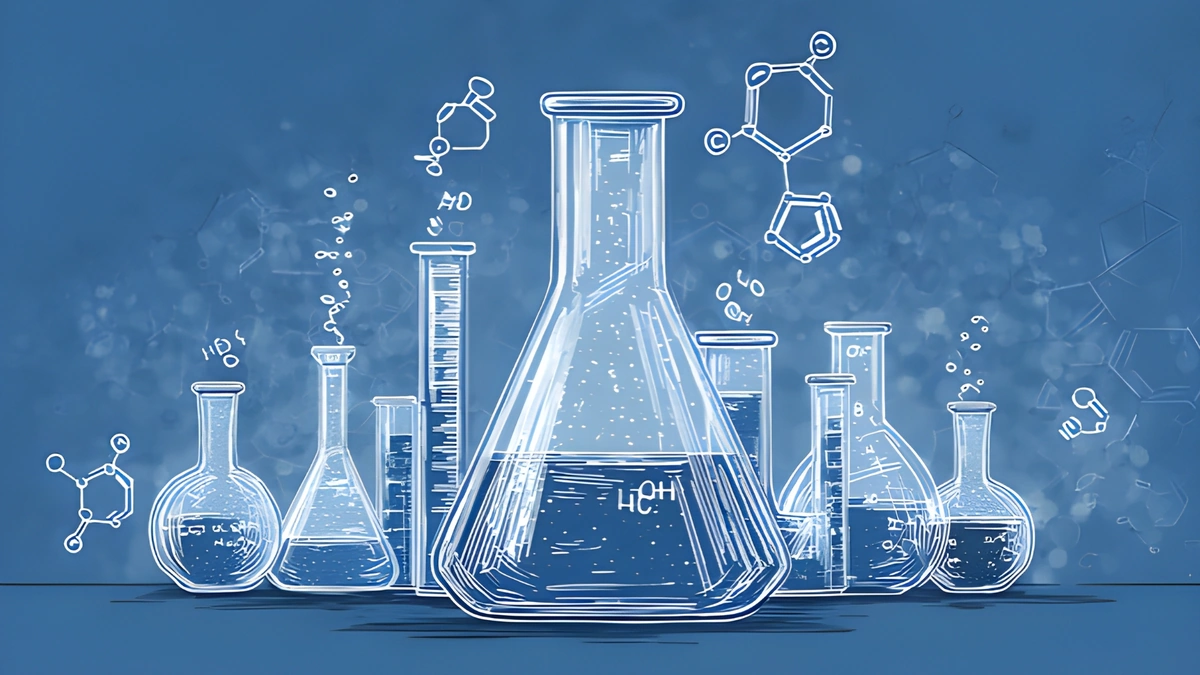
Imagine a horrifying and gruesome scene from a psycho-crime movie. Picture a body or corpse being dissolved instantly in a bathtub, leaving no trace behind. The acid used for such a gruesome act is called fluoroantimonic acid known as the world’s most dangerous and strongest acid discovered so far.
What is fluoroantimonic acid?
This acid is created by combining two chemical substances: hydrogen fluoride (HF) and antimony pentafluoride (SbF₅). When these two components mix, they form the superacid fluoroantimonic acid. If this acid is combined with other acids, the mixture becomes even more reactive, meaning the acid grows even stronger.
How strong is it?
The strength of an acid is judged by how quickly it donates protons (hydrogen ions H⁺) in a reaction. This is measured on the pH scale from 0 to 7. Neutral water has a pH of 7. Sulfuric acid is very strong, so its pH is near zero.
Fluoroantimonic acid is 10 quadrillion times stronger than sulfuric acid. One quadrillion means a 1 followed by 15 zeros. In conventional terms, one quadrillion equals 100,000 billion.
This acid is so reactive that it can dissolve glass and various metals. Chemically speaking, the protonating ability of fluoroantimonic acid is so high that it can protonate compounds that normally do not accept protons. For this reason, it is also called a hyperacid.
How is it stored?
Since it can easily dissolve plastic, glass, or metals, fluoroantimonic acid is stored in specially coated containers with Teflon lining. It is used for specific research purposes, such as carbocation studies, i.e., creating positively charged carbon atoms, as well as in other ionization, polymerization, and chemical reactions.
This acid cannot be used in ordinary laboratories. Only advanced laboratories with special permissions allow trained scientists and experts to handle it.
Extreme caution is required when working with this acid in laboratories. Even a tiny amount on human skin can burn immediately and cause deep damage. Not only externally, but internal tissues can also be severely harmed. Therefore, handling this acid requires chemical-resistant gloves, masks, goggles, and specially designed suits. Even after using protective gear, inhaling its fumes can cause serious respiratory damage. Extreme caution is always necessary.
Related News
You may like




Tom Holland Says Marvel Has a Plan for the Next Spider-Man
August 1, 2026
Elected News
-

Bangladesh Seeks UN Women Support on Digital Harassment and Women’s Empowerment
-

Bangladesh, Australia Discuss Human Trafficking, Irregular Migration and Rohingya Crisis
-

Bangladesh Plans Internet-Free Access to Mobile Banking and Financial Apps
-

DU to Open Undergraduate Admission Applications on 11 November, Tests Begin 5 December


