AI in healthcare: forecasting diseases explained
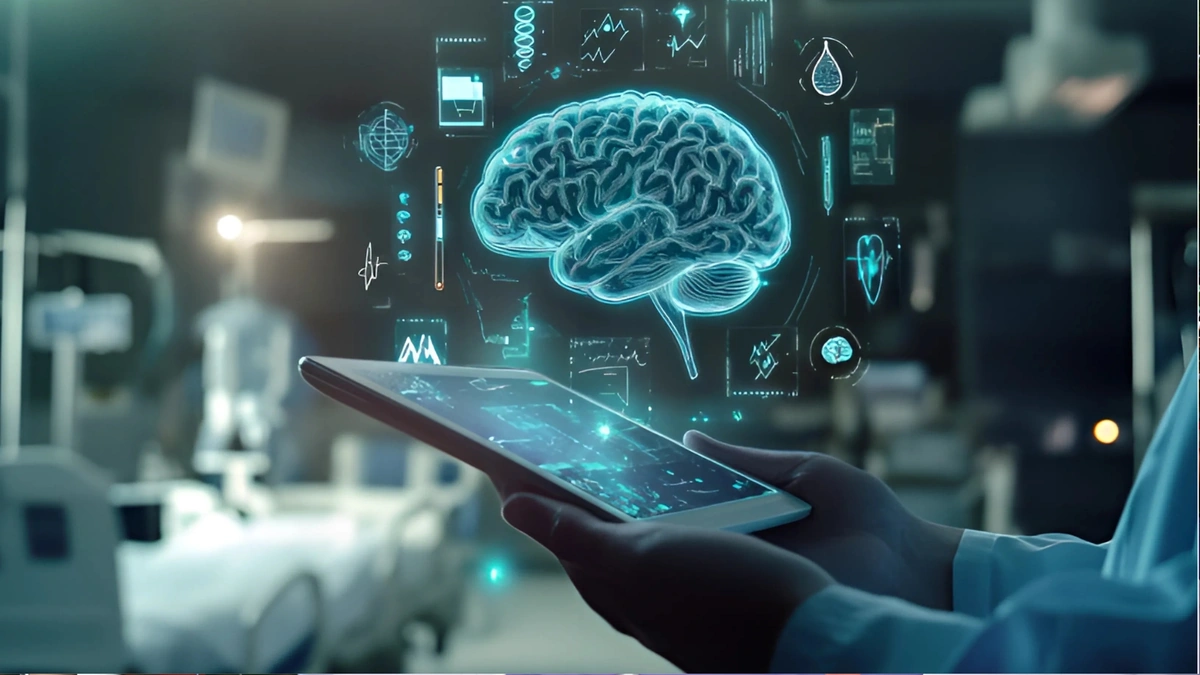
In the digital age, scientists have developed an artificial intelligence (AI) model that has astonished everyone. This AI will be able to predict medical diagnoses of your body several years in advance. Scientists announced on Wednesday (September 17) that the technology is built on the same foundation as consumer chatbots like ChatGPT.
Meanwhile, researchers from Britain, Denmark, Germany, and Switzerland wrote in a paper published in Nature that the AI model named Delphi-2M “can predict the incidence of more than a thousand diseases years in advance, based on individual patients.” The model was trained using data from the UK Biobank, which contains biological information from half a million participants.
On the other hand, Moritz Gerstung, an AI specialist at the German Cancer Research Center, said that just as language has grammar, the sequence of medical diagnoses also follows a kind of “grammar.” Delphi-2M learns patterns from prior diagnoses, their co-occurrence, and sequence in health records enabling it to make “very meaningful and health-related predictions.” Showing a chart, he explained that the AI could identify individuals at risk of heart disease much more accurately than traditional factors such as age.
Peter Bannister, a fellow at the UK’s Institute of Engineering and Technology, noted that the datasets used are biased in terms of age, ethnic diversity, and health outcomes. Therefore, AI still has a long way to go before being fully applicable in advanced healthcare.
However, in the future, such systems could support preventive medicine through early clinical monitoring and intervention, while also easing the burden on healthcare systems and contributing to more efficient allocation of resources.
Researcher Ewan Birney pointed out that while current programs like QRISK3 can only assess risks of heart attack or stroke, Delphi-2M is capable of predicting the long-term likelihood of multiple diseases simultaneously.
Professor Gustavo Sudre of King’s College London said the research represents “an important step toward broad, interpretable, and, most importantly, ethically responsible predictive modeling.” He emphasized that “explainable AI” is a major research goal today, as the inner workings of many large AI models remain mysterious even to their creators.
In Denmark, the effectiveness of Delphi-2M was tested using data from around 2 million people in the country’s national health database. The researchers cautioned, however, that the model is still experimental and not yet ready for direct use in clinical practice.
Related News
You may like




Tom Holland Says Marvel Has a Plan for the Next Spider-Man
August 1, 2026
Elected News
-

Bangladesh Seeks UN Women Support on Digital Harassment and Women’s Empowerment
-

Bangladesh, Australia Discuss Human Trafficking, Irregular Migration and Rohingya Crisis
-

Bangladesh Plans Internet-Free Access to Mobile Banking and Financial Apps
-

DU to Open Undergraduate Admission Applications on 11 November, Tests Begin 5 December


