Bangladesh Bank sets 55% crop credit target for banks in FY27
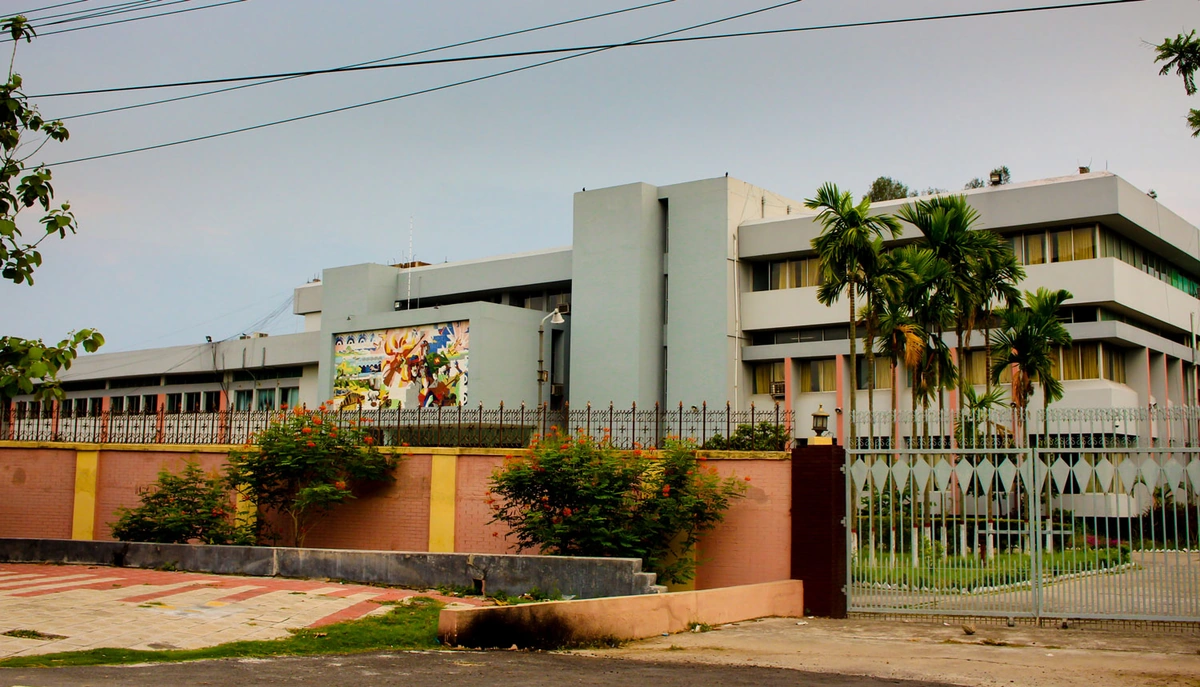
Bangladesh Bank has instructed all scheduled banks to allocate 55 percent of their agricultural credit targets to crop production for the fiscal year 2026-27. Under the revised policy, specific portions are also assigned to fisheries, livestock, and machinery.
Bangladesh Bank has instructed all scheduled banks operating in the country to allocate 55 percent of their agricultural credit targets to crop production in the fiscal year 2026-27. The central bank issued the revised instructions through a circular sent to managing directors and chief executive officers.
Under the revised Agricultural and Rural Credit Policy and Programme for FY27, banks will allocate 13 percent of their agricultural loan targets to fisheries, 20 percent to livestock, and two percent to irrigation and agricultural machinery, according to BSS reports. The remaining 10 percent may be distributed among other agricultural production, rural production, and service activities.
The central bank stated that crop production, irrigation and agricultural machinery, fisheries, and livestock would receive priority in agricultural credit distribution. Defaulting agricultural borrowers will remain ineligible for agricultural and rural credit facilities.
The revised policy has expanded eligibility criteria, allowing individuals, groups, entrepreneurs, and institutions directly or indirectly involved in agricultural activities to receive credit. People engaged in income-generating activities in rural areas will also be eligible in relevant sectors.
Small, marginal, and landless farmers, sharecroppers, and other farmers will be able to receive loans through simplified individual or group-based arrangements. According to the central bank circular issued on Thursday, banks must disburse agricultural loans publicly at the union level in the presence of local public representatives, agricultural officials, teachers, and other respected community members to ensure transparency.
Banks may also organise agricultural credit camps on local market days to disseminate information and distribute loans among farmers. Officials from Bangladesh Bank's Agricultural Credit Department will remain actively involved in awareness programmes and monitoring activities to ensure transparent distribution and proper recovery of loans at the grassroots level.
The revised policy has introduced three new focus areas, namely Agricultural Value Chain, Precision Agriculture, and Climate Smart Agriculture, to encourage modern, technology-based, and sustainable farming. Agricultural Value Chain financing will cover input supply, production, collection, storage, processing, transportation, marketing, and delivery to consumers.
Eligible entities under the value chain provision include agricultural processors, storage operators, transporters, marketers, wholesalers, retailers, and other participants in rural economic activities. Precision Agriculture is recognized as a priority area, encouraging the use of satellite imaging, remote sensing, geographic information systems, global navigation satellite systems, drones, sensors, artificial intelligence, and big data analytics.
Climate Smart Agriculture aims to increase productivity, strengthen farmers' capacity to adapt to climate change, and reduce greenhouse gas emissions. The policy encourages financing for climate-resilient crop varieties, water-saving irrigation, floating agriculture, rainwater conservation, integrated pest management, solar-powered irrigation, renewable energy, soil conservation, and organic fertiliser.
To modernise farming and reduce dependence on traditional energy sources, banks have been instructed to prioritise financing for irrigation facilities and agricultural machinery. Eligible machinery includes tractors, combine harvesters, power tillers, reapers, reaper binders, power threshers, seeders, bed planters, weeders, and automatic seedling nursery machines.
Banks may finance 70 to 80 percent of the total cost of eligible agricultural machinery, while farmers or buyers must bear the remaining 20 to 30 percent as down payment or equity. The loan repayment period will be determined based on the operational life of the machinery and farmers' seasonal income patterns, with banks permitted to provide a grace period of up to 12 months where necessary.
The policy also recognises loans for renewable energy initiatives, including biogas production and solar panel installation, as agricultural and rural credit. Financing for environmentally friendly organic fertiliser production, such as vermicompost and co-compost, is also included under the updated credit framework.
You may like

Alibaba reports 10 per cent revenue growth driven by AI cloud surge
November 19, 2026

South Korea hits US$1 trillion in exports, launches growth fund
November 19, 2026

Rupali Bank launches month-long farm loan programme in Dhaka
November 19, 2026

Janata Bank PLC holds 908th board meeting to discuss classified loans
November 19, 2026
Elected News
-
Bangladesh Seeks UN Women Support on Digital Harassment and Women’s Empowerment
-

Bangladesh, Australia Discuss Human Trafficking, Irregular Migration and Rohingya Crisis
-

Bangladesh Plans Internet-Free Access to Mobile Banking and Financial Apps
-

DU to Open Undergraduate Admission Applications on 11 November, Tests Begin 5 December


