Afghanistan–Pakistan relations have been burning since birth
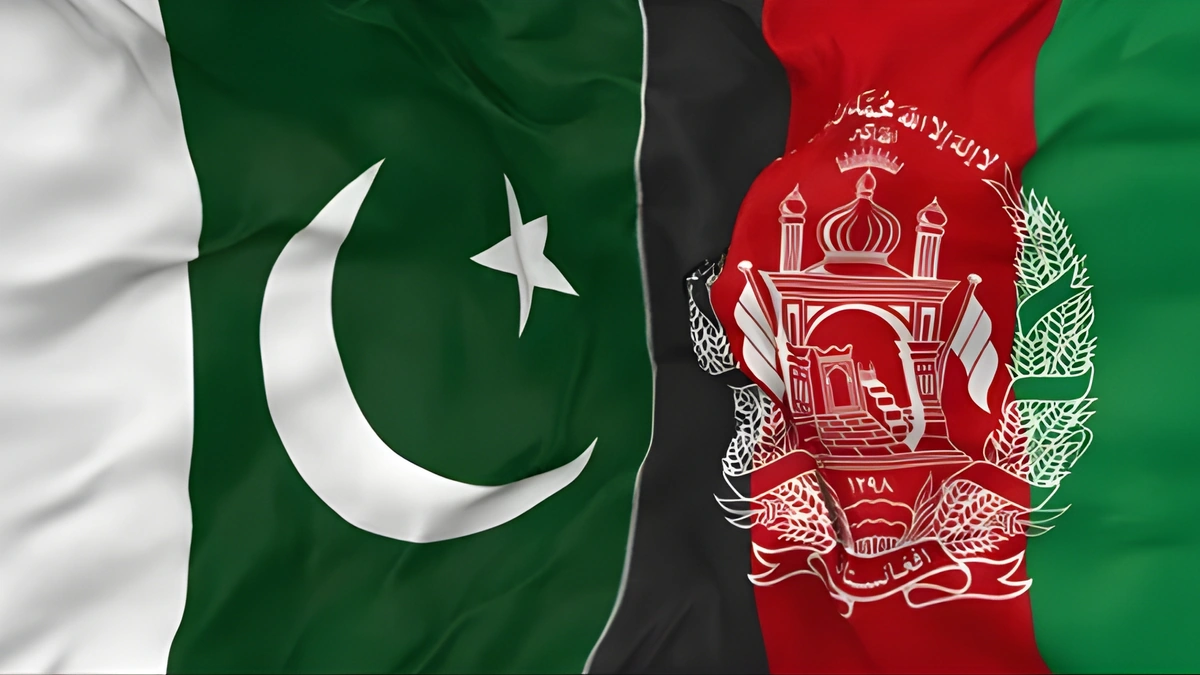
The relationship between Afghanistan and Pakistan has historically been contentious. Since Pakistan’s independence in 1947, tensions have persisted and continue to this day.
At the root of the dispute lies the 1893 “Durand Line” boundary that the British established for Afghanistan. That contested Durand Line remained as Pakistan’s border after the partition. Afghanistan has always considered it illegal. The tensions have grown over time rather than diminished.
The ongoing border dispute, refugee crisis, activities of extremist groups, and diplomatic friction all together have kept the neighboring countries at odds since Pakistan’s birth. From the 1970s onward, Soviet aggression, civil war, the rise of the Taliban, and terrorism have further complicated the bilateral relationship. (AP)
Meanwhile, explosions that occurred late Thursday night in Afghanistan’s capital Kabul and in the border‑adjacent eastern province of Paktika have further intensified the long‑standing hostility between the two countries. On Friday Afghanistan’s defense minister condemned the attacks.
On the same day, Afghanistan’s foreign minister visiting India also issued a stern warning to Pakistan. Although Afghanistan was never a British colony in the same way as some others, the London‑determined border line between the two countries is the main cause of this conflict.
Historically sensitive, the disputed Durand Line has seen a rise in cross‑border attacks in recent times especially after the Taliban seized power on 15 August 2021.
For Pakistan’s security, its air force’s cross‑border strikes and incursions into Afghan territory have further heightened tensions between Kabul and Islamabad.
Islamabad claims that the terrorist group Tehreek‑e‑Taliban Pakistan (TTP) uses Afghan soil to launch attacks into Pakistan. Afghanistan, however, has consistently denied this allegation.
Taliban leaders argue that Pakistan is violating their sovereignty under the pretext of strikes on Afghan territory. This mutual accusation has become a major destabilizing factor in bilateral relations. Still, the root cause of the tensions remains the Durand Line.
In 1893, Sir Mortimer Durand, a British diplomat of the then British Indian Civil Service, and Afghan Amir Abdur Rahman Khan established the Durand Line as the international boundary between British India and Afghanistan to delineate their respective borders. The line was slightly modified by the Anglo‑Afghan agreement of 1919. When Pakistan gained independence in 1947, the Durand Line was adopted as the boundary between Afghanistan and Pakistan, which then became the source of bilateral tensions.
Pakistan considers it the official border, but Afghans have never accepted the Durand Line. The two countries have clashed several times over it. This border dispute still affects their relations today, and its impact is multifaceted.
Prolonged tensions with Pakistan have complicated Afghanistan’s national security efforts. Trade and transport have been disrupted and regional cohesion initiatives impeded. Meanwhile, terrorist activities pose a threat to Pakistan’s internal stability, increase its military expenditure, and exacerbate existing economic pressures.
For the wider region, this unresolved dispute creates an environment of uncertainty that can discourage investment, hinder development, and invite external intervention. Notably, the Durand Line separates Afghanistan’s northeastern and southern provinces from Pakistan’s northwestern Khyber Pakhtunkhwa, Balochistan, and Gilgit‑Baltistan regions.
Regarding the Thursday attacks in Afghanistan, on Friday the Afghan Ministry of Defense said Pakistan is responsible for the explosions in Kabul and Paktika, though no detailed evidence or information was released.
The ministry’s statement added: “This aggressive act is irrational and a clear violation of our sovereignty. We reserve our legal right to defend our homeland, and the Pakistani military will bear the consequences of any escalation.”
Afghanistan’s foreign minister Amir Khan Muttaqi, on a visit to India, also reacted immediately.
In a statement on Friday he said, “Do not test Afghan patience. If you do, ask Britain, Russia, the United States, and NATO what happens when they play with Afghanistan.”
Jalil‑ul‑Ahmad Khalilzad, the former U.S. special representative for Afghanistan (21 September 2018 to 19 October 2021), warned on Saturday about the first airstrike in Kabul, saying Pakistan’s airstrike in Kabul could provoke a wider conflict and increase instability across the entire region.
Related News
You may like




Tom Holland Says Marvel Has a Plan for the Next Spider-Man
August 1, 2026
Elected News
-

Bangladesh Seeks UN Women Support on Digital Harassment and Women’s Empowerment
-

Bangladesh, Australia Discuss Human Trafficking, Irregular Migration and Rohingya Crisis
-

Bangladesh Plans Internet-Free Access to Mobile Banking and Financial Apps
-

DU to Open Undergraduate Admission Applications on 11 November, Tests Begin 5 December


