After China, Now Nepal Also Pulls Claim Over Indian Territory!
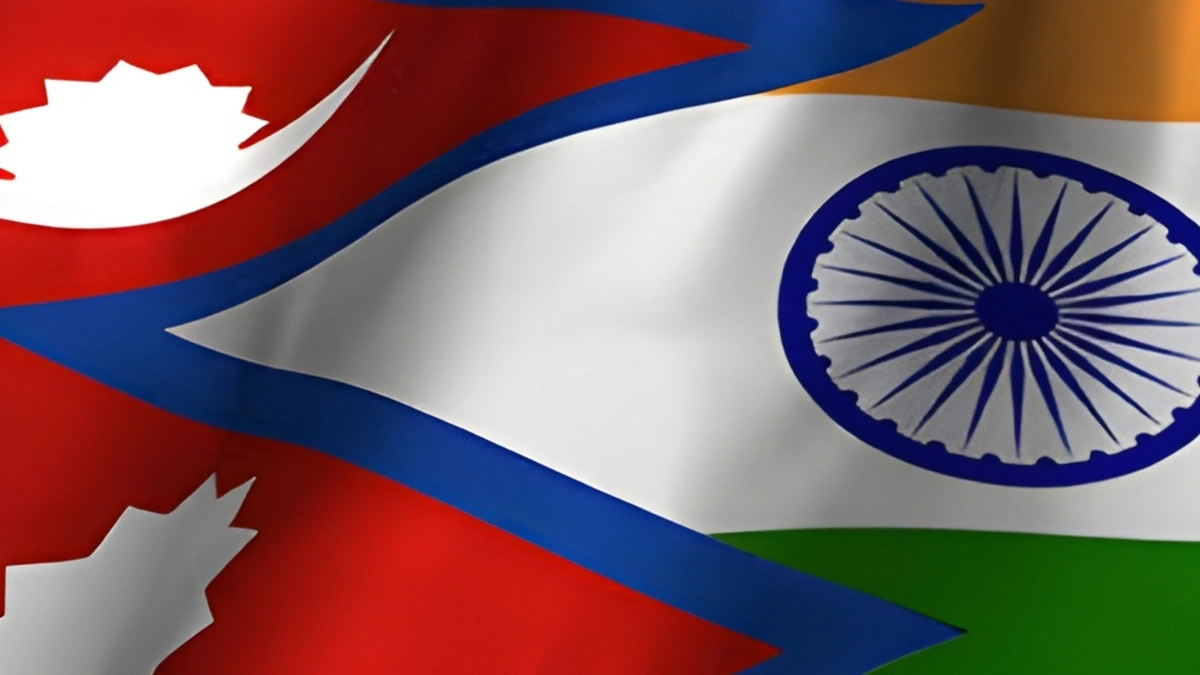
Nepal’s central bank (NRB) has introduced a new 100-rupee banknote, featuring a map that includes Kalapani, Lipulekh and Limpiyadhura—territories currently controlled and claimed by India
After the recent Gen-Z protests in Nepal and theNepal’s central bank (NRB) has introduced a new 100-rupee banknote, featuring a map that includes Kalapani, Lipulekh and Limpiyadhura-territories currently controlled and claimed by India. fall of the Oli government, an interim government took charge. It is under this short-term administration that the new 100-rupee note was released, triggering controversy.
On Thursday (27 November), the note-bearing the signature of former NRB governor Maha Prasad Adhikari-was circulated in the market. The issuing year printed on the note is 2081 in the Nepali calendar, corresponding to 2024.
In May 2020, the KP Sharma Oli–led government unveiled a new political map that showed Lipulekh, Kalapani and Limpiyadhura as part of Nepal. The map was later approved by Nepal’s parliament. India strongly objected to Nepal’s move at the time, calling the revised map a unilateral act. New Delhi warned Kathmandu that such “artificial territorial expansion” was unacceptable.
India maintains that Lipulekh, Kalapani and Limpiyadhura belong to them. Speaking about the updated map, an NRB spokesperson said the map had already been present on the older 100-rupee notes and was revised following the government’s directive.
He clarified that among various denominations-10, 50, 500 and 1,000-only the 100-rupee note features Nepal’s map. The new note carries an image of Mount Everest on the left. On the right is a watermark of Nepal’s national flower, the rhododendron. At the center, in light green, is the map of Nepal.
India’s External Affairs Minister S. Jaishankar has described Nepal’s inclusion of the three disputed territories on the note as a unilateral decision.
Near the map, the Ashoka pillar is printed, bearing the text “Lumbini, Birthplace of Lord Buddha.” The reverse side shows a one-horned rhinoceros. The note also includes a security thread and a black dot.
Nepal shares over 1,850 kilometers of border with five Indian states: Sikkim, West Bengal, Bihar, Uttar Pradesh and Uttarakhand.
Recently, China also reignited territorial tensions by again claiming India’s Arunachal Pradesh, part of the “Seven Sisters.” China refers to the region as “Zangnan.” On Tuesday (25 November), Chinese Foreign Ministry spokesperson Mao Ning claimed that Zangnan belongs to China and that Beijing never recognized India’s “illegal” creation of Arunachal Pradesh.
Responding strongly, Indian External Affairs Ministry spokesperson Randhir Jaiswal said Arunachal Pradesh is an “integral and inalienable” part of India, and China’s denial does not change this reality.
Related News
You may like




Tom Holland Says Marvel Has a Plan for the Next Spider-Man
August 1, 2026
Elected News
-
Bangladesh Seeks UN Women Support on Digital Harassment and Women’s Empowerment
-

Bangladesh, Australia Discuss Human Trafficking, Irregular Migration and Rohingya Crisis
-

Bangladesh Plans Internet-Free Access to Mobile Banking and Financial Apps
-

DU to Open Undergraduate Admission Applications on 11 November, Tests Begin 5 December


