Four Gazans killed in heavy storm and rain
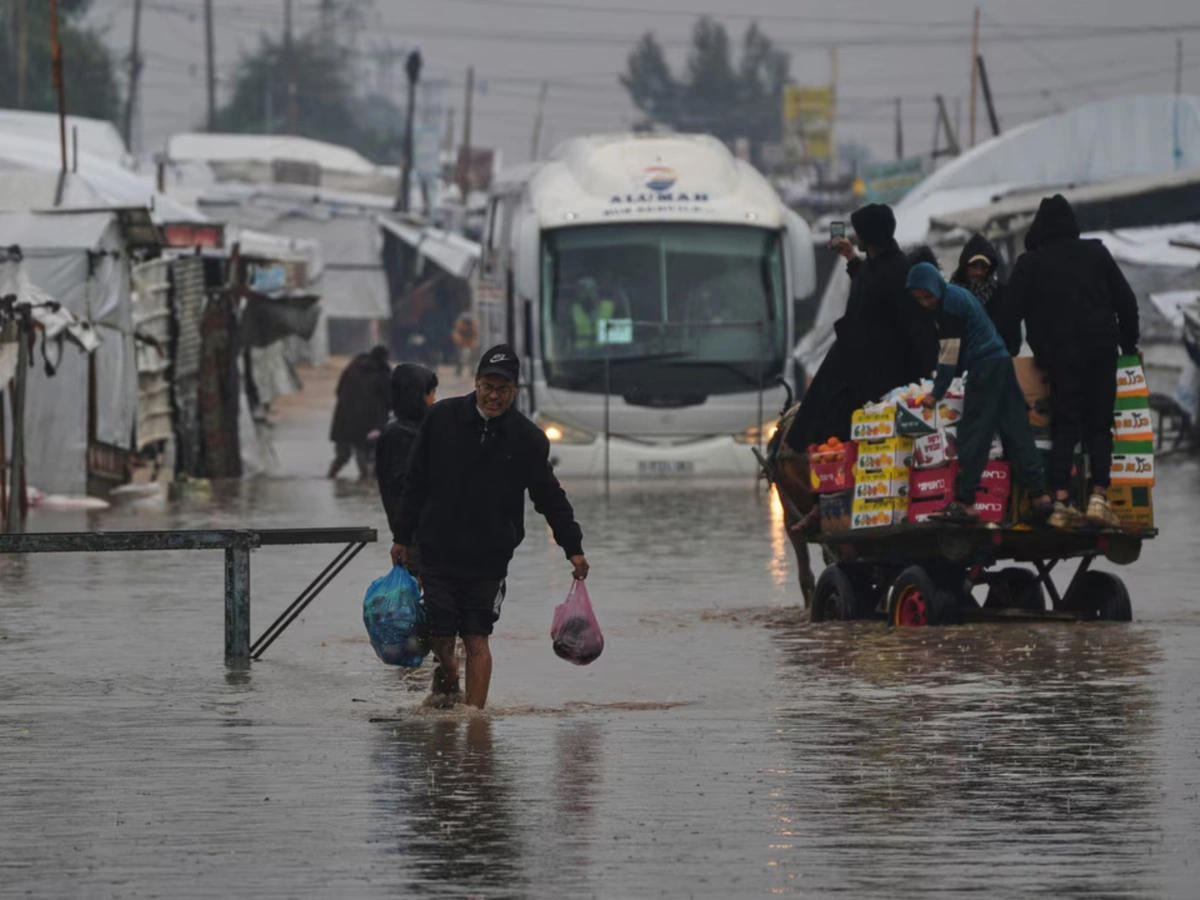
Flooding has submerged thousands of worn tents across the territory, destroying personal belongings and worsening humanitarian conditions as temperatures continue to drop
A powerful storm swept across the Gaza Strip overnight and into early yesterday, leaving four Palestinians dead within 24 hours, according to medical officials.
The severe weather system, driven by a deep low-pressure front, has battered Gaza for a third consecutive day, bringing intense rainfall, strong winds, and widespread flooding. The conditions have made life increasingly dangerous for hundreds of thousands of displaced people sheltering in weak, makeshift tents.
Two brothers, Khader and Khalil Iyhab Hanouna, were killed in central Gaza City after a wall weakened by heavy rain collapsed onto their tent, local sources told Anadolu Agency.
Their deaths came after two other storm-related fatalities during the same period. In the Shati refugee camp west of Gaza City, a man died when his home collapsed. In southern Gaza’s Khan Younis, a young girl lost her life due to exposure after floodwaters inundated her family’s tent.
Several people were injured in northern Gaza’s Beit Lahia area when part of a house previously damaged by Israeli airstrikes gave way. Rescue teams said some residents may still be trapped beneath the debris.
Separately, Gaza’s Civil Defense reported injuries, including among children, after strong winds caused a tent housing displaced families to collapse in the al-Mina (Port) area west of Gaza City.
Flooding has submerged thousands of worn tents across the territory, destroying personal belongings and worsening humanitarian conditions as temperatures continue to drop. Emergency crews have evacuated families from partially damaged buildings in Khan Younis and warned residents to avoid unsafe structures.
At least three additional buildings collapsed west of Gaza City on Thursday amid continued heavy rain.
Civil Defense officials estimate that around 250,000 families are currently living in displacement camps throughout Gaza, many enduring cold, flooding, and unsafe shelter conditions.
Although a ceasefire came into effect on October 10, officials say living conditions have not improved due to ongoing restrictions on the entry of humanitarian aid into the enclave.
Since October 2023, Israeli attacks on Gaza have killed more than 70,000 people—mostly women and children—and injured over 171,000 others, according to local authorities, despite the ceasefire announced two months ago.
The severe weather system, driven by a deep low-pressure front, has battered Gaza for a third consecutive day, bringing intense rainfall, strong winds, and widespread flooding. The conditions have made life increasingly dangerous for hundreds of thousands of displaced people sheltering in weak, makeshift tents.
Two brothers, Khader and Khalil Iyhab Hanouna, were killed in central Gaza City after a wall weakened by heavy rain collapsed onto their tent, local sources told Anadolu Agency.
Their deaths came after two other storm-related fatalities during the same period. In the Shati refugee camp west of Gaza City, a man died when his home collapsed. In southern Gaza’s Khan Younis, a young girl lost her life due to exposure after floodwaters inundated her family’s tent.
Several people were injured in northern Gaza’s Beit Lahia area when part of a house previously damaged by Israeli airstrikes gave way. Rescue teams said some residents may still be trapped beneath the debris.
Separately, Gaza’s Civil Defense reported injuries, including among children, after strong winds caused a tent housing displaced families to collapse in the al-Mina (Port) area west of Gaza City.
Flooding has submerged thousands of worn tents across the territory, destroying personal belongings and worsening humanitarian conditions as temperatures continue to drop. Emergency crews have evacuated families from partially damaged buildings in Khan Younis and warned residents to avoid unsafe structures.
At least three additional buildings collapsed west of Gaza City on Thursday amid continued heavy rain.
Civil Defense officials estimate that around 250,000 families are currently living in displacement camps throughout Gaza, many enduring cold, flooding, and unsafe shelter conditions.
Although a ceasefire came into effect on October 10, officials say living conditions have not improved due to ongoing restrictions on the entry of humanitarian aid into the enclave.
Since October 2023, Israeli attacks on Gaza have killed more than 70,000 people—mostly women and children—and injured over 171,000 others, according to local authorities, despite the ceasefire announced two months ago.
Related News
You may like




Tom Holland Says Marvel Has a Plan for the Next Spider-Man
August 1, 2026
Elected News
-

Bangladesh Seeks UN Women Support on Digital Harassment and Women’s Empowerment
-

Bangladesh, Australia Discuss Human Trafficking, Irregular Migration and Rohingya Crisis
-

Bangladesh Plans Internet-Free Access to Mobile Banking and Financial Apps
-

DU to Open Undergraduate Admission Applications on 11 November, Tests Begin 5 December


