How the elite class is consuming Pakistan’s economy
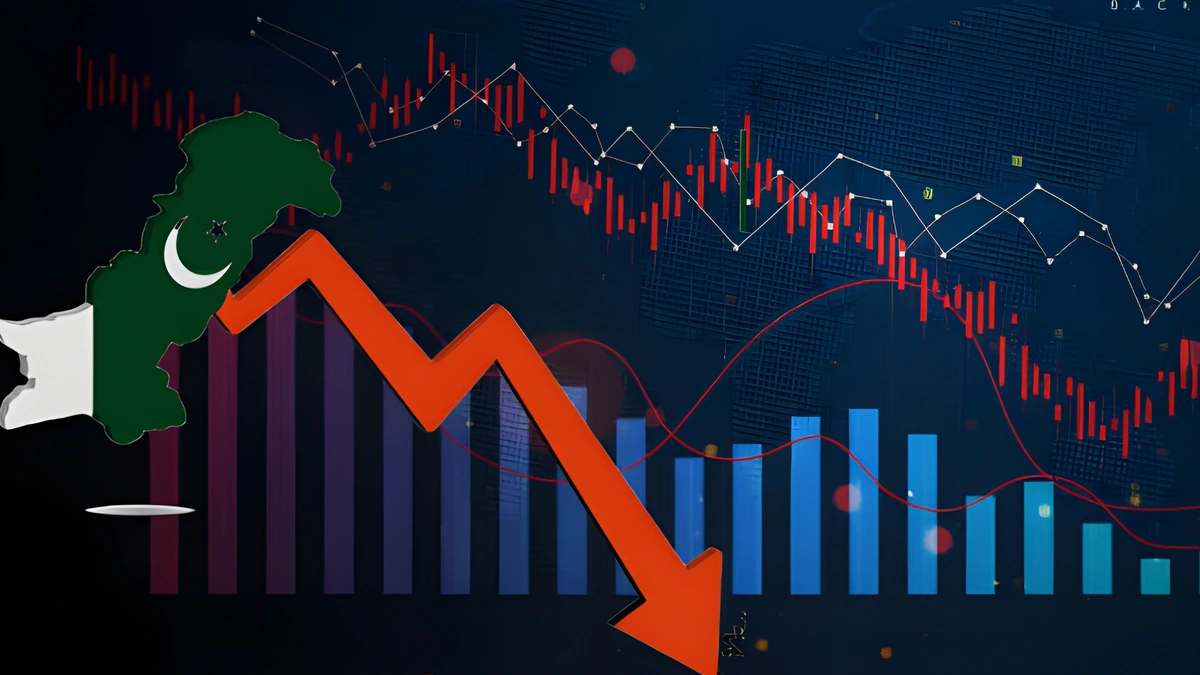
A new assessment by the International Monetary Fund (IMF) states that corruption is the main cause of Pakistan’s current economic crisis. The report says the country is experiencing “state capture,” meaning national policies are controlled in a way that serves the interests of a small group of political and business elites.
The International Monetary Fund’s newly finalized Governance and Corruption Diagnostic Assessment (GCDA) for November reveals that corruption lies at the heart of Pakistan’s economic crisis. The report states that Pakistan is experiencing “state capture”-where national policies are shaped to serve the interests of a small circle of political, military, and business elites.
According to the 186-page report, Pakistan’s institutions fail to enforce regulations, protect public resources, or ensure accountability. This deep-rooted and corrosive corruption distorts markets, erodes public trust, and undermines financial stability.
The IMF warns that unless Pakistan dismantles its elite-benefit structure, the country will remain trapped in long-term economic stagnation. Corruption affects every level of government, but the worst damage occurs when powerful groups gain control over key sectors, particularly state-owned or government-linked enterprises.
The IMF emphasizes that improvements in governance and accountability could yield substantial economic gains. Pakistan’s GDP-currently about $340 billion (2024)-could grow by 5% to 6.5% over five years if reforms are properly implemented.
Pakistan has turned to the IMF 25 times since 1958, making it one of the world’s most frequent borrowers. Its elite receive enormous privileges through subsidies, tax exemptions, and favorable government contracts-costing the economy trillions of rupees each year. A UNDP report earlier noted that elite privileges amount to nearly 6% of Pakistan’s GDP.
Experts say the findings are not new. They reinforce earlier studies showing how political and military elites manipulate laws, land access, loans, tariffs, and regulations to protect their own interests. Economists argue that without accountability in corruption cases and without breaking elite influence, economic reform will not be possible.
The new IMF report finds that tax exemptions and special incentives-especially in real estate, manufacturing and energy-granted to powerful groups cost Pakistan 4.61% of its GDP in the 2023 fiscal year.
It urges the government to end preferential treatment for state-linked entities in public contracts and to bring much greater transparency to the Special Investment Facilitation Council (SIFC).
The SIFC, created in June 2023 under Shehbaz Sharif, is a powerful civil–military body meant to attract foreign investment by cutting bureaucracy. But its lack of transparency and extensive legal protections for many of its (often military) officials increase corruption risks. The report says SIFC must publish annual details of incoming investments, incentives granted, and justifications for its decisions. Despite having enormous power, its accountability mechanisms remain untested.
Judiciary and Rule of Law
Pakistan’s judicial backlog exceeds 2 million cases, and Supreme Court pendency rose 7% in 2023. Two recent constitutional amendments-criticized by lawyers as “constitutional surrender”-are seen as weakening the Supreme Court and empowering the executive. The creation of a parallel constitutional court has also raised concerns.
Anti-corruption bodies NAB and FIA face questions. A 2024 taskforce found NAB sometimes exceeds its authority for political motives, undermining trust and slowing bureaucratic decision-making. Although NAB claims to have recovered 5.3 trillion rupees from January 2023 to December 2024, conviction rates remain low. The IMF calls for major reforms to ensure NAB’s independence and rule-based enforcement.
Was This Report Necessary?
Experts agree that implementing these recommendations would have major impact, but similar advice has been given for years with little government action. Since Pakistan is currently under an IMF program, analysts think this time the government may pay more attention.
Economist Sajid Amin Javed says the IMF should also have explained why earlier recommendations failed. Still, he welcomes the report’s attempt to quantify economic losses from corruption.
Ali Hasanain is more skeptical, questioning why the IMF waited for the government’s request. He notes that Pakistani and international institutions have long documented elite capture-politically connected groups benefiting from land, loans, tariff exemptions and regulatory manipulation.
What Can the Government Do?
Experts say Pakistan’s economy has long been controlled by politically tied elites. IMF’s findings are not new.
Hasanain argues that elite capture is inherently political and will not disappear without sweeping political reform. “Reforms survive only when political incentives change.”
Javed says policy-making is often dominated by the very elites who benefit from corruption, creating “policy capture.”
Both analysts stress the need for:
-
A unified, prime-minister-led economic recovery plan
-
Merging scattered committees, councils and taskforces into a coordinated platform
-
Clear priorities, deadlines and measurable outcomes
-
Monthly public reporting and independent evaluation
Ultimately, Javed concludes: “If Pakistan wants a transparent and effective economy, the entire economic structure must be fundamentally transformed.”
Related News
You may like




Tom Holland Says Marvel Has a Plan for the Next Spider-Man
August 1, 2026
Elected News
-
Bangladesh Seeks UN Women Support on Digital Harassment and Women’s Empowerment
-
Bangladesh, Australia Discuss Human Trafficking, Irregular Migration and Rohingya Crisis
-

Bangladesh Plans Internet-Free Access to Mobile Banking and Financial Apps
-
DU to Open Undergraduate Admission Applications on 11 November, Tests Begin 5 December


