India fears huge losses as Trump imposes 100% tariffs on medicines
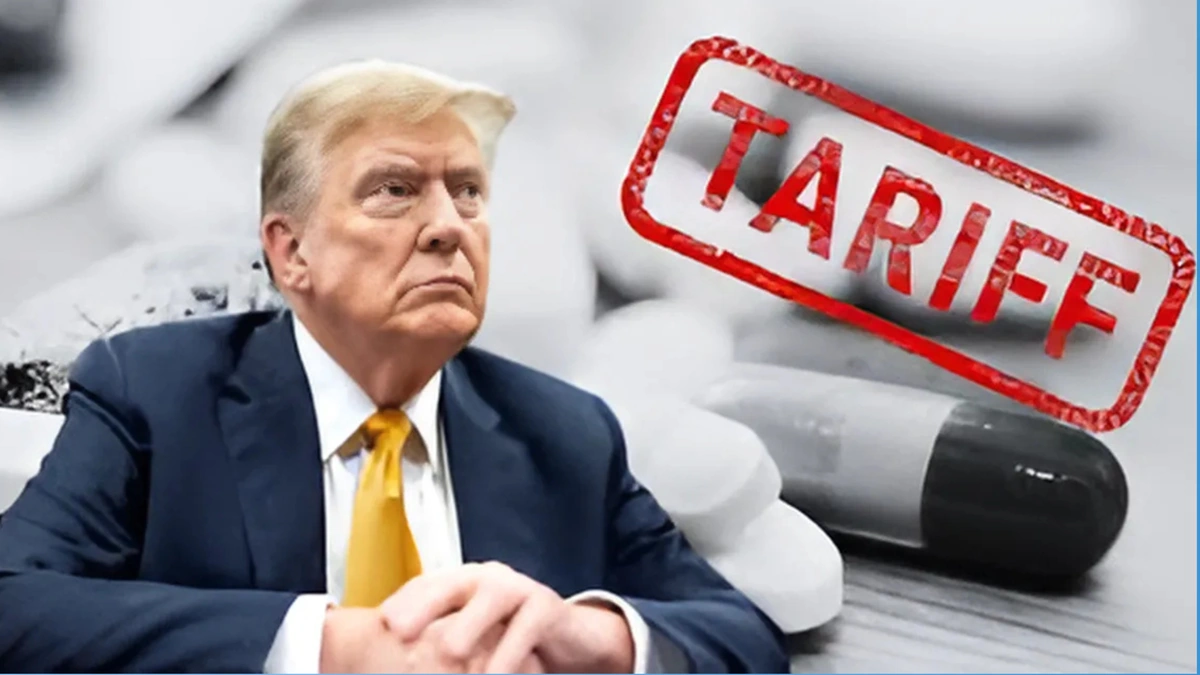
“U.S. President Donald Trump announced on Thursday that starting October 1, his country will impose tariffs of up to 100 percent on imports of branded and patented medicines. India’s pharmaceutical industry is heavily dependent on the U.S. market, and this decision could have a significant impact on the sector.”
In a post on his social media platform Truth Social, Donald Trump wrote, ‘Starting October 1, 2025, we will impose a 100 percent tariff on any branded or patented medicine, unless a company is building its manufacturing plant in the United States.’
Trump’s posts indicate that he is not limiting his tariff plans to the new trade policy or import duties introduced in August. He intends to expand tariffs further and apply them more broadly. According to him, the tariffs will help reduce the federal budget deficit and boost domestic production.
Trump further clarified, ‘By “building a plant,” we mean “land is being prepared” or “construction has already started.” If work on a facility is underway in the United States, then its medicines will not be subject to tariffs. Thank you for your attention on this matter.
“Trump’s posts suggest that he is not confining tariffs to the new trade policy or import duties introduced in August. He is seeking to impose additional tariffs and to expand their use more broadly. He believes these taxes will help reduce the U.S. government’s budget deficit and boost domestic production.”
Under the latest tariff measures, Trump has imposed a 50 percent duty on kitchen cabinets and bathroom vanities, 30 percent on furniture, and 25 percent on heavy trucks (large freight vehicles).
Although Trump has not provided a legal justification for the new tariffs, he argued that the duties are necessary for ‘national security and other reasons.’ Normally, matters such as tariffs and taxes fall under the authority of the U.S. Congress. This has led to concerns that, in this case, President Trump may have exceeded the limits of his executive power.
“How India Could Be Affected
The United States is the largest market for India’s pharmaceutical exports. In the 2024 fiscal year, out of India’s total drug exports worth $27.9 billion, 31 percent—or $8.7 billion (₹77,138 crore)—went to the U.S. In the first six months of 2025 alone, India exported an additional $3.7 billion (₹32,505 crore) worth of medicines to the American market.”
Trump’s new tariffs are primarily targeting branded and patented medicines, a segment dominated by large multinational companies. However, it remains unclear whether complex generics and specialty drugs exported from India will also fall under these duties. Many of the big firms already have their own manufacturing facilities in the United States.
American consumers rely heavily on low-cost generic medicines produced in India. Higher tariffs could push up drug prices, fuel inflation, and create shortages. Since Indian pharmaceutical companies already operate on thin margins, they may be unable to absorb the additional costs and will ultimately pass them on to U.S. consumers or insurance companies.
Trump has already imposed a 50 percent tariff on Indian goods, including a 25 percent ‘penalty’ tied to India’s continued purchase of oil from Russia.
Related News
You may like




Tom Holland Says Marvel Has a Plan for the Next Spider-Man
August 1, 2026
Elected News
-
Bangladesh Seeks UN Women Support on Digital Harassment and Women’s Empowerment
-

Bangladesh, Australia Discuss Human Trafficking, Irregular Migration and Rohingya Crisis
-

Bangladesh Plans Internet-Free Access to Mobile Banking and Financial Apps
-

DU to Open Undergraduate Admission Applications on 11 November, Tests Begin 5 December


