Iran launches missile barrage at Israel after killing of senior Iranian leaders
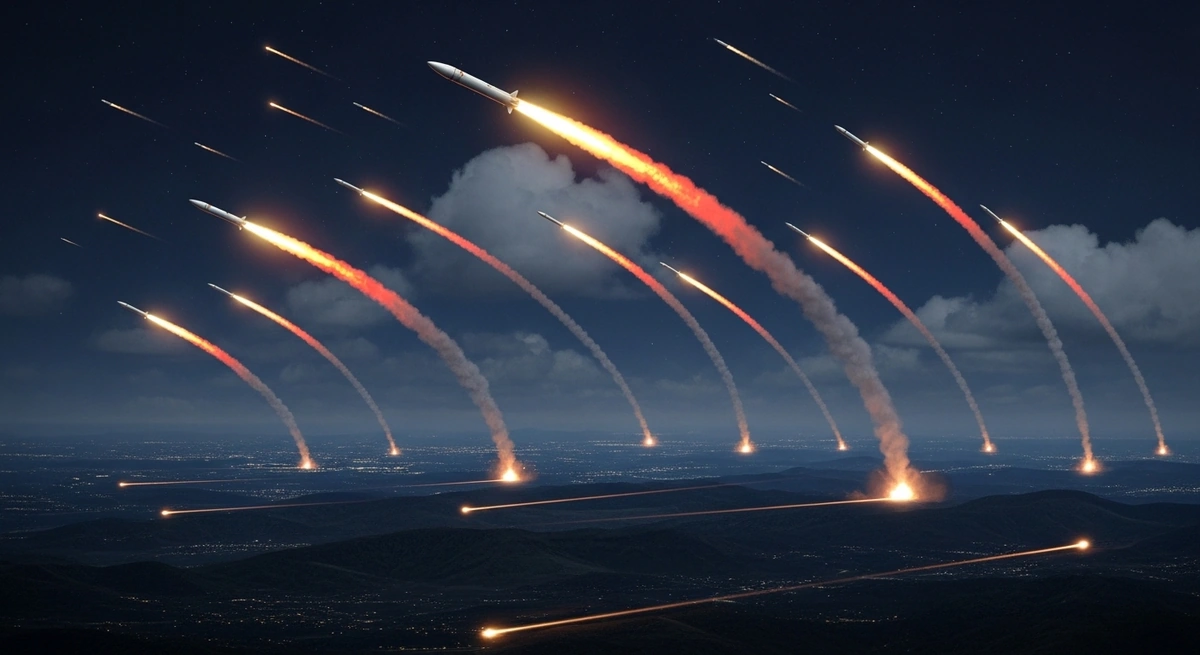
Iran launched a retaliatory missile attack on central Israel early Wednesday after the killings of senior Iranian officials, including Ali Larijani, in a sharp escalation of the war between Iran and Israel. Iranian state messaging and the Islamic Revolutionary Guard Corps framed the strike as revenge for Larijani’s death, while Israeli and international reports said at least two people were killed near Tel Aviv.
The overnight strike targeted central Israel, including the Ramat Gan area near Tel Aviv, and involved missiles described by international reporting as advanced multiple warhead systems. Associated Press reported that the attack killed two people and damaged property, while other coverage said the assault set off alarms across central Israel and raised fresh concerns about the ability of civilians to reach shelter in time.
The attack came hours after Iran confirmed the killing of Ali Larijani, secretary of the Supreme National Security Council, in an Israeli air strike. The Guardian reported that Larijani’s death was confirmed by Iran’s national security council, making him one of the most senior Iranian figures killed since the conflict began. Reuters also reported that Israel said it had killed Larijani in a strike on Tuesday.
Iranian officials and aligned media also linked the retaliation to the killing of Gholamreza Soleimani, head of the Basij paramilitary force. Associated Press reported that Iran launched attacks on Israel and Gulf countries after the Israeli strike that killed Larijani and Soleimani, underlining the widening regional fallout from the confrontation.
In Tehran, authorities also carried out the execution of a man accused of spying for Israel’s Mossad, according to Associated Press. The execution added to an atmosphere of mounting tension inside Iran as the state responded both militarily and domestically to the latest phase of the war.
Another point of concern emerged around Iran’s Bushehr nuclear power plant. Iran informed the International Atomic Energy Agency that a projectile had struck near the facility on Tuesday, though no damage or injuries were reported, according to reporting that cited the IAEA notification.
Iran has sought to project continuity despite the assassinations. In remarks carried by Al Jazeera and cited in related coverage, Foreign Minister Abbas Araghchi said the Islamic Republic’s political system would remain stable and that the loss of individual leaders would not break the state structure. That message appears aimed at countering any perception that the killings of Larijani and other senior figures have destabilised Tehran’s leadership.
The exchange marks another step in a conflict that is now moving into its third week, with missile and drone attacks spreading beyond Israel and Iran to parts of the Gulf. Associated Press reported that Iran also targeted several Gulf states in the same wave of retaliation, underscoring fears that the war is widening into a broader regional confrontation.
The attack came hours after Iran confirmed the killing of Ali Larijani, secretary of the Supreme National Security Council, in an Israeli air strike. The Guardian reported that Larijani’s death was confirmed by Iran’s national security council, making him one of the most senior Iranian figures killed since the conflict began. Reuters also reported that Israel said it had killed Larijani in a strike on Tuesday.
Iranian officials and aligned media also linked the retaliation to the killing of Gholamreza Soleimani, head of the Basij paramilitary force. Associated Press reported that Iran launched attacks on Israel and Gulf countries after the Israeli strike that killed Larijani and Soleimani, underlining the widening regional fallout from the confrontation.
In Tehran, authorities also carried out the execution of a man accused of spying for Israel’s Mossad, according to Associated Press. The execution added to an atmosphere of mounting tension inside Iran as the state responded both militarily and domestically to the latest phase of the war.
Another point of concern emerged around Iran’s Bushehr nuclear power plant. Iran informed the International Atomic Energy Agency that a projectile had struck near the facility on Tuesday, though no damage or injuries were reported, according to reporting that cited the IAEA notification.
Iran has sought to project continuity despite the assassinations. In remarks carried by Al Jazeera and cited in related coverage, Foreign Minister Abbas Araghchi said the Islamic Republic’s political system would remain stable and that the loss of individual leaders would not break the state structure. That message appears aimed at countering any perception that the killings of Larijani and other senior figures have destabilised Tehran’s leadership.
The exchange marks another step in a conflict that is now moving into its third week, with missile and drone attacks spreading beyond Israel and Iran to parts of the Gulf. Associated Press reported that Iran also targeted several Gulf states in the same wave of retaliation, underscoring fears that the war is widening into a broader regional confrontation.
Related News

You may like




Tom Holland Says Marvel Has a Plan for the Next Spider-Man
August 1, 2026
Elected News
-

Bangladesh Seeks UN Women Support on Digital Harassment and Women’s Empowerment
-

Bangladesh, Australia Discuss Human Trafficking, Irregular Migration and Rohingya Crisis
-

Bangladesh Plans Internet-Free Access to Mobile Banking and Financial Apps
-

DU to Open Undergraduate Admission Applications on 11 November, Tests Begin 5 December


