Israel expands ‘Yellow Line’, uproots Gaza families
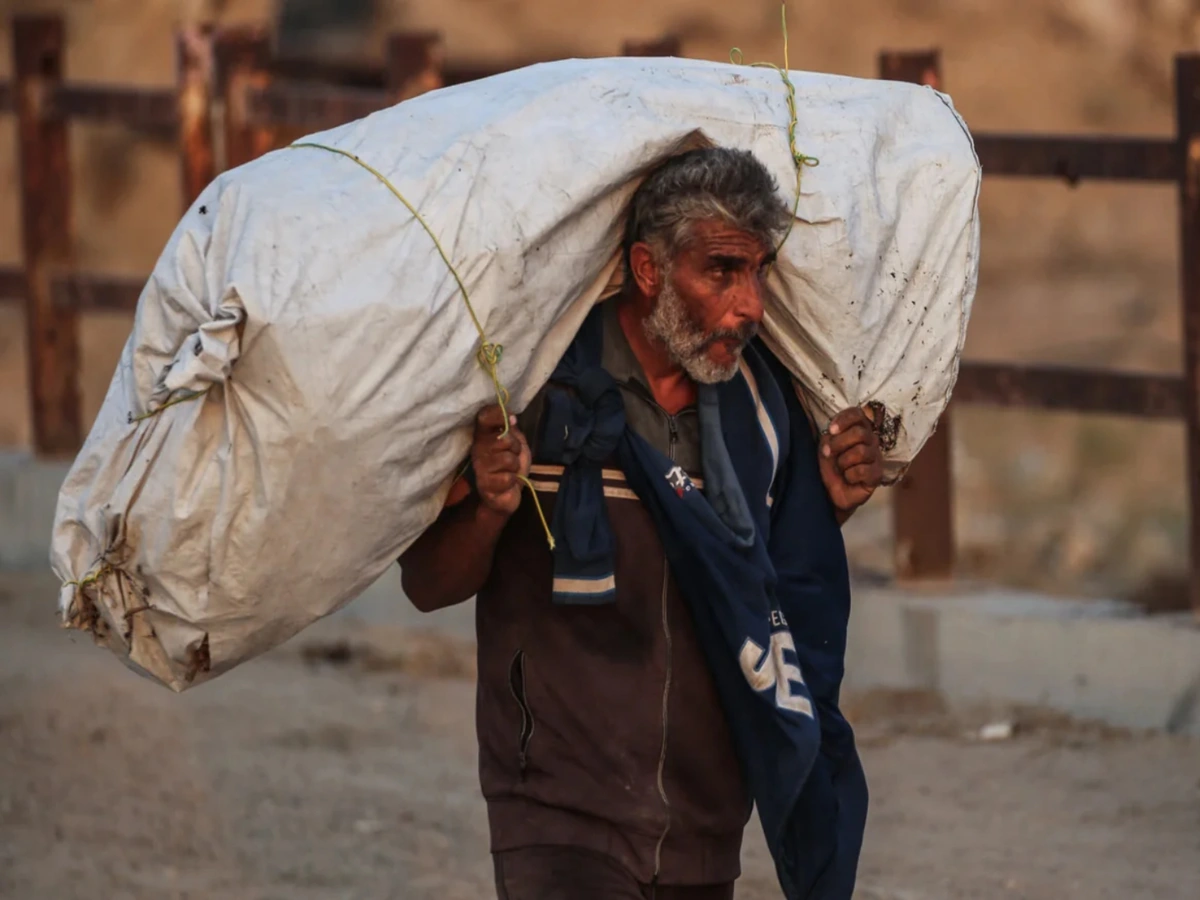
Local accounts suggest the line has advanced more than one kilometre since the ceasefire began, displacing thousands in what residents describe as largely unreported waves of forced movement.
Months after a US-brokered ceasefire came into effect, residents of Gaza City said that a newly imposed Israeli military boundary—known locally as the “Yellow Line”—has continued to advance westward, triggering fresh displacement and fear in densely populated neighbourhoods.
Ahmed Hamed, a 31-year-old Palestinian journalist, returned to his family home near the Shujaiya area of eastern Gaza City after waiting two weeks for security conditions to stabilise. At the time, the house stood around 1.5 kilometres west of the boundary. Today, the distance has narrowed to about 200 metres, Middle East Eye reported.
Hamed said the return was followed almost immediately by renewed sounds of conflict. “From the first night, there were explosions, demolitions and gunfire,” he said, noting that the activity often continued from sunset until dawn.
Initially, residents believed the military activity was taking place far away. That assumption changed when yellow concrete blocks—used by Israeli forces to mark the boundary—appeared in nearby streets. The blocks are now visible from Hamed’s window, alongside Israeli tanks and military vehicles.
The Yellow Line, which Israeli forces have marked inside the Gaza Strip since October under the ceasefire framework, is designated as a restricted zone. Palestinians are barred from accessing areas north, south and east of the line. According to local residents, the boundary has expanded steadily since the ceasefire, now covering more than half of Gaza’s territory.
Each advance has been marked by the placement of yellow concrete blocks inside civilian neighbourhoods, forcing residents to flee—often overnight and under fire. Hamed said many families who returned after the ceasefire tried to rebuild basic services such as electricity and internet access, only to be displaced again days or weeks later.
“People wake up to gunfire and find the boundary has moved into their street,” he said. “They gather what they can and leave in the middle of the night.”
Some residents reported being trapped inside their homes for hours due to heavy bombardment, emerging later to discover that the boundary had already shifted past their neighbourhoods.
Local accounts suggest the line has advanced more than one kilometre since the ceasefire began, displacing thousands in what residents describe as largely unreported waves of forced movement.
Hamed’s family has been directly affected by the violence. A relative, Samar Abu Waked, a mother of three, was killed by a gunshot to the head at the entrance of the family home. Relatives say the shot was fired from within the Yellow Zone.
“We sometimes have to crawl with our children from rooms facing the street to inner rooms to avoid the gunfire,” Hamed said. “It feels like a fire moving through the neighbourhood, and we’re waiting for it to reach us.”
Since October 2023, Hamed has been displaced multiple times. He said previous displacements felt temporary, but he now fears his family may never return permanently.
As Israeli forces advance, residents say large-scale demolitions are being carried out in eastern Gaza using explosives, flattening entire residential blocks and preventing people from going back.
On Sunday, Israel’s army chief, Lieutenant General Eyal Zamir, described the Yellow Line as a “new border,” calling it a forward defensive line. While the ceasefire agreement envisions further Israeli withdrawals in later phases, Zamir said the army would maintain operational control over large parts of Gaza.
Other residents share similar experiences. Reem Mortaja, a 27-year-old from Shujaiya, said she has been displaced 11 times. After returning under the ceasefire and making minor repairs to her damaged home, her family was forced to flee again when yellow blocks appeared just metres away.
“Days after we left, our entire neighbourhood was bombed and destroyed,” she said. “The world believes the ceasefire is holding, but we are still living through war—only quieter.”
Mortaja said daily advances, air strikes and artillery fire continue, driving ongoing displacement with little international attention. “The displacement never stops,” she said. “It’s all happening in silence.”
Ahmed Hamed, a 31-year-old Palestinian journalist, returned to his family home near the Shujaiya area of eastern Gaza City after waiting two weeks for security conditions to stabilise. At the time, the house stood around 1.5 kilometres west of the boundary. Today, the distance has narrowed to about 200 metres, Middle East Eye reported.
Hamed said the return was followed almost immediately by renewed sounds of conflict. “From the first night, there were explosions, demolitions and gunfire,” he said, noting that the activity often continued from sunset until dawn.
Initially, residents believed the military activity was taking place far away. That assumption changed when yellow concrete blocks—used by Israeli forces to mark the boundary—appeared in nearby streets. The blocks are now visible from Hamed’s window, alongside Israeli tanks and military vehicles.
The Yellow Line, which Israeli forces have marked inside the Gaza Strip since October under the ceasefire framework, is designated as a restricted zone. Palestinians are barred from accessing areas north, south and east of the line. According to local residents, the boundary has expanded steadily since the ceasefire, now covering more than half of Gaza’s territory.
Each advance has been marked by the placement of yellow concrete blocks inside civilian neighbourhoods, forcing residents to flee—often overnight and under fire. Hamed said many families who returned after the ceasefire tried to rebuild basic services such as electricity and internet access, only to be displaced again days or weeks later.
“People wake up to gunfire and find the boundary has moved into their street,” he said. “They gather what they can and leave in the middle of the night.”
Some residents reported being trapped inside their homes for hours due to heavy bombardment, emerging later to discover that the boundary had already shifted past their neighbourhoods.
Local accounts suggest the line has advanced more than one kilometre since the ceasefire began, displacing thousands in what residents describe as largely unreported waves of forced movement.
Hamed’s family has been directly affected by the violence. A relative, Samar Abu Waked, a mother of three, was killed by a gunshot to the head at the entrance of the family home. Relatives say the shot was fired from within the Yellow Zone.
“We sometimes have to crawl with our children from rooms facing the street to inner rooms to avoid the gunfire,” Hamed said. “It feels like a fire moving through the neighbourhood, and we’re waiting for it to reach us.”
Since October 2023, Hamed has been displaced multiple times. He said previous displacements felt temporary, but he now fears his family may never return permanently.
As Israeli forces advance, residents say large-scale demolitions are being carried out in eastern Gaza using explosives, flattening entire residential blocks and preventing people from going back.
On Sunday, Israel’s army chief, Lieutenant General Eyal Zamir, described the Yellow Line as a “new border,” calling it a forward defensive line. While the ceasefire agreement envisions further Israeli withdrawals in later phases, Zamir said the army would maintain operational control over large parts of Gaza.
Other residents share similar experiences. Reem Mortaja, a 27-year-old from Shujaiya, said she has been displaced 11 times. After returning under the ceasefire and making minor repairs to her damaged home, her family was forced to flee again when yellow blocks appeared just metres away.
“Days after we left, our entire neighbourhood was bombed and destroyed,” she said. “The world believes the ceasefire is holding, but we are still living through war—only quieter.”
Mortaja said daily advances, air strikes and artillery fire continue, driving ongoing displacement with little international attention. “The displacement never stops,” she said. “It’s all happening in silence.”
Related News
You may like




Tom Holland Says Marvel Has a Plan for the Next Spider-Man
August 1, 2026
Elected News
-

Bangladesh Seeks UN Women Support on Digital Harassment and Women’s Empowerment
-

Bangladesh, Australia Discuss Human Trafficking, Irregular Migration and Rohingya Crisis
-

Bangladesh Plans Internet-Free Access to Mobile Banking and Financial Apps
-

DU to Open Undergraduate Admission Applications on 11 November, Tests Begin 5 December


