Maduro Arrives in Custody at New York Detention Center
Trump repeatedly linked the operation to Venezuela’s oil reserves, suggesting US intervention would be self-financing. His comments on a potential open-ended military presence echoed rhetoric from past US interventions in Iraq and Afghanistan, which ended after years of costly occupation.
Venezuelan President Nicolas Maduro was in a New York detention center today (4 January) after President Donald Trump ordered an audacious US raid to capture the South American leader and take control of the country and its vast oil reserves.
The operation, conducted early Saturday (3 January), involved strikes on military installations and temporary power outages in parts of Caracas. US Special Forces reportedly seized Maduro and his wife, Cilia Flores, transported them via helicopter to a US Navy ship offshore, and then flew them to the United States.
Trump, speaking at a press conference at his Mar-a-Lago resort in Florida, said Washington would manage the country “until such time as we can do a safe, proper and judicious transition.”
For months, the Trump administration had criticized Maduro, 63, for alleged involvement in drug trafficking to the US, increasing pressure through a military buildup in the Caribbean and targeted attacks on suspected drug-smuggling vessels.
While many Western nations have questioned Maduro’s 2024 election victory, Trump’s statements about controlling Venezuela and its oil reserves revived memories of past US interventions in Latin America, Iraq, and Afghanistan.
Legal experts have raised questions about the operation’s legality, while some Democrats, who say they were not fully briefed, have demanded a clear plan for what comes next.
Trump said major US oil companies would re-enter Venezuela to restore deteriorated oil infrastructure, a process experts say could take years. He added that US forces could remain in the country if necessary, stating, “We’re not afraid of boots on the ground.”
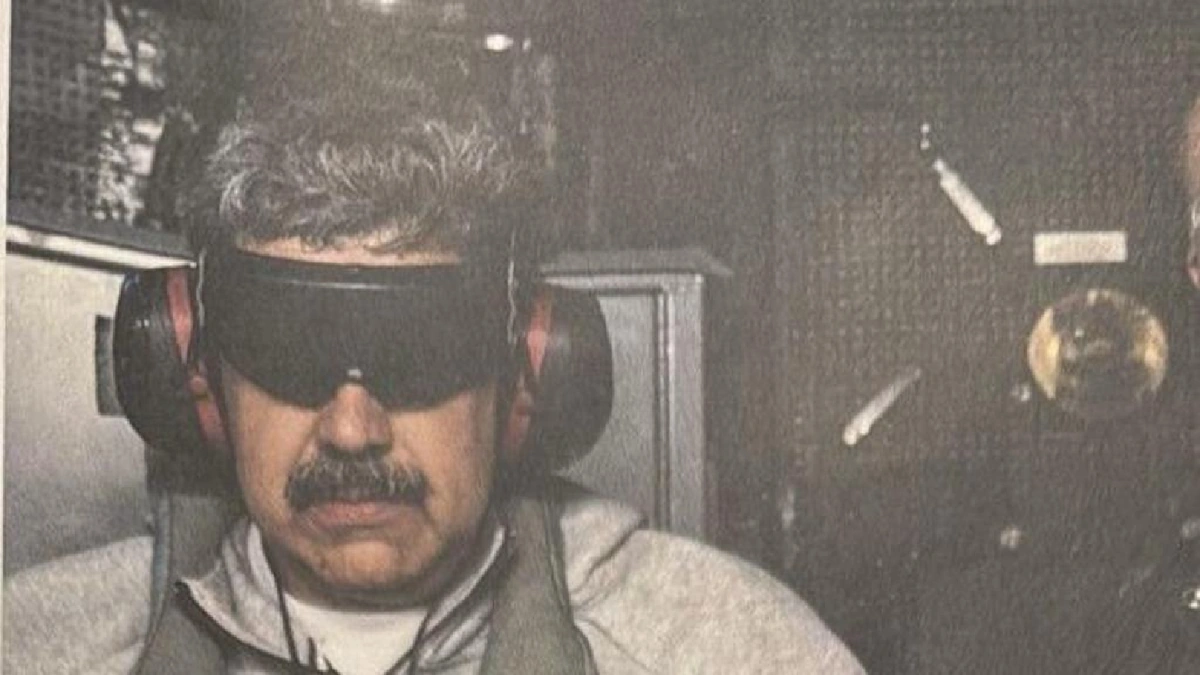
Maduro arrived in the US on Saturday night and was taken by helicopter to a convoy in New York before being placed under heavy guard at the Metropolitan Detention Center in Brooklyn. Images released by US authorities showed him handcuffed and blindfolded during transport and later being escorted at DEA offices, where he was heard wishing a “happy New Year.”
Indicted on multiple federal charges, including narco-terrorism conspiracy, Maduro is scheduled to make an initial appearance in Manhattan federal court on Monday, according to a Justice Department official.
Despite the operation, Maduro’s government remains largely in control inside Venezuela. Vice President Delcy Rodriguez appeared on national television on Saturday, calling the seizure a “kidnapping” and demanding the immediate release of Maduro and Flores. A Venezuelan court ordered Rodriguez to serve as interim president.
Trump did not specify who would lead Venezuela after US control ends, dismissing opposition figure Maria Corina Machado, whom he said lacked domestic support.
In Caracas, streets remained mostly calm, though soldiers patrolled some areas and small pro-Maduro gatherings were reported. Some residents expressed relief. “I’m happy, I doubted for a moment that it was happening because it’s like a movie,” said merchant Carolina Pimentel, 37, in Maracay.
Venezuelan migrants abroad celebrated the news. “We are free. We are all happy that the dictatorship has fallen,” said Khaty Yanez, a Venezuelan living in Santiago, Chile, one of an estimated 7.7 million citizens who have left the country since 2014.
The UN Security Council plans to meet on Monday to discuss the situation. Secretary-General António Guterres described the operation as “a dangerous precedent,” while Russia and China condemned the US. China’s foreign ministry said the action violates international law, Venezuela’s sovereignty, and regional peace and security.
Trump repeatedly linked the operation to Venezuela’s oil reserves, suggesting US intervention would be self-financing. His comments on a potential open-ended military presence echoed rhetoric from past US interventions in Iraq and Afghanistan, which ended after years of costly occupation.
The move has drawn criticism domestically. Democrats see it as an opportunity to challenge Trump ahead of the midterm elections, while some of his “America First” supporters oppose foreign interventions. Opinion polls show most voters remain more concerned about domestic issues, such as inflation, than foreign policy.
Related News
You may like




Tom Holland Says Marvel Has a Plan for the Next Spider-Man
August 1, 2026
Elected News
-

Bangladesh Seeks UN Women Support on Digital Harassment and Women’s Empowerment
-

Bangladesh, Australia Discuss Human Trafficking, Irregular Migration and Rohingya Crisis
-

Bangladesh Plans Internet-Free Access to Mobile Banking and Financial Apps
-

DU to Open Undergraduate Admission Applications on 11 November, Tests Begin 5 December


