Pompeii Excavation Reveals Secret of Roman “Self-Healing” Concrete
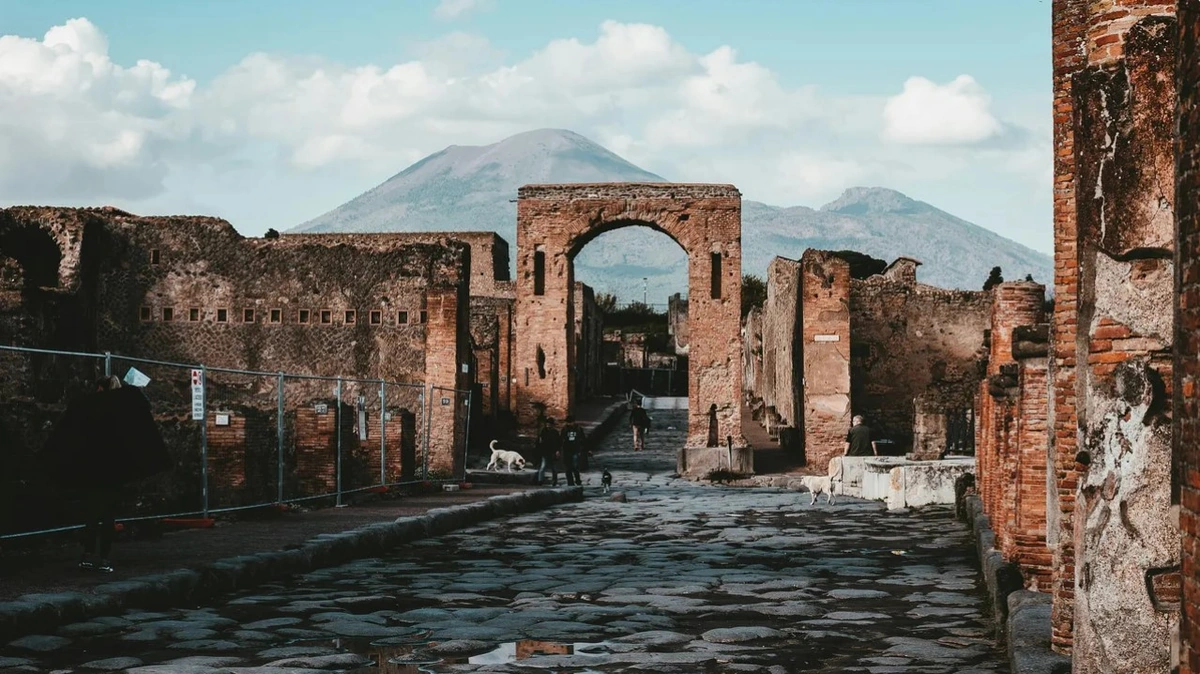
Archaeologists working at Pompeii have uncovered a construction site frozen in time from the eruption of Mount Vesuvius in 79 AD. The discovery has provided the clearest evidence yet of how ancient Romans made durable, self-healing concrete.
Scientists excavating the ruins of Pompeii in Italy have unearthed an extraordinary ancient construction site that was left intact by the catastrophic eruption of Mount Vesuvius in 79 AD, offering unprecedented insight into Roman building technology.
The site, part of a structure that was under renovation when the volcano struck, contains unfinished walls, piles of premixed dry materials, and tools for weighing and preparing concrete-frozen in place as if workers had just stepped away.
Researchers, led by engineers including Professor Admir Masic of MIT, say this discovery confirms how the Romans created a remarkably enduring form of concrete using a technique known as “hot mixing.” In this method, quicklime (heated limestone) and volcanic ash (pozzolan) were mixed dry before water was added, triggering a chemical reaction that produced a binder that could self-heal cracks over time.
Unlike prior theories based on ancient texts, this physical evidence shows that Romans didn’t simply combine slaked lime and ash; instead, the dry blending of ingredients before hydration helped create small reactive lime fragments that later dissolved and recrystallized, repairing micro-fractures in the concrete. This explains why many Roman structures have endured for millennia.
The findings, published in Nature Communications, not only shed light on ancient construction practices but may also inform future development of sustainable, long-lasting concrete inspired by this ancient technology.
The site, part of a structure that was under renovation when the volcano struck, contains unfinished walls, piles of premixed dry materials, and tools for weighing and preparing concrete-frozen in place as if workers had just stepped away.
Researchers, led by engineers including Professor Admir Masic of MIT, say this discovery confirms how the Romans created a remarkably enduring form of concrete using a technique known as “hot mixing.” In this method, quicklime (heated limestone) and volcanic ash (pozzolan) were mixed dry before water was added, triggering a chemical reaction that produced a binder that could self-heal cracks over time.
Unlike prior theories based on ancient texts, this physical evidence shows that Romans didn’t simply combine slaked lime and ash; instead, the dry blending of ingredients before hydration helped create small reactive lime fragments that later dissolved and recrystallized, repairing micro-fractures in the concrete. This explains why many Roman structures have endured for millennia.
The findings, published in Nature Communications, not only shed light on ancient construction practices but may also inform future development of sustainable, long-lasting concrete inspired by this ancient technology.
Related News




You may like




Tom Holland Says Marvel Has a Plan for the Next Spider-Man
August 1, 2026
Elected News
-
Bangladesh Seeks UN Women Support on Digital Harassment and Women’s Empowerment
-
Bangladesh, Australia Discuss Human Trafficking, Irregular Migration and Rohingya Crisis
-
Bangladesh Plans Internet-Free Access to Mobile Banking and Financial Apps
-
DU to Open Undergraduate Admission Applications on 11 November, Tests Begin 5 December


