Seven UAE Backed Separatists Killed By Saudi Strikes
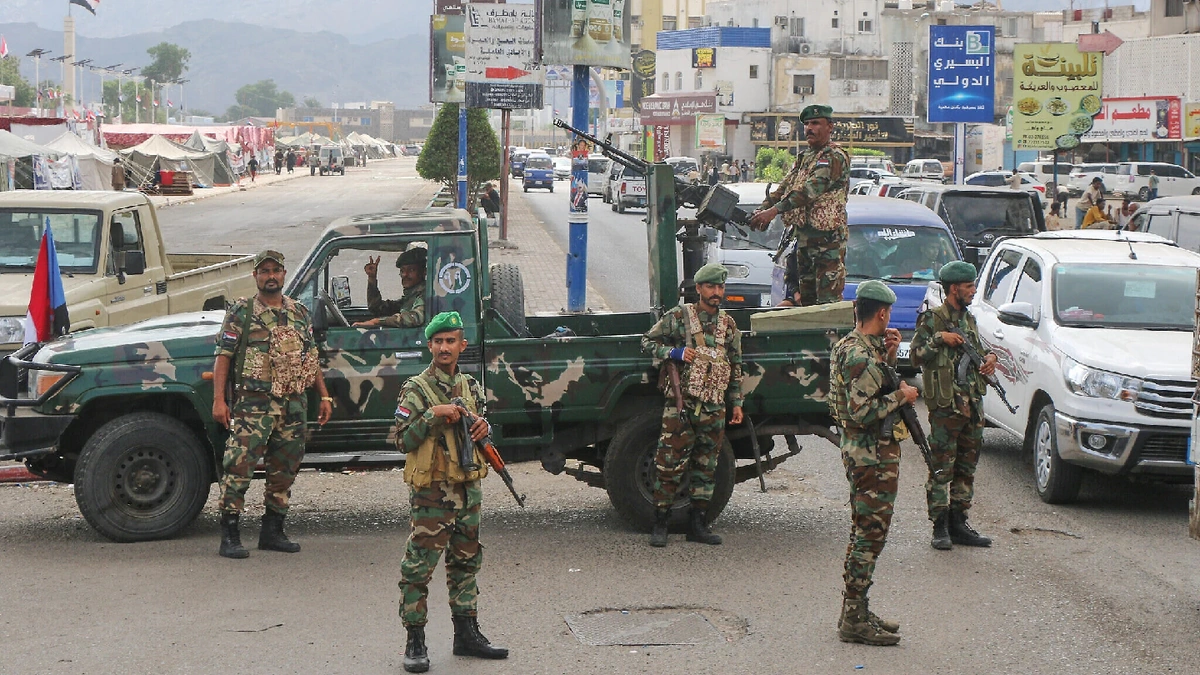
The deaths marked the first fatalities caused by Saudi-led coalition fire since the STC’s offensive last month.
At least seven members from Yemen’s Southern Transitional Council (STC) were killed after Saudi Arabia carried out air strikes on STC positions in the country’s southeast, the separatist group said yesterday.
According to Mohammed Abdulmalik, the STC’s leader in Wadi Hadhramaut and the Hadhramaut Desert, more than 20 others were injured when seven air raids struck a military camp in the al-Khasah area. Additional strikes were reported near an airport and a military installation in the city of Seiyun, in Hadhramaut province.
The air attacks came as Saudi-backed forces moved to regain territory seized by the STC during a rapid advance in December. Earlier on Friday, Hadhramout Governor Salem al-Khanbashi, who is supported by Riyadh, announced the launch of what he described as a “peaceful operation” aimed at retaking military sites captured by the separatists.
Local media quoted Khanbashi as saying the operation would avoid targeting political or social actors and would focus instead on the orderly transfer of military positions. Later in the day, he said government forces had taken control of the al-Khasah camp, the largest military base in the province.
Senior STC figures rejected Saudi Arabia’s description of the operation, accusing Riyadh of acting in bad faith. Amr al-Bidh, the group’s special representative for foreign affairs, said Saudi Arabia had misled the international community by speaking of de-escalation while simultaneously carrying out air strikes.
“These attacks began only minutes after claims of a peaceful operation were made,” Bidh said, adding that Saudi actions contradicted its stated intentions.
Saudi Arabia did not issue an official statement on the strikes, although Saudi sources confirmed the attacks to AFP. One source close to the Saudi military said operations would continue until the STC withdrew from two eastern governorates.
The deaths marked the first fatalities caused by Saudi-led coalition fire since the STC’s offensive last month.
Khanbashi has been granted broad military, security and administrative powers by Yemen’s Presidential Leadership Council (PLC), the internationally recognised government, to restore control in the east. He has also been placed in command of the “Homeland Shield” forces.
“The operation is not meant to escalate the conflict or declare war,” Khanbashi said, describing it as a security measure to prevent disorder.
Later on Friday, an STC military spokesperson told AFP that the group now considered itself engaged in a “decisive and existential” conflict with Saudi-backed forces.
The STC, which seeks the re-establishment of an independent southern Yemen, took control of large areas in early December, including parts of Hadhramout and al-Mahra provinces.
Southern Yemen has been governed for years by the PLC, an eight-member body that includes the STC and was initially backed by both Saudi Arabia and the United Arab Emirates. However, the council has been plagued by internal divisions, with roughly half its members aligned with the separatist cause.
Tensions escalated further on Friday when Saudi Arabia’s ambassador to Yemen, Mohammed al-Jaber, accused STC leader and PLC vice-president Aidarus al-Zubaidi of blocking a Saudi delegation from landing in Aden for de-escalation talks.
According to Jaber, Zubaidi ordered the closure of Aden airport, preventing the delegation’s arrival. Flight-tracking data showed no arrivals or departures at the airport for more than 24 hours.
The ambassador also accused Zubaidi of making unilateral decisions without consulting the PLC, including leading the military push into Hadhramout and al-Mahra, which he said caused security disruptions and frightened civilians.
Jaber said the STC leader bore responsibility for actions that harmed the interests of southern Yemenis and strained relations with Saudi Arabia.
The statement reflected a sharp escalation in Riyadh’s rhetoric against the STC. Earlier this week, Saudi Arabia struck a shipment in southern Yemen that it said originated from the UAE, directly criticising Abu Dhabi’s backing of the separatist group.
The Saudi foreign ministry later expressed disappointment with what it described as Emirati pressure on STC forces to conduct operations near Saudi Arabia’s southern border. The UAE rejected the claims, saying the Saudi statement contained significant inaccuracies.
Following a request from the head of the PLC, the Emirati defence ministry announced that its forces would withdraw from Yemen. While the UAE’s military presence in the country was limited, officials said the move was intended to support de-escalation efforts.
On Friday, the UAE confirmed that its remaining personnel had left Yemen, reiterating its call for reducing tensions and restoring stability.
Related News
You may like




Tom Holland Says Marvel Has a Plan for the Next Spider-Man
August 1, 2026
Elected News
-
Bangladesh Seeks UN Women Support on Digital Harassment and Women’s Empowerment
-
Bangladesh, Australia Discuss Human Trafficking, Irregular Migration and Rohingya Crisis
-

Bangladesh Plans Internet-Free Access to Mobile Banking and Financial Apps
-

DU to Open Undergraduate Admission Applications on 11 November, Tests Begin 5 December


