why Israel is worried about Trump potentially selling F‑35 jets to Saudi Arabia
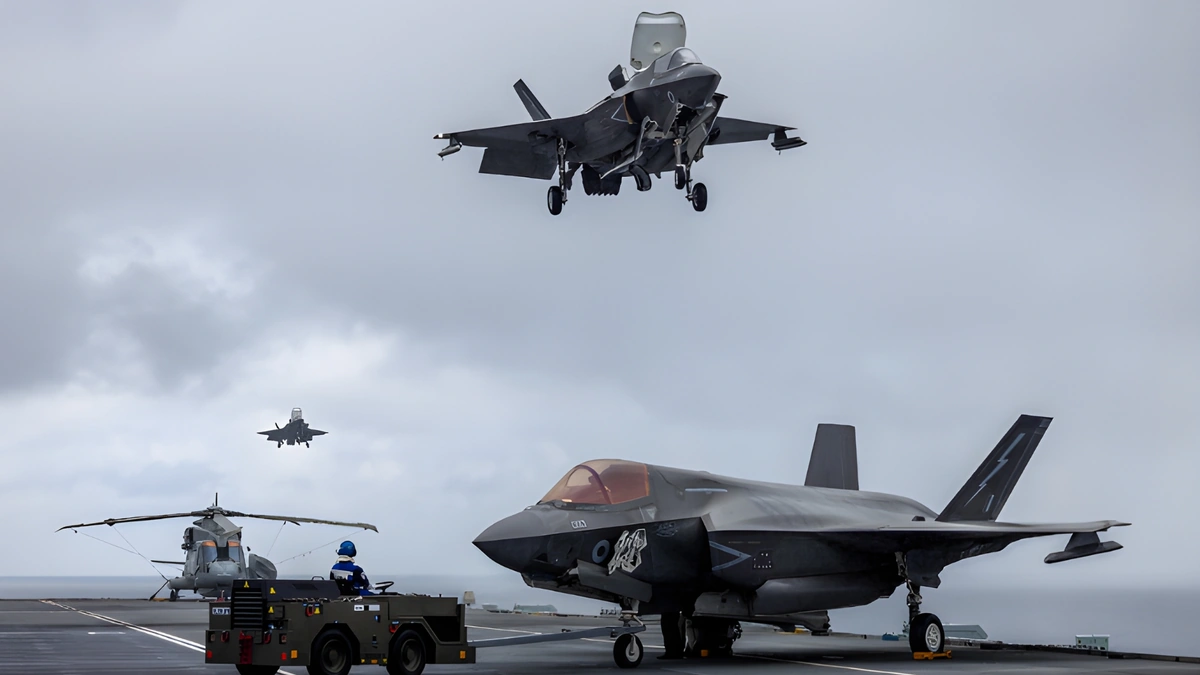
U.S. President Donald Trump said on Monday that he would approve the sale of F‑35 fighter jets to Saudi Arabia. This signals a shift in Washington’s policy on selling sensitive, high-tech weapons to Arab countries.
U.S. President Donald Trump is scheduled to meet Saudi Crown Prince Mohammed bin Salman at the White House on Tuesday.
On Monday, speaking to reporters at the White House, Trump said, “We are going to sell the F‑35. Yes, I plan to do it. They want to buy them. They are very good allies of ours.”
As part of the Abraham Accords, Trump has been working to persuade Saudi Arabia to formally normalize relations with Israel. It was in this context that he announced approval for the sale of advanced weaponry to Saudi Arabia, signaling a deepening of Washington’s ties with Riyadh. This move is being seen as a major diplomatic success for the Saudis.
Saudi officials, however, have stated that their country remains committed to the Arab Peace Initiative, which calls for the establishment of a sustainable Palestinian state as a precondition for recognizing Israel.
The potential arms sale has raised questions about Washington’s longstanding policy of maintaining Israel’s military edge. U.S. law requires that Israel retain superior military capabilities relative to its potential regional adversaries. Several Israeli officials have already expressed concerns over the proposed sale of F‑35 jets to Saudi Arabia.
The U.S. first adopted the policy of ensuring Israel’s qualitative military edge (QME) in 1968 under President Lyndon Johnson. President Ronald Reagan later formally recognized it. For more than four decades, U.S. arms sales in the Middle East have been guided by this policy, with every administration committed to preserving Israel’s regional superiority.
The F‑35 fighter jet, built by American defense and aerospace company Lockheed Martin, is considered the world’s most advanced combat aircraft. Its technology allows it to evade most existing air defense systems, making it extremely difficult to detect and shoot down.
Israeli critics warn that selling F‑35 jets to Saudi Arabia could undermine Israel’s longstanding regional military advantage. Former Israeli Defense Deputy Chief Yair Golan said the move could trigger an arms race in the Middle East and weaken Israel’s strategic position.
Israeli Prime Minister Benjamin Netanyahu has also faced criticism. Golan accused the government of being “prone to failure,” arguing that decades of superior military capability, which underpin Israel’s security, are at risk.
Israel’s National Security Minister Itamar Ben-Gvir emphasized that Israel must maintain its aerial superiority in the region. Speaking to a local newspaper, Ben-Gvir said, “We are in the Middle East, so we cannot afford any confusion. We extend our hand to genuine partners who do not harm Israel, but our superiority must be preserved.”
Trump’s F‑35 announcement, just before the Saudi crown prince’s White House visit, highlights efforts to deepen U.S.-Riyadh relations and forms part of the broader Trump administration Middle East policy.
Historically, Washington has addressed Israel’s concerns about regional arms sales by limiting sales to Arab states or providing Israel with advanced or additional military equipment. A sale of F‑35 jets to Saudi Arabia would mark the first time the U.S. has sold this aircraft to an Arab country.
Previously, in 2020, Trump approved the sale of F‑35 jets to the United Arab Emirates in exchange for Abu Dhabi agreeing to formal relations with Israel. However, after Joe Biden became U.S. president in 2021, Congress blocked that deal. U.S. law allows Congress to reject arms sales approved by the president and secretary of state.
Related News
You may like




Tom Holland Says Marvel Has a Plan for the Next Spider-Man
August 1, 2026
Elected News
-

Bangladesh Seeks UN Women Support on Digital Harassment and Women’s Empowerment
-

Bangladesh, Australia Discuss Human Trafficking, Irregular Migration and Rohingya Crisis
-

Bangladesh Plans Internet-Free Access to Mobile Banking and Financial Apps
-

DU to Open Undergraduate Admission Applications on 11 November, Tests Begin 5 December


