How risky is Adani’s power cut threat for Bangladesh?
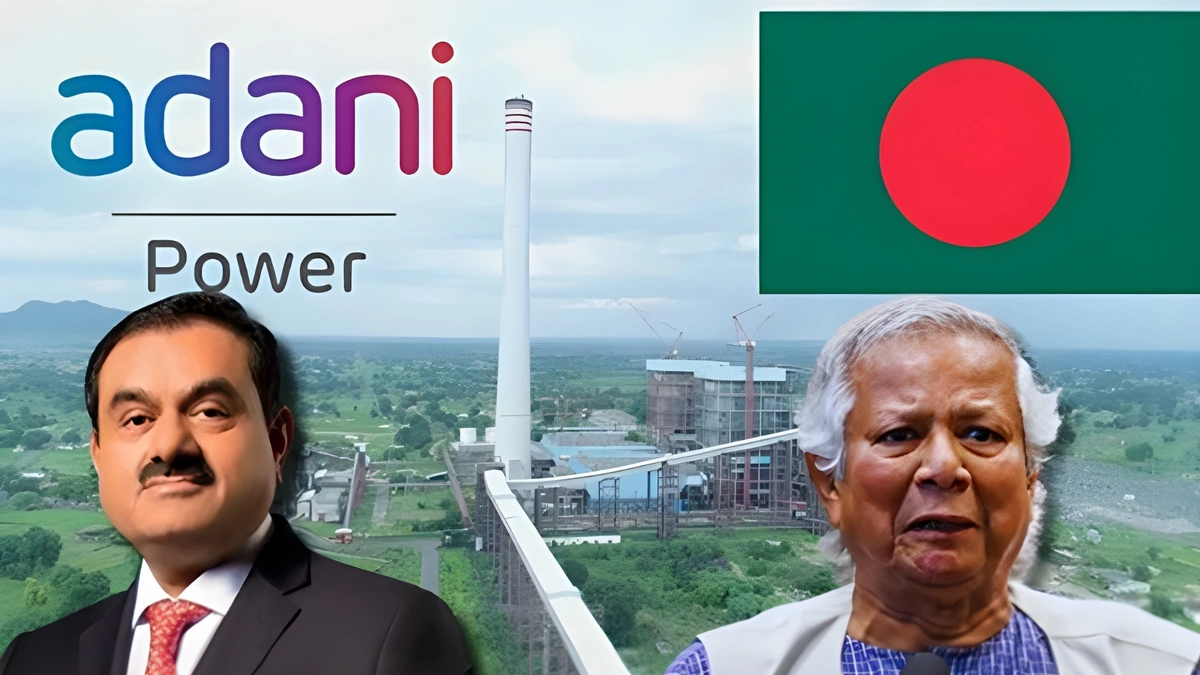
Despite having nearly double the power generation capacity needed to meet current demand, Bangladesh’s electricity sector is facing renewed questions about its reliability. This situation arose after India’s Adani Group threatened to cut electricity supply over unpaid bills.
After receiving a bill of 30 million dollars (3.66 billion Taka, assuming 1 USD = 122 Taka), Adani Power continued supplying electricity to Bangladesh. On Monday, Adani supplied 836 MW of electricity to the Power Development Board (PDB). However, a spokesperson for Adani told Jugantor that PDB currently owes Adani a total of 430 billion Taka (35 million USD) in regular, non-disputed bills, including interest. Earlier, on October 30, Adani had stated that the disputed bill amounted to 49.6 million USD.
On Monday evening, PDB Chairman Rezaul Karim told Jugantor: “A temporary solution has been reached. Let’s see what happens. No further comments can be made.” Meanwhile, an official from the Power Division said that, for some reason, the caretaker government wants to keep the matter confidential. Legal opinions are also being sought.
In a letter dated October 30, Adani Power warned that if the outstanding 26.2 million USD was not paid by November 10, electricity supply to Bangladesh would be cut off from November 11. During this period, Bangladesh would still have to pay capacity charges. After this letter, the Bangladesh government took action, holding repeated meetings within the Power Division and sending a strict notice to Adani stating that sudden cuts in supply would invite legal action.
On Tuesday, Adani Power’s spokesperson told Jugantor that the company wants to continue electricity supply in Bangladesh according to the terms of the power purchase agreement. They requested PDB to pay the outstanding bills on a priority basis to ensure uninterrupted supply.
It is reported that Adani is charging disputed bills through manipulation. PDB’s calculation of coal prices used at the plant is 65 USD per ton, while Adani charges 80 USD. Regularly, there is a 15–20 USD difference between the two accounts. Without resolving this dispute, Adani is demanding the full amount.
PDB noted that electricity demand is much lower during the winter. On hot summer days, demand exceeds 14,000 MW at noon, while on Tuesday, supply was around 11,200 MW, of which 836 MW came from Adani across the border at Godda.
Power officials said Bangladesh has become heavily dependent on Adani’s electricity because the company supplies 1,600 MW. If this supply is cut, domestic power plants would have to step in, but that would require running furnace-oil-based plants, where the cost per unit exceeds 26 Taka. By contrast, coal-based electricity costs only 13 Taka per unit.
Since the current caretaker government came to power, it has stated that all electricity contracts and bill payments will be scrutinized. Disputes arose with Adani over the higher coal price, and so far, 234 million USD is considered a disputed bill. Three months ago, Adani owner Gautam Adani secretly visited Bangladesh regarding this bill, meeting Power Secretary Farzana Momtaz and promising to waive the entire amount. Otherwise, he threatened to take the matter to international arbitration according to the contract.
Domestic power companies stated that after the threat to cut supply, 30 million USD was paid to Adani, while PDB owes local companies five to six months’ worth of unpaid bills that have accumulated over years, totaling around 4.5 trillion Taka.
Related News
You may like




Tom Holland Says Marvel Has a Plan for the Next Spider-Man
August 1, 2026
Elected News
-
Bangladesh Seeks UN Women Support on Digital Harassment and Women’s Empowerment
-

Bangladesh, Australia Discuss Human Trafficking, Irregular Migration and Rohingya Crisis
-
Bangladesh Plans Internet-Free Access to Mobile Banking and Financial Apps
-

DU to Open Undergraduate Admission Applications on 11 November, Tests Begin 5 December


