How to Protect Old Buildings from Earthquakes
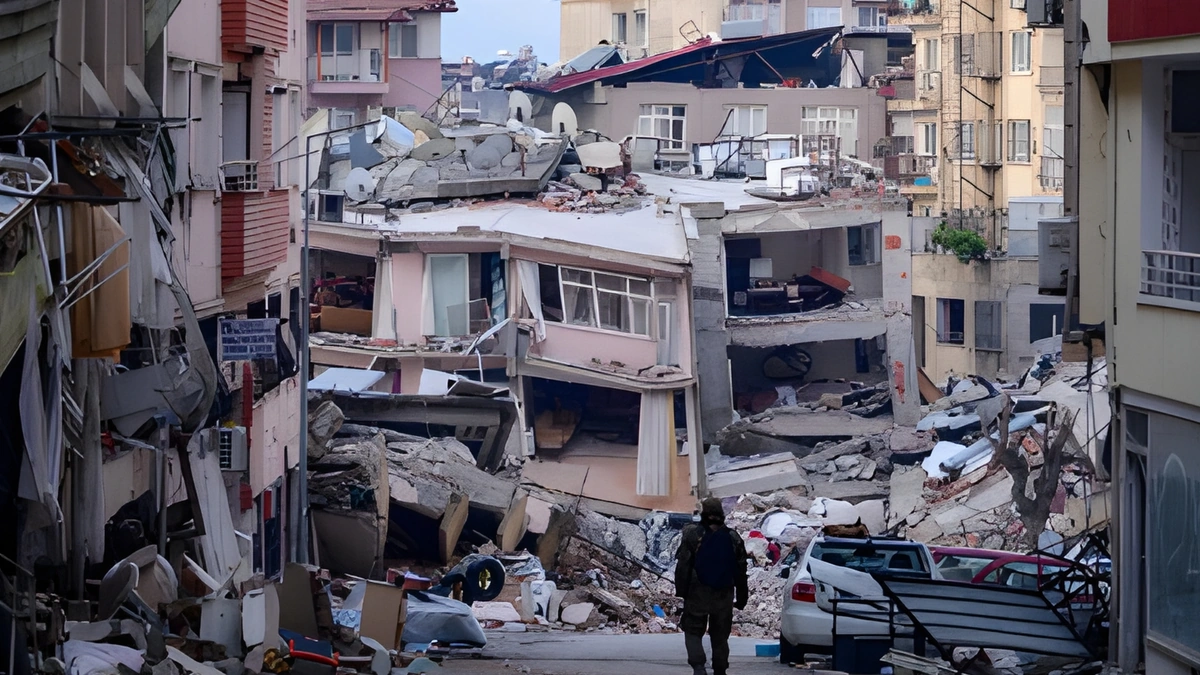
Earthquakes pose the greatest risk when there is unplanned urbanization and building codes related to seismic safety are not followed. The devastating losses seen in this year’s earthquakes in Turkey and Syria also highlighted these very issues.
Unplanned urbanization and failure to follow earthquake-related building codes are among the biggest risk factors during earthquakes. The devastating destruction caused by the Turkey–Syria earthquakes earlier this year highlighted exactly these issues.
A recent survey under RAJUK’s Urban Resilience Project has revealed how catastrophic a major earthquake could be for densely populated Dhaka city.
According to their assessment, an earthquake of magnitude 6.9 on the Madhupur Fault in Tangail could cause more than 850,000 structures-about 40% of all buildings in Dhaka-to collapse. The expected financial loss could exceed 25 billion US dollars, or more than 250,000 crore taka. Another scenario shows that a 7.1 magnitude earthquake on the Dauki Fault in Sylhet could cause nearly 41,000 buildings to collapse in Dhaka.
However, even if a building was not originally designed to be earthquake-resistant, engineers can still apply several methods to improve its resilience.
BUET civil engineering professor Dr. Mehedi Ahmed Ansary previously explained to BBC Bangla seven such technologies. Three of them are used for very tall buildings and are highly expensive, while the remaining four are for regular buildings.
Four Common Retrofitting Methods
These are the usual ways to strengthen an existing building against earthquakes, known as retrofitting. They may look simple, but without a qualified engineer, it is impossible to determine what measures are actually needed.
Engineers first cut into various sections of the building to examine its internal condition. After that, they choose the necessary reinforcement methods. Dr. Ansary provided visuals describing the following techniques:
1. Column Jacketing
This method reinforces the existing columns or pillars by making them thicker and stronger—essentially “putting a jacket” around them. Sometimes special materials are used.
2. Shear Wall
A shear wall is created by adding extra reinforcement and concrete next to existing columns to form a wall-like structure. It can be partial (as shown in the second example) or full (as in the third). Engineers must determine where these walls can be added.
3. Steel Bracing
A metal frame is installed between two columns to absorb seismic forces. It can be placed diagonally as well.
4. Wall Thickening
Here, the wall between two columns is made thicker using reinforcement and concrete to increase its strength.
Three Advanced Technologies Used in Developed Countries
1. TMD (Tuned Mass Damper)
Installed near the top of tall buildings, this system contains liquid-such as oil or water-or a heavy pendulum that moves opposite to the earthquake's motion and absorbs the shock.
Examples include the giant pendulum in Taiwan’s Taipei 101 tower.
No building in Bangladesh has used TMD technology yet.
2. Base Isolator
Base isolators are placed beneath a building to separate it from the foundation. During an earthquake, the bottom moves, but the upper structure remains relatively stable, reducing vibration transfer to the building.
This technology is commonly used in hospitals in developed countries.
While not used in Bangladeshi buildings yet, Jamuna Bridge does employ this technology.
3. BRB (Buckling-Restrained Braces)
A highly expensive technology, BRBs use steel and spring-like components that expand and contract during seismic activity. They absorb vibrations without transferring pressure to the building’s columns. These are mostly manufactured and used in the US and China.
However, all these advanced systems are extremely costly. Therefore, ensuring earthquake-resistant design before construction - considering soil conditions and seismic factors-is always the most practical and economical option.
Related News



You may like




Tom Holland Says Marvel Has a Plan for the Next Spider-Man
August 1, 2026
Elected News
-
Bangladesh Seeks UN Women Support on Digital Harassment and Women’s Empowerment
-
Bangladesh, Australia Discuss Human Trafficking, Irregular Migration and Rohingya Crisis
-
Bangladesh Plans Internet-Free Access to Mobile Banking and Financial Apps
-
DU to Open Undergraduate Admission Applications on 11 November, Tests Begin 5 December


