Minor tremors signal the possibility of a major earthquake
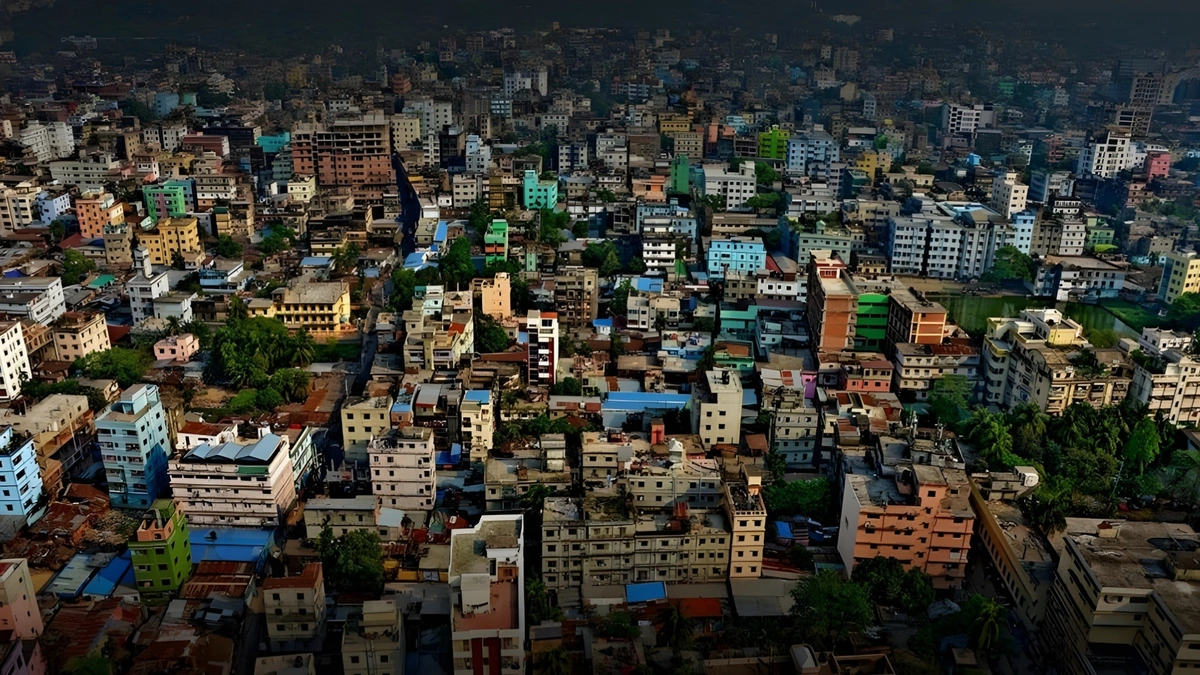
In a span of nearly 32 hours, four earthquakes occurred. Among the three earthquakes on that day, one originated in Narsingdi, while the other two originated in Badda, in the capital city Dhaka.
After the 5.7-magnitude earthquake on Friday, three more earthquakes struck Dhaka and its surrounding areas on Saturday morning and evening. These aftershocks could be a warning sign of a larger earthquake.
They explained that in geological terms, the energy of a large earthquake is concentrated in what is called a subduction zone. Current evidence suggests that Dhaka is close to such a zone. Furthermore, conditions beneath Dhaka are currently conducive to a major earthquake. According to these experts, the world’s largest and most destructive earthquakes typically occur in or near subduction zones. However, they emphasized that instead of panicking, people should focus on preparedness and not lose morale. At the same time, construction must be carried out in a way that buildings can withstand 7–8 magnitude earthquakes. Wide roads in front of houses are also crucial. Buildings constructed irregularly should be quickly identified, and appropriate measures must be taken.
The 5.7-magnitude earthquake on Friday morning has instilled a sense of fear among people in Dhaka and most parts of the country. Furthermore, within just 24 hours, four earthquakes occurred in a span of nearly 32 hours as aftershocks, heightening public anxiety. Many are now asking whether a major earthquake is imminent uncertain when a magnitude 6 or stronger earthquake might strike. Questions abound about how many buildings might collapse, how many lives could be lost, whether devastating fires could break out, and if hospitals, ambulances, and fire services could operate effectively. People are also questioning whether the buildings they live or work in are earthquake-resistant, and whether authorities like RAJUK or other government agencies have the modern equipment to measure structural resilience. Some individuals, recognizing the potential danger, are even considering which areas of the country might be safest during an earthquake.
Experts say the government should take stronger measures to raise public awareness and implement large-scale initiatives to boost confidence. This could include forming a national committee comprising well-known experts and organizing meetings and seminars. Particularly, buildings that are highly vulnerable to earthquakes must be identified and appropriate measures taken swiftly.
Regarding the impact of the four earthquakes in Dhaka and nearby Narsingdi within a span of 32 hours, Dr. Md. Anwar Hossain Bhuiya, professor of the Department of Geology at Dhaka University, said that Dhaka and several other districts in Bangladesh are at risk of major earthquakes. Bangladesh is located at the junction of three tectonic plates. On the eastern side, a part of the Indian Plate is subducting under the Burmese sub-plate, while to the north, the Indian Plate is subducting under the Eurasian Plate. Additionally, the Burmese sub-plate is part of the Eurasian Plate.
In the northern part of the Eurasian Plate, the Indian Plate subducts in one area, while in the eastern part of the Eurasian Plate called the Burmese sub-plate it also subducts. This downward movement is called subduction: the plate moving downward is the subducting plate, and the one on top is the overriding plate.
He added that the subduction zone, extending from Sylhet through Teknaf to Java and Sumatra, lies close to Dhaka. Chattogram and Sylhet are also near this zone. The world’s largest earthquakes occur in subduction zones, meaning several cities, including Dhaka, are at risk of a major earthquake. To the north lies the Dauki Fault, stretching from Netrokona through Sylhet into a large area of India. Two potential earthquake zones are very close to Bangladesh, and historical evidence shows that major earthquakes have occurred here.
He further noted that many faults exist near Madhupur and even the Shitalakkhya River is considered fault-controlled. Generally, earthquakes occur near subduction zones, so both historical evidence and physical causes for earthquakes exist here.
Dr. Mehedi Ahmed Ansari, professor of Civil Engineering at BUET and founding secretary of the Bangladesh Earthquake Society, that the minor to moderate earthquakes near Dhaka could be precursors to a major earthquake.
He said another minor earthquake occurred in Palash, Narsingdi on Saturday morning, followed by two in Badda, Dhaka, in the evening. Such small tremors are a bad sign and could be foreshocks of a larger earthquake. To determine if a major earthquake will occur, we need to observe for 2–3 more days. If several more foreshocks occur, it may indicate an impending large earthquake. In such a scenario, there is a risk of a magnitude 7 earthquake near Dhaka and its surroundings, although the likelihood will become clearer if minor earthquakes continue in the coming days.
Dr. Syed Humayun Akhtar, earthquake expert and former professor of the Department of Geology at Dhaka University, told that these small earthquakes have created panic and are affecting mental health. Many people were already traumatized by Friday’s earthquake. He explained that the main sources of earthquakes to the east and north of Dhaka are subduction zones, particularly the Dauki Fault. Earthquakes occurring here would cause maximum damage in Dhaka. While a major earthquake might not directly strike central Dhaka, multiple small to moderate tremors in the same zone could still inflict significant damage.
Related News
You may like




Tom Holland Says Marvel Has a Plan for the Next Spider-Man
August 1, 2026
Elected News
-

Bangladesh Seeks UN Women Support on Digital Harassment and Women’s Empowerment
-

Bangladesh, Australia Discuss Human Trafficking, Irregular Migration and Rohingya Crisis
-

Bangladesh Plans Internet-Free Access to Mobile Banking and Financial Apps
-
DU to Open Undergraduate Admission Applications on 11 November, Tests Begin 5 December


