Sheikh Hasina sentenced to death by the tribunal she created
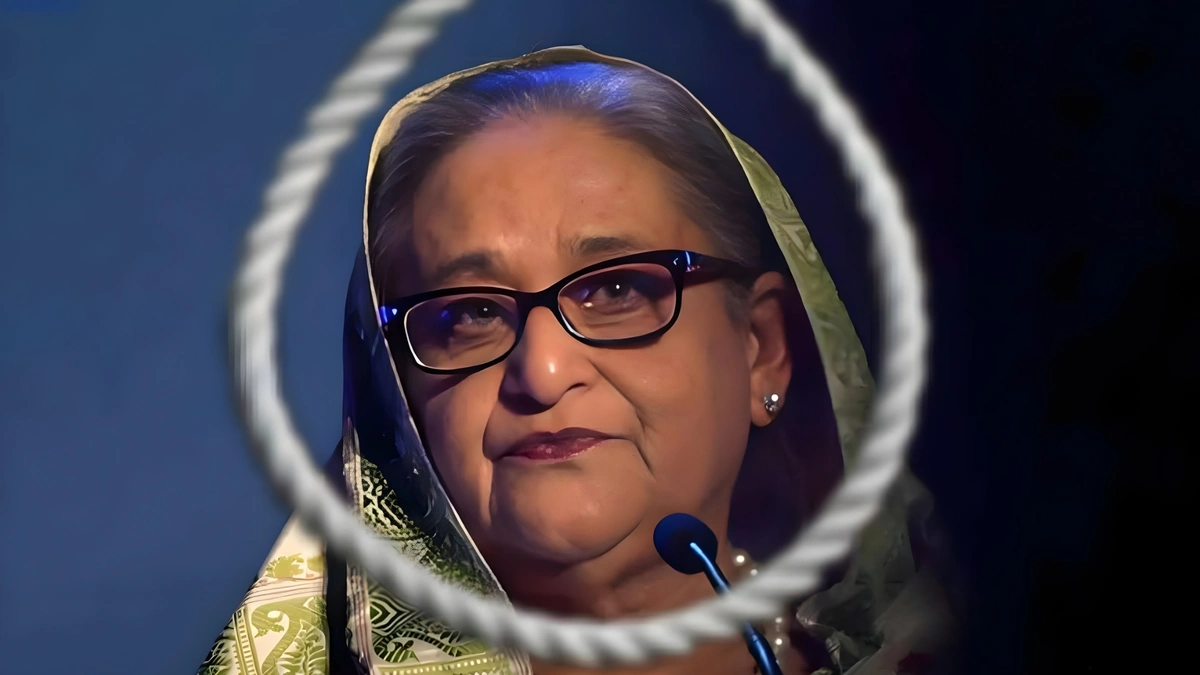
The International Crimes Tribunal was created by former prime minister Sheikh Hasina after she was removed from power. It was established with the aim of trying the war criminals of 1971. Today, that very tribunal she founded has delivered a death sentence against the autocratic ruler Sheikh Hasina.
The three-member International Crimes Tribunal-1, headed by Justice Golam Martuza Mozumdar, delivered this significant verdict. The other two members of the tribunal are Justice Md. Shafiul Alam Mahmood and Judge Md. Mohitul Haque Enam Chowdhury.
The two other accused in this case are the former home minister of the fallen Awami League government, Asaduzzaman Khan Kamal, and former IGP Chowdhury Abdullah Al-Mamun.
In this crimes-against-humanity case, former home minister Asaduzzaman Khan Kamal has also been sentenced to death. Meanwhile, as a state witness, the other accused, IGP Abdullah Al-Mamun, has been sentenced to five years in prison. He was present in the tribunal during the pronouncement of the verdict.
During the mass uprising last July, more than 1,500 students and civilians were killed by gunfire from police forces and the cadres of the Awami League and its affiliated organizations. Among the dead were more than 30 children. Some of these children were killed while playing on the streets, some while standing on rooftops, and others were shot and killed inside their homes.
Not only in the government’s official records and investigations, but also in the UN’s extensive inquiry and its published report, the picture of this genocide in Bangladesh has been documented.
It was also revealed that during the mass uprising, former prime minister Sheikh Hasina and former home minister Asaduzzaman Khan Kamal directly ordered security forces to fire on unarmed students and civilians. Acting on those orders, the then–IGP Chowdhury Abdullah Al-Mamun carried them out. Bullets rained down like showers, and bodies fell by the hundreds on roads across the country.
A video from that time went viral on social media. In it, a police officer in Dhaka is seen showing a video on his phone to then–home minister Kamal and saying: “Sir, when we shoot, one falls but the rest don’t. And that, sir, is very frightening.”
This incident created an uproar nationwide. In the midst of it, internet services were shut down. A genocide was carried out while keeping the entire country in darkness. Countless parents lost their children, many children lost their fathers, and hundreds of women were widowed.
At last, on 5 August last year, the Awami League government fell amid the mass uprising of students and citizens. The autocratic ruler Sheikh Hasina was forced to flee to India. She has been in Delhi for the past 15 months. Meanwhile, a death sentence has now been pronounced against her back in Bangladesh.
The International Crimes Tribunal that sentenced Sheikh Hasina to death had issued its first charge sheet in 2010. In the more than 15 years since, the tribunal has delivered verdicts in a total of 57 cases related to crimes against humanity committed in 1971.
Among these, after all legal procedures, six executions were carried out five of whom were senior leaders of Jamaat-e-Islami and one from the BNP.
After the fall of the Hasina government last year, the interim government reconstituted the International Crimes Tribunal to try crimes against humanity committed during the July mass uprising. Along with Hasina, influential leaders, ministers, and bureaucrats from her administration are also on trial.
Related News


You may like




Tom Holland Says Marvel Has a Plan for the Next Spider-Man
August 1, 2026
Elected News
-
Bangladesh Seeks UN Women Support on Digital Harassment and Women’s Empowerment
-

Bangladesh, Australia Discuss Human Trafficking, Irregular Migration and Rohingya Crisis
-

Bangladesh Plans Internet-Free Access to Mobile Banking and Financial Apps
-
DU to Open Undergraduate Admission Applications on 11 November, Tests Begin 5 December


