Soft-Shell Crab Farming Emerges as ‘New Gold’ for Sundarbans Coast, Boosting Exports and Livelihoods
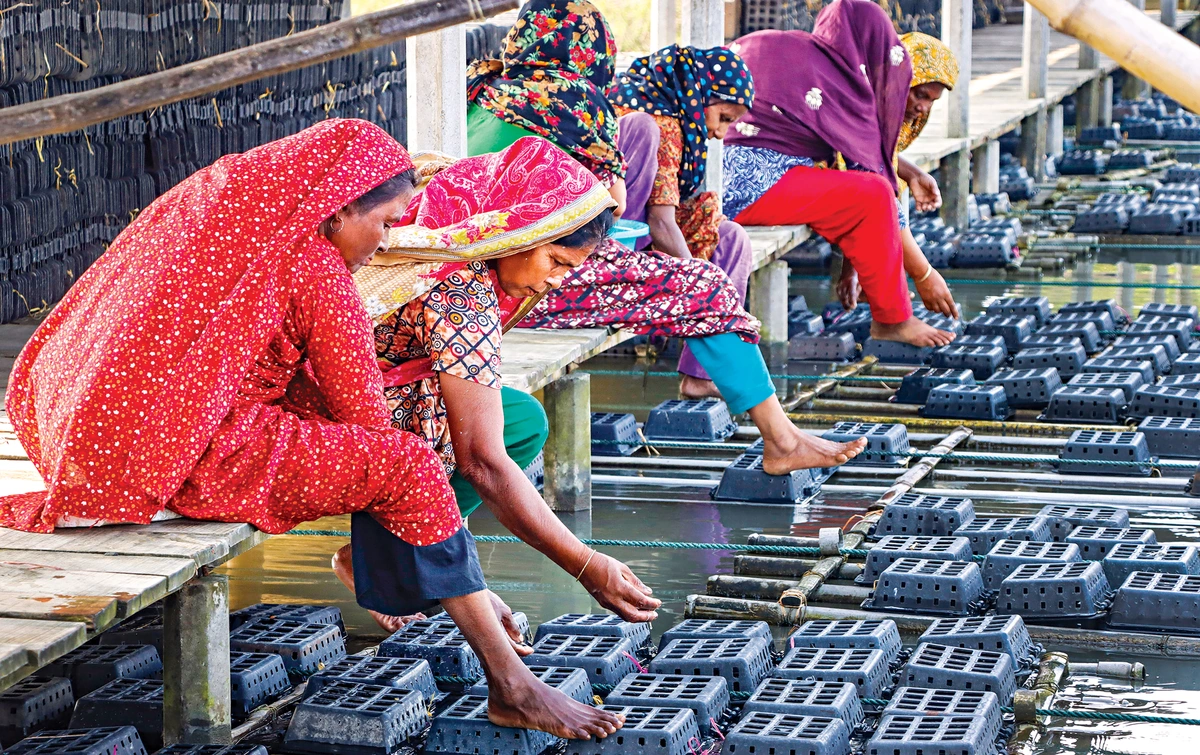
What began as a small experiment in 2014 has grown into a major export-driven industry, transforming livelihoods along Bangladesh’s Sundarbans coast while creating new opportunities for women and youth.
Commercial soft-shell crab farming along Bangladesh’s coastal belt began in 2014, initially expanding at a slow pace due to limited technical knowledge and lack of capital. The situation changed when non-governmental organisations stepped in with training, technical guidance, and small-scale financial support, helping farmers adopt intensive cage-based cultivation methods.
Today, the sector supports at least 30,000 people directly in Satkhira, with Shyamnagar emerging as the national hub. The number of commercial crab enclosures there has surged from just 10 in 2014 to around 870, spread across approximately 220 hectares. Coastal villages such as Datinakhali, Arpangasia, Burigoalini and Munshiganj are now lined with floating plastic cages, visibly reshaping the rural landscape.
The industry’s labour demand is high and socially significant. Women form a large share of the workforce, especially in harvesting, cleaning, and processing crabs. Many unemployed young people have also entered the sector, investing small amounts of capital to set up cage-based operations, making crab farming one of the most inclusive coastal livelihoods in the region.
Biswanath Mondol, owner of Bhai Bhai Agro Crab Fisheries near the Sundarbans, started soft-shell crab farming in 2017 on 20 bighas of land. He now operates about 55,000 cages.
“Everything is manageable,” he said, “except the shortage of crab seed.”
Mondol explained that crabs weighing around 100 grams are collected locally and fattened for 18 to 20 days using small pieces of tilapia fish. “After moulting, when each crab reaches about 150 grams, they are sold to exporter Farid Nine Star Agro BD Limited,” he said.
His farm employs around 25 full-time workers, who check the cages six times a day to ensure timely harvesting. “Preparing 1,000 boxes requires an investment of about Tk 2 lakh, covering pond excavation, lime, boxes, pipes, ropes and bamboo,” he added.
Price variations depend on size. Crabs weighing 51–79 grams sell for about Tk 800 per kg, while those weighing 91–150 grams fetch up to Tk 1,300 per kg.
“Tilapia is the sole feed,” Mondol said. “We buy it at Tk 80–90 per kg, cut it into small pieces, and feed the crabs before 2pm, three days a week.”
Another farmer, Abdullah Al Kayum Abu, highlighted rising input costs as a major concern. “Earlier, crab seed cost Tk 100 per kg. Now it has increased to Tk 300–400,” he said.
Explaining the soft-shell process, he added: “Hard-shell crabs are prepared by cutting their limbs and placing them in saline water. Within three hours, they moult and become soft-shell crabs. If they are not collected within that window, they harden again.”
The price difference is stark. “Hard-shell crabs sell for Tk 250–350 per kg, while soft-shell crabs fetch Tk 800–1,000 per kg,” he said.
As exports to Europe and North America continue to grow, soft-shell crab farming is increasingly viewed as the ‘new gold’ of Bangladesh’s coast-though farmers and experts warn that seed scarcity and sustainability challenges must be addressed to secure the industry’s future.
Today, the sector supports at least 30,000 people directly in Satkhira, with Shyamnagar emerging as the national hub. The number of commercial crab enclosures there has surged from just 10 in 2014 to around 870, spread across approximately 220 hectares. Coastal villages such as Datinakhali, Arpangasia, Burigoalini and Munshiganj are now lined with floating plastic cages, visibly reshaping the rural landscape.
The industry’s labour demand is high and socially significant. Women form a large share of the workforce, especially in harvesting, cleaning, and processing crabs. Many unemployed young people have also entered the sector, investing small amounts of capital to set up cage-based operations, making crab farming one of the most inclusive coastal livelihoods in the region.
Biswanath Mondol, owner of Bhai Bhai Agro Crab Fisheries near the Sundarbans, started soft-shell crab farming in 2017 on 20 bighas of land. He now operates about 55,000 cages.
“Everything is manageable,” he said, “except the shortage of crab seed.”
Mondol explained that crabs weighing around 100 grams are collected locally and fattened for 18 to 20 days using small pieces of tilapia fish. “After moulting, when each crab reaches about 150 grams, they are sold to exporter Farid Nine Star Agro BD Limited,” he said.
His farm employs around 25 full-time workers, who check the cages six times a day to ensure timely harvesting. “Preparing 1,000 boxes requires an investment of about Tk 2 lakh, covering pond excavation, lime, boxes, pipes, ropes and bamboo,” he added.
Price variations depend on size. Crabs weighing 51–79 grams sell for about Tk 800 per kg, while those weighing 91–150 grams fetch up to Tk 1,300 per kg.
“Tilapia is the sole feed,” Mondol said. “We buy it at Tk 80–90 per kg, cut it into small pieces, and feed the crabs before 2pm, three days a week.”
Another farmer, Abdullah Al Kayum Abu, highlighted rising input costs as a major concern. “Earlier, crab seed cost Tk 100 per kg. Now it has increased to Tk 300–400,” he said.
Explaining the soft-shell process, he added: “Hard-shell crabs are prepared by cutting their limbs and placing them in saline water. Within three hours, they moult and become soft-shell crabs. If they are not collected within that window, they harden again.”
The price difference is stark. “Hard-shell crabs sell for Tk 250–350 per kg, while soft-shell crabs fetch Tk 800–1,000 per kg,” he said.
As exports to Europe and North America continue to grow, soft-shell crab farming is increasingly viewed as the ‘new gold’ of Bangladesh’s coast-though farmers and experts warn that seed scarcity and sustainability challenges must be addressed to secure the industry’s future.
Related News


You may like




Tom Holland Says Marvel Has a Plan for the Next Spider-Man
August 1, 2026
Elected News
-
Bangladesh Seeks UN Women Support on Digital Harassment and Women’s Empowerment
-
Bangladesh, Australia Discuss Human Trafficking, Irregular Migration and Rohingya Crisis
-
Bangladesh Plans Internet-Free Access to Mobile Banking and Financial Apps
-
DU to Open Undergraduate Admission Applications on 11 November, Tests Begin 5 December


