NATO member states debate AI integration and sovereignty at Izmir summit
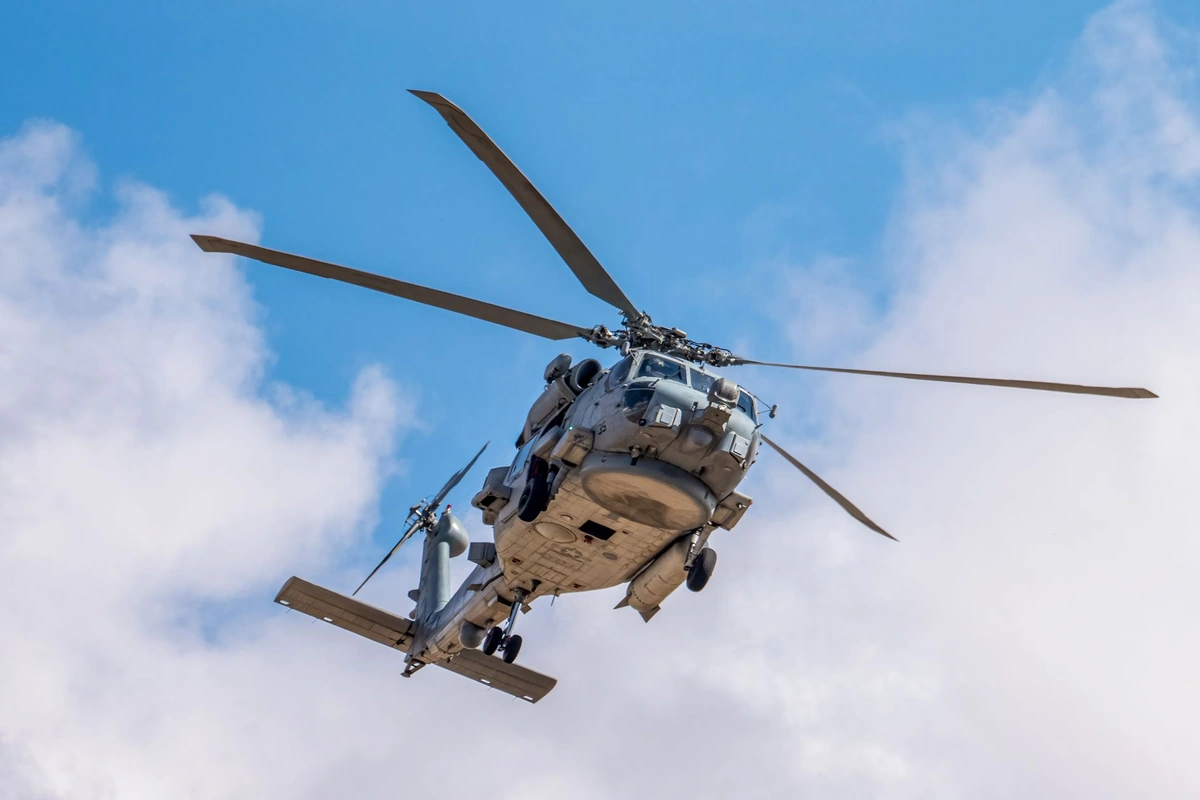
Military leaders and defense experts from NATO's 32 member states and Ukraine gathered in Izmir, Turkey, for the NATO Edge conference. Discussions centered on the complex dilemma of integrating high technology and artificial intelligence from private companies while preserving national sovereignty.
Military leaders, government officials, and defence experts from NATO's 32 member states and Ukraine gathered in Izmir, Turkey, this week for the NATO Edge conference. The three-day event focused on the rapid integration of high technology, artificial intelligence, and digital warfare into modern armed forces. Discussions centered on the complex dilemma of entrusting critical military infrastructure and data to private companies while maintaining national sovereignty and defence secrecy.
The rapid integration of high tech into the armed forces presents a tricky dilemma for modern defense establishments. On one side are digital and mission-critical technology specialists driven by market forces and controlled by private capital demanding profits, operating independently from political control. On the other side are military leaders who answer only to political authority and remain focused on strategy, hierarchy, and the sacrosanct nature of defence secrecy.
Between these two opposing forces lies the race to connect the battlefield. From troop coordination to real-time terrain analysis, modern operations generate terabits of data that can decide a war's outcome and the fate of many lives. Beyond the even more complex issue of autonomous weapons systems often referred to as killer robots, a stark example of the defense challenge is found in the civilian Starlink satellite network and its military counterpart, Starshield.
Ukraine has desperately needed these systems since Russia's invasion in 2022. Kyiv has faced restrictions on access to Starshield, which is owned by Elon Musk's SpaceX, leaving a constant threat hanging over the nation's armed forces. Musk has shifted his stance on Ukraine many times, insisting that any disruption regarding the service was the responsibility of Washington, rather than SpaceX.
The broader implications of relying on commercial providers loomed heavily over the proceedings in Izmir. Tom Barton, an analyst with intelligence firm Janes, told AFP that the issue of working with private companies is a difficult one that many ministries of defence are actively grappling with. Barton explained that for private companies to deliver the so-called networked battlefield, some access ideally needs to be given to confidential data.
From space to land-based sensors and military communications, defence establishments are experimenting with standalone exercises and varying levels of trust and access. Without proper safeguards, however, militaries cannot simply entrust their fate to developers who are often focused primarily on civilian needs and commercial expansion. The tension between public security mandates and private commercial interests remains a central hurdle for military planners.
A US company representative speaking to AFP on condition of anonymity noted that there is a significant amount of advocacy for the military and government to have a closer relationship with industry. At the same time, the representative pointed out that there is a fine line to walk, citing unpredictable actions by commercial figures that can complicate active conflict zones. With boundaries constantly shifting, military leaders have little choice but to compromise, accepting that absolute sovereignty over every technological component may be unrealistic as long as they remain sovereign enough.
Major General Rainer Beeck, one of NATO's top cyberspace commanders, described the situation as a hard nut to crack during the conference sessions. He stated that military leaders have to make deliberate choices about which classification to apply to specific data and infrastructure. The core problem, according to Beeck, ultimately boils down to trust and establishing secure operational boundaries with commercial suppliers.
Admiral Pierre Vandier, NATO's Supreme Allied Commander Transformation, likewise insisted that trust is the single most important element in modern military architecture. Vandier emphasized the need for absolute trust in architecture, data sharing, AI agents, and decision-making tools. He added that military organizations need to close the fighter-factory gap, noting that Ukraine successfully achieved this during active combat operations.
Nearly five years of war have given Kyiv more operational experience than anyone else within the NATO alliance. The dynamics of technological integration also vary significantly according to the size of national defence budgets among member states. For large powers, data collection is generally not the primary problem, as military leaders note that they would receive necessary data if a war started, though the underlying issue is that organizing it at that stage would be too late.
By contrast, smaller governments face entirely different logistical hurdles and must build up their capacity accordingly. Mitch Free, vice president of international government at Vantor, which provides satellite imagery for defence and intelligence agencies, explained the constraints smaller nations face. Many smaller governments may only own a handful of satellites and must carefully weigh their intelligence value against the substantial cost of building and operating them, making commercial partnerships essential to fill the gap.
Ultimately, the real debate at the summit centered on the best way to utilize artificial intelligence across allied operations. Jean-Charles Ellermann-Kingombe, NATO's cyber and digital transformation chief, stated that the bottleneck is frequently not the technology itself, but rather permission, classification boundaries, national rules, and trust decisions. He added that the alliance must make AI adoption possible at scale, ensuring these capabilities are secure, interoperable, and deployable within NATO infrastructure by personnel who fully understand both their value and their limitations.
You may like

UGDP review: 91.88% of 29,257 medical items in 158 upazilas operational
November 23, 2026

Liverpool beat 10-man Manchester United 4-0 in Pochettino debut
November 23, 2026

BCB plans free cricket training academies in cities outside Dhaka
November 23, 2026

NRBC Bank signs Tk 2,000 crore deal to support leather industry
November 23, 2026
Elected News
-

Bangladesh Seeks UN Women Support on Digital Harassment and Women’s Empowerment
-

Bangladesh, Australia Discuss Human Trafficking, Irregular Migration and Rohingya Crisis
-

Bangladesh Plans Internet-Free Access to Mobile Banking and Financial Apps
-

DU to Open Undergraduate Admission Applications on 11 November, Tests Begin 5 December


