Bangladesh Begins Construction of First Ocean Research Vessel for Bay of Bengal Exploration
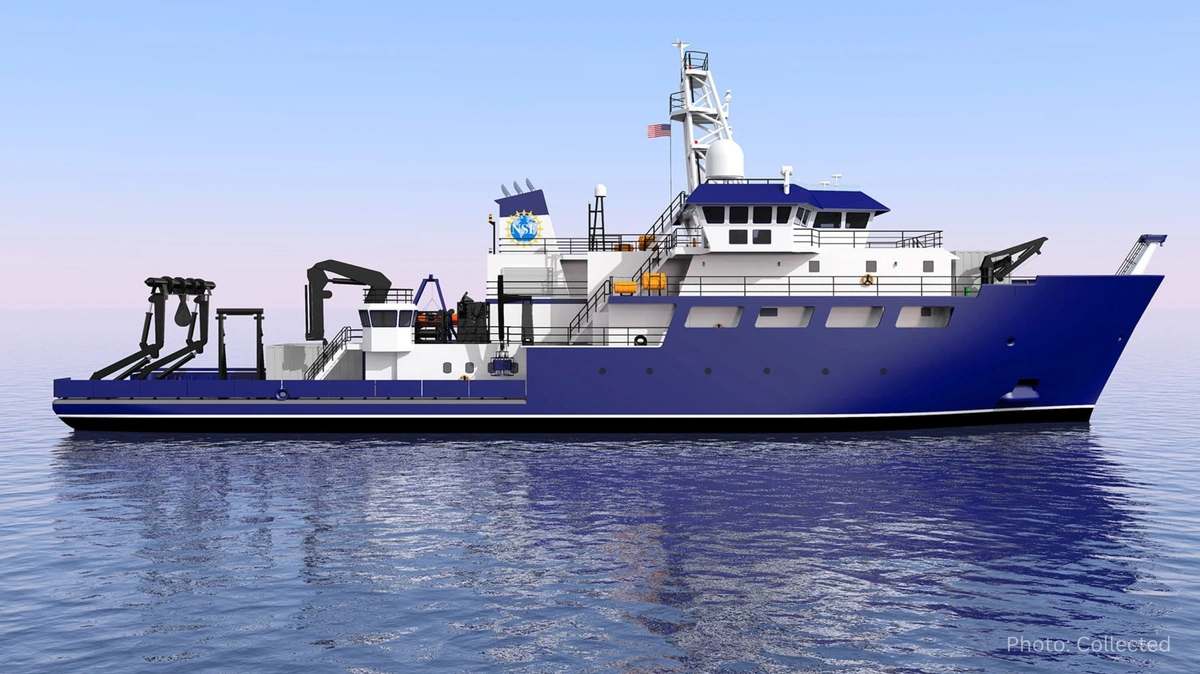
Bangladesh has started building its first indigenous oceanographic research vessel, a landmark project expected to strengthen marine research, unlock blue economy opportunities and enable deep-sea exploration in the Bay of Bengal by 2028.
Bangladesh has taken a major step toward expanding its marine research capabilities with the construction of the country's first oceanographic research vessel, a project that is expected to transform scientific exploration of the Bay of Bengal and support the nation's long-term blue economy ambitions.
The vessel is currently under construction at Khulna Shipyard Limited and is scheduled to be completed by 2028. Once operational, it will provide Bangladeshi scientists with the country's first dedicated platform for conducting deep-sea research, replacing the small fishing boats currently used for coastal data collection.
Designed by UK-based marine engineering firm Keel Marine, the research vessel will measure 32 metres in length, with an 8-metre beam and a 4-metre draught. Scientific equipment and research instruments are being sourced from several European countries and China to equip the ship with advanced oceanographic capabilities.
The vessel will have a maximum speed of approximately 14 miles per hour and will be fitted with state-of-the-art laboratories, scientific sensors and satellite communication systems. Researchers will use the platform to study marine biodiversity, seabed geology, deep-sea mineral resources, fisheries, ocean circulation and the impacts of climate change across the Bay of Bengal.
Construction officially began on June 16 at Khulna Shipyard, marking a significant milestone for Bangladesh's marine science sector. The project is being implemented under the Bangladesh Oceanographic Research Institute (BORI), which has long faced limitations due to the absence of a dedicated research vessel.
BORI Director General Commodore Sheikh Shahid Ahmed said the institute's existing research activities are largely confined to surface-level observations, preventing scientists from examining deeper ocean environments. He noted that Bangladesh still has limited scientific knowledge about its own marine territory despite possessing extensive sovereign waters in the Bay of Bengal.
Bangladesh secured sovereign rights over more than 118,800 square kilometres of maritime territory following international legal rulings in maritime boundary disputes with Myanmar and India in 2012 and 2014. The maritime zone is nearly equal in size to the country's land area, making it a significant national resource.
Although the Bangladesh Oceanographic Research Institute was established in Cox's Bazar in 2016, limited research infrastructure has slowed efforts to fully explore the country's marine resources and blue economy potential.
The new vessel is expected to change that by enabling comprehensive scientific surveys of offshore ecosystems. Researchers will be able to identify fish populations and migration patterns, monitor marine biodiversity, investigate seaweed resources and assess the sustainability of fisheries throughout the Bay of Bengal.
In addition to biological studies, the ship will conduct seabed mapping, geological exploration, water column analysis, environmental monitoring and climate-related research. It will feature three specialized onboard laboratories a wet laboratory, a dry laboratory and a data analysis laboratory allowing scientists to examine collected samples immediately while remaining at sea.
The vessel will accommodate up to 23 scientists and crew members and will support continuous research missions lasting between eight and ten days. Satellite communication systems will also enable researchers to transmit scientific data directly to shore-based research centres in real time.
Despite its advanced capabilities, officials acknowledge that the vessel's relatively compact size will limit operations during rough weather conditions, restricting deep-sea research activities to approximately three or four months each year.
The broader Tk 160 crore project also includes the construction of two high-speed cabin boats, a 36-metre pontoon, a 250-metre jetty and a gangway, all of which will be established in the Maheshkhali Channel area of Cox's Bazar to support marine research operations.
Khulna Shipyard Limited, operated by the Bangladesh Navy, has built more than 800 vessels and completed repairs on over 2,500 ships since its establishment. Managing Director Rear Admiral Maksud Alam described the research vessel as one of the shipyard's most significant projects, noting that previous Bangladeshi research vessels had been constructed overseas.
Officials believe the new oceanographic vessel will significantly strengthen Bangladesh's scientific capacity, generate valuable data on marine ecosystems and natural resources, and support evidence-based policymaking as the country seeks to unlock the economic potential of the Bay of Bengal while promoting sustainable management of its maritime resources.
Related News





You may like




Tom Holland Says Marvel Has a Plan for the Next Spider-Man
August 1, 2026
Elected News
-
Bangladesh Seeks UN Women Support on Digital Harassment and Women’s Empowerment
-
Bangladesh, Australia Discuss Human Trafficking, Irregular Migration and Rohingya Crisis
-
Bangladesh Plans Internet-Free Access to Mobile Banking and Financial Apps
-
DU to Open Undergraduate Admission Applications on 11 November, Tests Begin 5 December


