Afghanistan Mourns First Astronaut Abdul Ahad Mohmand, Pioneer Who Carried the Quran into Space
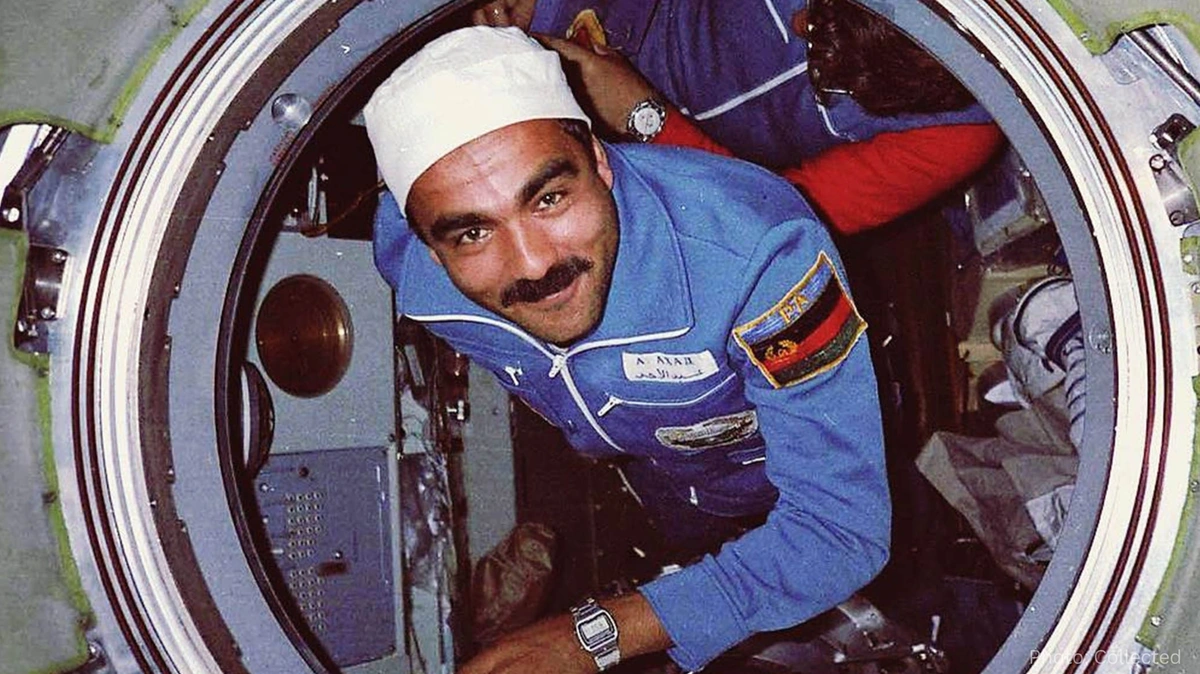
Abdul Ahad Mohmand, Afghanistan's first and only astronaut, has died at the age of 67 in Germany after battling cancer. Remembered as the first person to carry the Holy Quran into space and the first Afghan to travel beyond Earth's atmosphere, Mohmand leaves behind a lasting legacy in science, exploration, and national history.
Afghanistan is mourning the loss of one of its most celebrated scientific figures following the death of Abdul Ahad Mohmand, the country's first and only astronaut. Mohmand passed away at the age of 67 in Stuttgart, Germany, after a prolonged battle with cancer, bringing to a close the life of a man whose historic journey into space became a lasting symbol of Afghan achievement.
Mohmand made history in 1988 when he became the first Afghan citizen to travel into space, joining the Soviet Union's Interkosmos space programme. His mission aboard the Soyuz TM-6 spacecraft to the Mir space station also established him as one of the earliest Muslim astronauts and the first known person to carry a copy of the Holy Quran into space.
Born in 1959 in the Andar district of Afghanistan's Ghazni province, Mohmand completed his early education in Kabul before pursuing engineering studies and later joining the Afghan Air Force. His aviation skills led him to advanced military and aerospace training in the former Soviet Union, where he studied at the Krasnodar Higher Military Aviation School and the Kyiv Air Force Engineering Academy.
Following his return to Afghanistan, Mohmand distinguished himself as a fighter pilot before being selected for the prestigious Interkosmos programme, which enabled astronauts from allied nations to participate in Soviet space missions.
On August 29, 1988, Mohmand launched aboard Soyuz TM-6 alongside Soviet cosmonauts Vladimir Lyakhov and Valeri Polyakov for a mission to the Mir space station. During nearly nine days in orbit, the crew conducted a range of scientific, medical, and biological experiments while also capturing photographs of Earth from space.
Among the mission's most significant achievements was Mohmand's photography of Afghanistan from orbit, providing some of the earliest images of the country taken from space. During the mission, he also communicated with Afghanistan's then-president, Dr. Mohammad Najibullah, and spoke with members of his family back home.
One of the defining moments of the mission came when Mohmand carried a copy of the Holy Quran into orbit and recited verses from the sacred text while aboard the Mir space station. The act earned widespread recognition among Muslims around the world and remains one of the most memorable aspects of his historic journey.
His conversation with his mother in Pashto also entered the history of space exploration, becoming the first recorded use of the Pashto language in space. For many Afghans, the achievement represented both national pride and cultural representation on one of humanity's most advanced scientific frontiers.
Upon returning to Earth, Mohmand was celebrated as a national hero. He received several prestigious honours, including the titles of Hero of the Soviet Union and Hero of the Democratic Republic of Afghanistan, as well as the Order of Lenin. He later served as Afghanistan's deputy minister of civil aviation.
Following the collapse of the Afghan government in the early 1990s and the outbreak of prolonged civil conflict, Mohmand left his homeland and settled in Germany in 1992. He became a German citizen in 2003 but remained closely connected to Afghanistan throughout his life. In 2013, he returned to the country to commemorate the 25th anniversary of his historic space mission.
News of his passing prompted an outpouring of tributes from political leaders, former government officials, and thousands of Afghans on social media. Former presidents Hamid Karzai and Ashraf Ghani praised Mohmand as a national icon whose achievements brought international recognition to Afghanistan. Other public figures described him as a symbol of knowledge, scientific excellence, and hope during some of the country's most difficult decades.
For a nation that has endured years of conflict and instability, Abdul Ahad Mohmand's journey into space remains one of Afghanistan's proudest scientific accomplishments. His pioneering mission demonstrated that Afghan talent could reach the highest levels of global scientific achievement, inspiring generations of young people to dream beyond adversity.
Although Abdul Ahad Mohmand is no longer with us, his remarkable legacy will continue to inspire future generations. His historic voyage beyond Earth, his commitment to science, and the pride he brought to Afghanistan ensure that his name will remain permanently etched in the history of both his country and international space exploration.
Related News


You may like




Tom Holland Says Marvel Has a Plan for the Next Spider-Man
August 1, 2026
Elected News
-
Bangladesh Seeks UN Women Support on Digital Harassment and Women’s Empowerment
-
Bangladesh, Australia Discuss Human Trafficking, Irregular Migration and Rohingya Crisis
-
Bangladesh Plans Internet-Free Access to Mobile Banking and Financial Apps
-
DU to Open Undergraduate Admission Applications on 11 November, Tests Begin 5 December


