SpaceX Starship continues mission after booster self-destructs
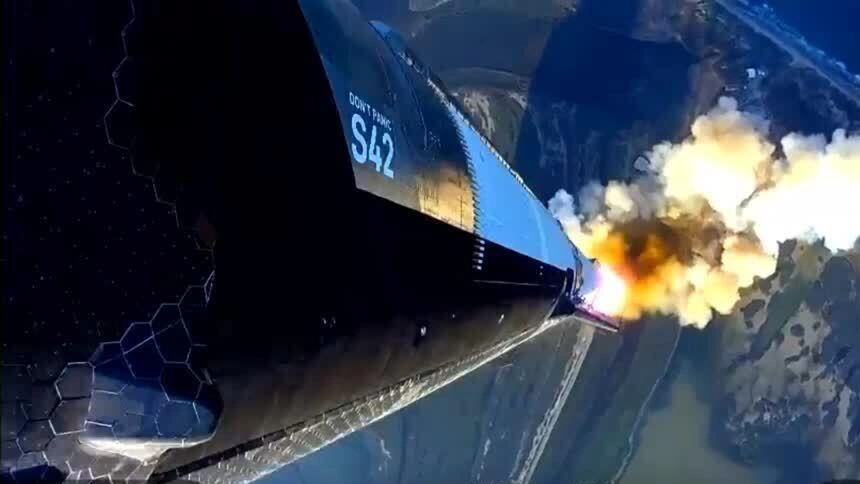
SpaceX's 15th Starship test flight saw the Super Heavy booster self-destruct over the Gulf of Mexico after a navigation error. The main Starship spacecraft continues its mission and is scheduled to return to Texas on 14 November.
SpaceX’s 124m rocket system launched from Starbase, Texas, on the afternoon of 13 November, marking the 15th test flight of the Starship programme. While the mission successfully deployed 26 satellites into the Starlink internet constellation, the Super Heavy booster failed to complete its planned recovery at the launch site.
SpaceX spokesman Dan Huot confirmed that the booster aborted its descent near the end of the flight due to a guidance, navigation and control (GNC) issue. Following the detection of this fault, the booster diverted to the Gulf of Mexico and automatically self-destructed before making contact with the water.
Despite the loss of the booster, SpaceX reported that the Starship spacecraft remains in a healthy state as it orbits the Earth. The company expects the vehicle to complete its mission and return to the Texas launch site at approximately 3.20pm local time on 14 November.
The mission was intended to feature a groundbreaking twin capture of both the Super Heavy booster and the Starship spacecraft. Successful recoveries of both stages would have represented a significant milestone in the industry's pursuit of fully reusable rocket systems, which are designed to reduce mission costs and increase launch frequency.
Clayton Swope of the Center for Strategic and International Studies described the mission as a mixed bag, noting the success of reaching orbit while acknowledging the failure to recover the booster. NASA administrator Jared Isaacman offered congratulations to the company for what he termed another spectacular launch.
The Starship project is central to SpaceX's long-term ambitions, including plans to transport humans to the Moon and Mars. The company is currently investing heavily in its production infrastructure, with officials stating that they now possess the capability to manufacture a new spaceship every two weeks and a booster every four weeks.
The recovery of the booster and the spacecraft is considered a vital step toward achieving fully reusable rocket systems. The company has previously successfully recovered the Super Heavy booster on three occasions.
The Starship spacecraft is expected to orbit the Earth 14 times before its planned return. SpaceX commentator Kate Tice noted that the company maintains strict decision gates for the return process, and the mission could be shortened to plunge the ship into the Pacific Ocean if system checks are not met.
The company's investment in production is supported by its recent stock market debut in June, which raised approximately US$85.7 billion. SpaceX continues to operate its 93,000 sq m factory at Starbase to support these ambitious launch schedules.
You may like
Microsoft 365 services suffer worldwide outage across 74 countries
November 14, 2026

Prime Bank PLC. partners with BD Creation for payroll banking services
November 14, 2026
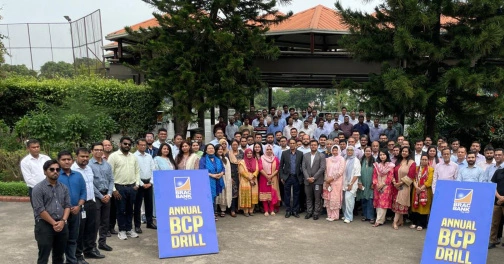
BRAC Bank tests operational resilience with surprise continuity drill
November 14, 2026

Mahmudur Labib wins top AI award at HackZar event in Khulna
November 14, 2026
Elected News
-

Bangladesh Seeks UN Women Support on Digital Harassment and Women’s Empowerment
-

Bangladesh, Australia Discuss Human Trafficking, Irregular Migration and Rohingya Crisis
-

Bangladesh Plans Internet-Free Access to Mobile Banking and Financial Apps
-

DU to Open Undergraduate Admission Applications on 11 November, Tests Begin 5 December


