Bangladesh President Mohammed Shahabuddin Resigns, Citing Health Reasons
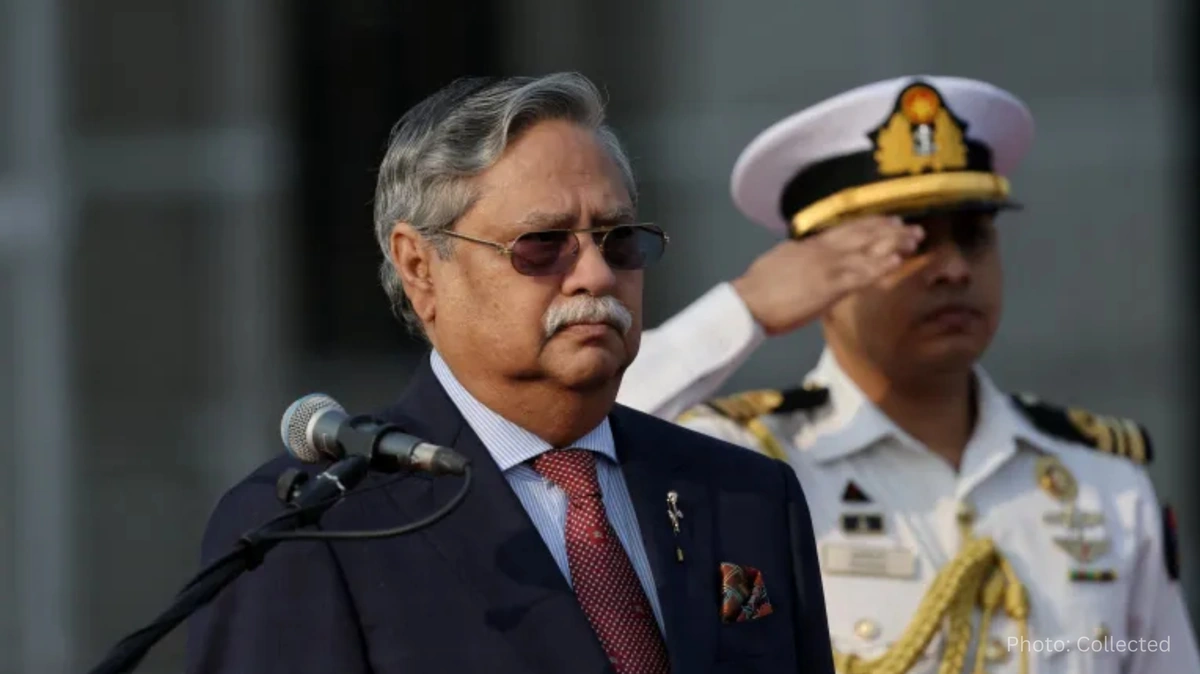
President Mohammed Shahabuddin has stepped down from office nearly two years before completing his five-year term, citing serious health complications. Under the Constitution, the Speaker of Parliament will assume presidential responsibilities until a successor is elected.
Bangladesh President Mohammed Shahabuddin has resigned from office, citing health concerns that he says have made it impossible for him to continue performing his constitutional responsibilities. His resignation comes nearly two years before the scheduled end of his five-year term.
In a statement released on Friday through his press secretary, the 76-year-old president said recent medical examinations had diagnosed him with Autonomic Neuropathy, a condition that occasionally causes brief episodes of loss of consciousness. He stated that the illness has significantly affected his ability to carry out the duties of the country's highest constitutional office.
In his resignation letter addressed to Parliament Speaker Hafiz Uddin Ahmed, Shahabuddin said his deteriorating health left him unable to fulfill the responsibilities entrusted to him as president. The Speaker formally accepted the resignation, making it effective immediately in accordance with the Constitution.
Officials confirmed that, under Bangladesh's constitutional provisions, the Speaker of the Jatiya Sangsad will perform the responsibilities of the president on an interim basis until a new head of state is elected. The Constitution requires that a presidential election be held within 90 days to fill the vacant office.
Shahabuddin assumed the presidency in April 2023 and was expected to remain in office until 2028. During his tenure, he presided over a politically significant period that included the political transition following the removal of former Prime Minister Sheikh Hasina in August 2024 and the subsequent establishment of a caretaker administration.
His resignation also comes amid heightened political attention and continued demands from several opposition parties calling for his departure from office. Recent media reports had alleged that Shahabuddin held a telephone conversation with former Prime Minister Sheikh Hasina while receiving medical treatment in the United Kingdom earlier this year. The president publicly rejected those reports and denied the claims.
When asked about the timing of his resignation, Shahabuddin reiterated that his decision was based solely on his worsening health condition. He declined to comment further on the matter beyond acknowledging that he has been experiencing multiple medical complications.
The president traveled to London in May for medical treatment before returning to Bangladesh later that month. While officials did not disclose further details regarding his diagnosis, the statement accompanying his resignation emphasized that his medical condition had made it increasingly difficult to perform official duties.
The vacancy now begins the constitutional process of selecting Bangladesh's next president. Although the office serves as the country's head of state, its functions are largely ceremonial, while executive authority remains vested in the prime minister and the cabinet.
Political observers are expected to closely watch the upcoming presidential election process, as the appointment of a new head of state will take place during an important period in Bangladesh's political landscape. Until a successor is elected, the Speaker of Parliament will continue exercising the constitutional responsibilities assigned to the presidency, ensuring continuity in the functioning of the state.
Related News

You may like



Tom Holland Says Marvel Has a Plan for the Next Spider-Man
August 1, 2026
Elected News
-
Bangladesh Seeks UN Women Support on Digital Harassment and Women’s Empowerment
-
Bangladesh, Australia Discuss Human Trafficking, Irregular Migration and Rohingya Crisis
-
Bangladesh Plans Internet-Free Access to Mobile Banking and Financial Apps
-
DU to Open Undergraduate Admission Applications on 11 November, Tests Begin 5 December


