Dhaka Targets Two Monorail Routes by 2029 to Expand Mass Transit Network
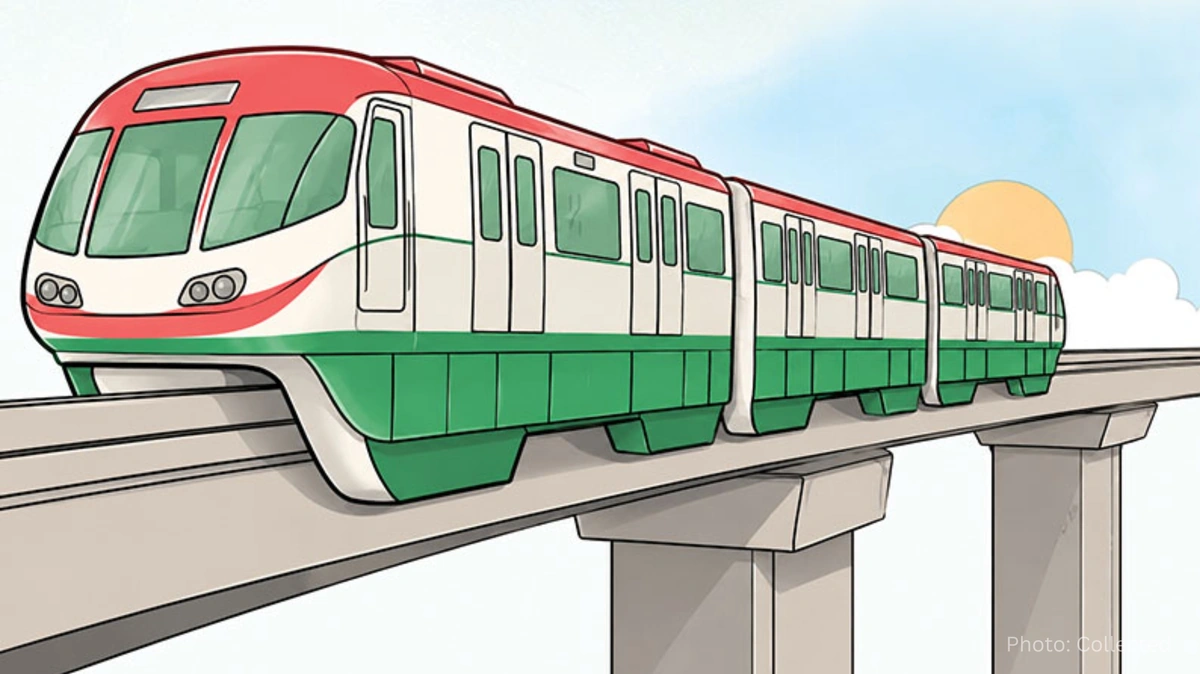
The government is planning a monorail network to connect densely populated neighbourhoods beyond the reach of Dhaka’s metro rail, with two priority corridors expected to be selected after a six-month BUET study assessing passenger demand, costs, connectivity and investment potential.
The government has initiated plans to expand Dhaka’s mass transit system through monorail services, with authorities targeting the operation of at least two routes by 2029 as the capital continues to face severe traffic congestion.
The proposed monorail network is intended to complement existing and planned metro rail services by connecting densely populated neighbourhoods and developing areas that cannot be efficiently served by conventional heavy rail. The Dhaka Transport Coordination Authority (DTCA) has identified five potential corridors for the proposed system.
The Bangladesh University of Engineering and Technology (BUET) will conduct a pre-feasibility study to determine which two routes should receive priority. The study will examine passenger demand, technical and economic viability, estimated project costs, land requirements, implementation options and investment potential before the government makes a final decision.
According to DTCA officials, the study is expected to take approximately six months. BUET will work alongside international consulting firms, with authorities currently discussing the involvement of advisers from France and Malaysia. The international consultants are expected to provide technical expertise and experience from similar transport projects.
The study will also prepare a preliminary development project proposal that can be presented to potential investors. However, implementation of the two priority routes by 2029 will depend on financing arrangements, government approval, project preparation and construction progress.
Hadiuzzaman, a civil engineering professor at BUET who is leading the consultancy team, said the proposed monorail system is not intended to replace Dhaka’s metro rail. Instead, it would operate as a feeder network serving areas where large-scale metro infrastructure would be difficult to construct because of narrow roads and dense development.
Dhaka’s revised strategic transport plan, known as the URSTP, already includes five proposed monorail corridors. However, the BUET team may examine two or three additional routes if its analysis indicates that they would provide greater transport benefits.
Each potential corridor will be evaluated according to several factors, including expected passenger numbers, land acquisition requirements, connectivity with metro stations and the ease and cost of implementation.
Hadiuzzaman said the existing strategic transport plan does not contain dedicated passenger-demand modelling specifically for monorail services. The new study is therefore expected to provide the first detailed scientific forecasts of passenger demand for the proposed network and assess how monorail services could influence traffic flows on existing and planned metro routes.
The five corridors currently under consideration are Airport–Jalshiri–Purbachal, designated as Monorail 1; Airport–Savar, or Monorail 2; Mohammadpur–Postogola, or Monorail 3; Central Badda–Bhulta, or Monorail 4; and Rampura–Demra, or Monorail 5.
DTCA sources said the proposed routes are designed to extend the reach of Dhaka’s primary public transport network into areas that remain outside the metro system. The planned corridors would improve connections to locations including Old Dhaka, Mohammadpur, Rampura, Demra, Purbachal, Bhulta and Savar.
The network could also create direct transport links between Hazrat Shahjalal International Airport and newly developed suburban areas, potentially improving accessibility for commuters and residents in rapidly expanding parts of the metropolitan region.
DTCA Executive Director Mohammad Mashiur Rahman said authorities are initially focusing on two routes while BUET carries out its analysis. He said the authority is also working to finalise contracts with French and Malaysian advisers, who are expected to provide a preliminary report within three months to support the next stage of the study.
Transport experts say monorail systems can offer advantages in densely populated cities because elevated tracks can be constructed on relatively narrow structures, reducing the need for extensive land acquisition. Their elevated design can also minimise disruption to existing roads during construction.
Electric trains, particularly rubber-tyred systems used in some monorail networks, can also generate less noise and vibration compared with conventional rail systems, making them potentially suitable for heavily built-up urban areas.
Experts nevertheless emphasise that Dhaka’s monorail system will need to be properly integrated with the city’s existing and planned public transport network. Connections with metro rail, bus rapid transit and conventional bus services would be crucial to ensuring that passengers can transfer easily between different modes.
They also warn that monorails are less effective when operated as isolated transport systems. A coordinated network, integrated ticketing, convenient interchange facilities and reliable feeder services would therefore be important to ensuring that the proposed lines become an effective component of Dhaka’s broader mass transit system.
The planned pre-feasibility study will determine which corridors offer the strongest combination of passenger demand, connectivity, affordability and investment potential, setting the stage for the government's next decisions on Dhaka’s proposed monorail network.
Related News
You may like




Tom Holland Says Marvel Has a Plan for the Next Spider-Man
August 1, 2026
Elected News
-
Bangladesh Seeks UN Women Support on Digital Harassment and Women’s Empowerment
-
Bangladesh, Australia Discuss Human Trafficking, Irregular Migration and Rohingya Crisis
-
Bangladesh Plans Internet-Free Access to Mobile Banking and Financial Apps
-
DU to Open Undergraduate Admission Applications on 11 November, Tests Begin 5 December


