Fed hosts AI forum as officials warn of job market disruptions
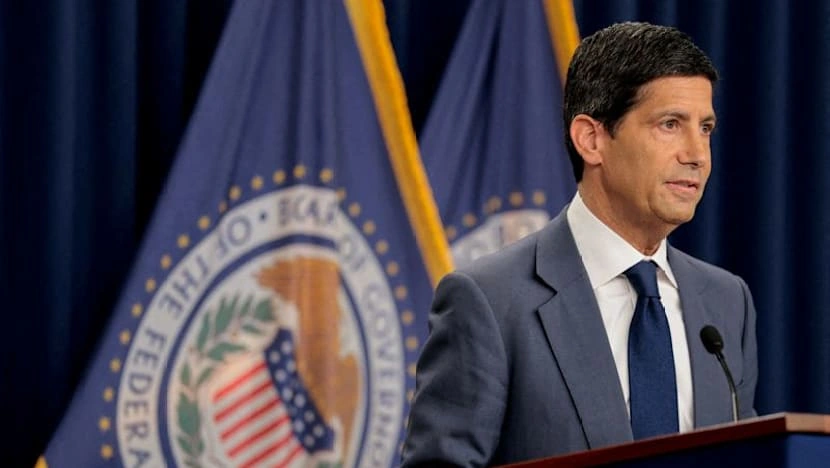
The Federal Reserve is hosting a three-hour forum on Monday to discuss the economic implications of artificial intelligence. Officials warn of potential job market disruptions while acknowledging historic levels of investment.
The Federal Reserve is hosting a three-hour forum on Monday to discuss the economic and labour market implications of artificial intelligence. The event, organised by the San Francisco Fed, will feature three panels of speakers and include comments from the Fed chief, Warsh. The agenda describes the session as offering input from a wide range of stakeholders on technology's implications for the economy and the labour market.
The forum arrives as central bank officials express growing concern over the potential for AI to cause significant volatility in employment. Fed Governor Lisa Cook has warned that the technology could lead to at least a temporary increase in the unemployment rate and potentially a rise in the underlying level of joblessness. Her comments reflect a broader shift in how the central bank views the technology's impact on workers.
Fed Governor Michael Barr echoed these sentiments on Thursday, stating that the United States should prepare for serious short-term disruptions to the job market. He noted that the severity of these impacts may depend on the speed of AI deployment and whether the technology remains accessible to businesses of all sizes. Barr's remarks highlight the uncertainty surrounding how quickly AI will be integrated into the workforce.
Warsh, who has adopted the term 'super intelligence' for AI in line with the wishes of President Donald Trump, has previously appointed a task force to focus on the technology. The task force includes figures such as Marc Andreessen, who serves as chair, alongside Chad Jones of Stanford University and Asha Sharma of Microsoft. This group represents a mix of tech industry leaders and academic experts.
The economic debate surrounding AI remains complex. While some officials view the current wave of investment as historic, comparing it to the development of railroads and interstate highways, others remain cautious. Richmond Fed President Tom Barkin described the investment as 'railroad-plus-interstate-highways-historic' but cautioned that the economy could face risks if those investments do not yield expected returns.
Barkin made these comments at a chamber of commerce event in South Carolina, where attendees sought insight on what the AI boom might mean for the broader economy. He expressed hope that the Monday forum would cover the full landscape of issues, including both optimistic and pessimistic perspectives. The Fed chief will not have the final say on policy, as other officials like Barkin will weigh in on the recommendations.
Local opposition to the infrastructure required for AI is also growing. Oakland Mayor Barbara Lee recently joined a movement to ban the construction of new data centres in her area, citing concerns over land use, societal health, and the potential for AI to compound existing biases. She stated that AI must be used responsibly and ethically to prevent harm or displacement.
The industry continues to see massive capital movement. Anthropic, an AI firm, is reportedly nearing an initial public offering that could value the company at more than $1 trillion. Warsh, who formerly held investments in AI firms, divested his holdings in accordance with Federal Reserve ethics rules before taking his current position. This divestment was required to comply with conflict of interest policies.
The forum marks a homecoming of sorts for the Fed chief, who attended nearby Stanford University with some of the tech industry's leading figures. The event underscores the Fed's increasing focus on AI, a topic that gained prominence after the release of the ChatGPT generative AI chatbot in 2022. Since then, the pace of research and discussion within the central bank has accelerated significantly.
AI is now solving advanced math and medical problems, turning novice entrepreneurs into software engineers, and offering bespoke services that can handle legal or scientific research. These capabilities have led to a reevaluation of how the technology affects productivity and inflation. Warsh initially saw AI as providing a downdraft on inflation through higher productivity, but has since taken a more nuanced view.
The shift in Warsh's perspective reflects the uncertain timetable for productivity benefits and the potentially inflationary investment needed to realize them. Views on job-market impacts range from a broad boost to employment to a scenario of chronic underemployment. The Fed is tasked with navigating these uncertainties while maintaining price stability and full employment.
For the moment, AI investments are propping up US growth, stock-market gains, and consumer and business spending. However, the sustainability of this growth is a subject of intense debate among policymakers. The Monday forum will provide a platform for these discussions, with the aim of informing future monetary policy decisions.
The event highlights the intersection of technology and economics, a relationship that is becoming increasingly important for central banks worldwide. As AI continues to evolve, the Fed must adapt its approach to ensure that the benefits of the technology are widely shared and that the risks are managed effectively.
The participation of high-profile tech figures in the task force signals the Fed's recognition of the industry's influence on the economy. However, the final policy decisions will rest with the Fed's governing body, which includes officials with diverse views on the technology's impact.
The forum is expected to draw attention from investors, policymakers, and the public, who are all keen to understand the long-term implications of AI for the US economy. The outcomes of the discussion could have significant repercussions for interest rates, employment, and economic growth in the coming years.
As the forum takes place, the broader context of AI development and its societal implications will remain in the spotlight. The Fed's role in shaping the regulatory and economic environment for AI will be closely watched by stakeholders across the globe.
The event serves as a reminder of the challenges and opportunities presented by rapid technological change. The Fed's ability to balance innovation with stability will be crucial in determining the future trajectory of the US economy in the age of AI.
Related News




You may like
Fed hosts AI forum as officials warn of job market disruptions
November 13, 2026

Bangladesh Bank launches Tk 15 billion fund for small loans
November 13, 2026
Bangladesh pushes for climate grants and technology at COP31
November 13, 2026
Trump AI task force reviews safety standards amid expiring cyber law
November 13, 2026
Elected News
-

Bangladesh Seeks UN Women Support on Digital Harassment and Women’s Empowerment
-

Bangladesh, Australia Discuss Human Trafficking, Irregular Migration and Rohingya Crisis
-

Bangladesh Plans Internet-Free Access to Mobile Banking and Financial Apps
-

DU to Open Undergraduate Admission Applications on 11 November, Tests Begin 5 December


