Bangladeshi Ship Denied Clearance to Cross Strait of Hormuz Despite Ceasefire
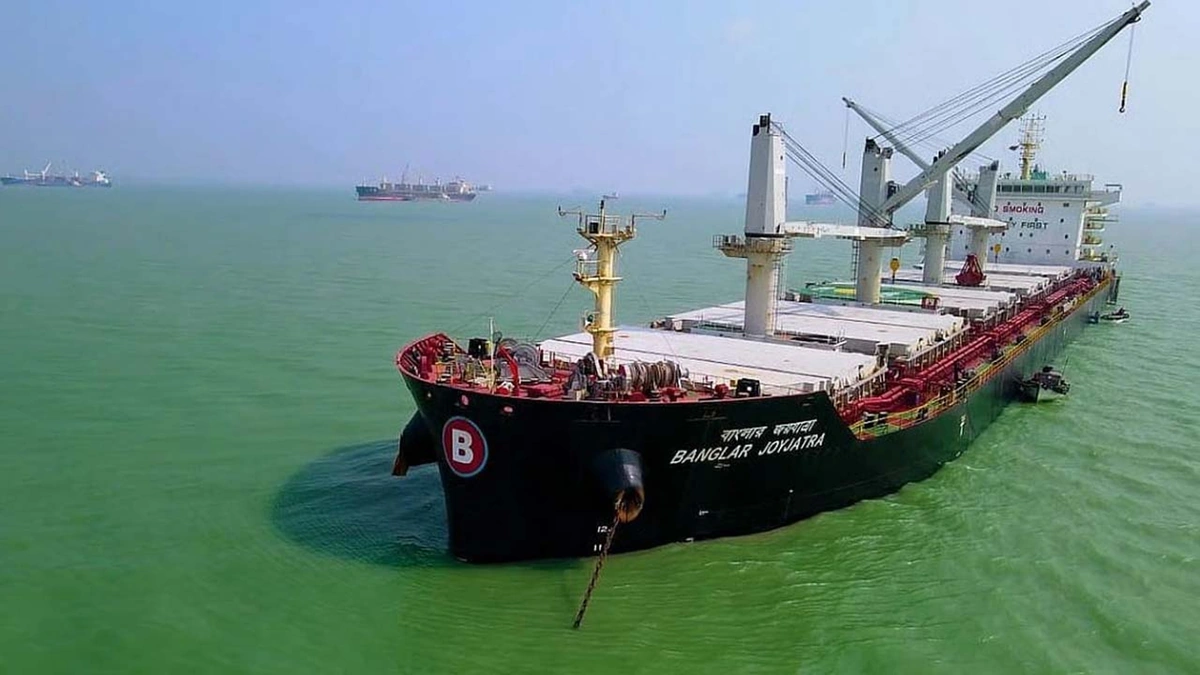
‘Banglar Joyjatra’ remains stranded near the strategic waterway as Iran enforces strict transit controls under post-conflict protocols.
A vessel owned by the Bangladesh Shipping Corporation (BSC), Banglar Joyjatra, has been denied permission to cross the Strait of Hormuz despite an ongoing ceasefire in the Middle East.
The confirmation came from BSC Managing Director Commodore Mahmudul Malek, who stated that the ship had approached the strait after departing Saudi Arabia’s Ras Al Khair port following the ceasefire.
After sailing for nearly 40 hours, the vessel reached the vicinity of the Strait of Hormuz on Friday (April 10). However, upon requesting clearance, Iranian authorities rejected the application, instructing the ship to turn back and proceed toward the port of Sharjah in the United Arab Emirates for safety.
Malek said diplomatic efforts are still underway to obtain clearance. For now, the vessel remains near the strait while authorities monitor the situation closely.
The ship carries 31 crew members, all of whom have sufficient food supplies. It is capable of producing up to 18 tons of freshwater daily through desalination, although consumption has been reduced to around 6 tons per day through rationing. To maintain crew morale, the daily food allowance has been increased from $7 to $12 per person, along with the provision of a war allowance.
Earlier, the vessel had entered the Persian Gulf on February 2 after crossing the Strait from India. It later transported steel coils from a Qatari port to Jebel Ali in the UAE. Shortly after, regional tensions escalated following military strikes involving the United States, Israel, and Iran, leading to widespread conflict across the region.
According to international sources, Iran has imposed strict limitations on vessel movement through the Strait of Hormuz under the ceasefire arrangement. Only a limited number of ships—fewer than 15 per day—are being allowed to pass, subject to prior approval and compliance with specific protocols overseen by Iranian authorities.
The Strait of Hormuz is one of the world’s most critical maritime routes, handling nearly one-fifth of global seaborne crude oil shipments, making any restriction a significant concern for international trade and energy security.
Related News
You may like




Tom Holland Says Marvel Has a Plan for the Next Spider-Man
August 1, 2026
Elected News
-

Bangladesh Seeks UN Women Support on Digital Harassment and Women’s Empowerment
-

Bangladesh, Australia Discuss Human Trafficking, Irregular Migration and Rohingya Crisis
-

Bangladesh Plans Internet-Free Access to Mobile Banking and Financial Apps
-

DU to Open Undergraduate Admission Applications on 11 November, Tests Begin 5 December


