Canada’s strict policy 62% of student visa applications rejected in 2025
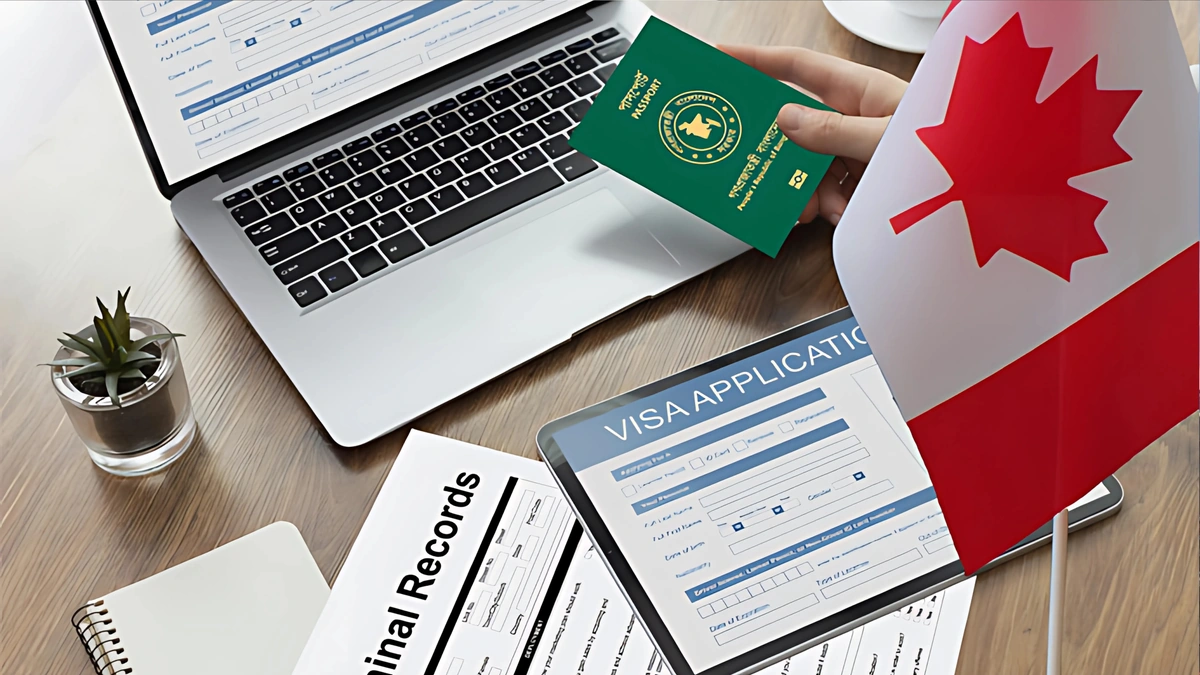
Canada has long been known as a friendly destination for international students. However, recent developments indicate that the country’s visa policies are becoming stricter. According to new data released by Immigration, Refugees and Citizenship Canada (IRCC), 62% of student visa applications were rejected in 2025. Last year, the rejection rate was 52%, indicating a significant increase in visa refusals.
Highest Rejection Rate in a Decade
IRCC data shows that the visa rejection rate has reached its highest level in the past ten years. According to the new report, around 80% of applications were rejected. The statistics do not specify which countries faced higher or lower rejection rates, but it is evident that students from Asia and Africa have been most affected by the stricter student visa policies.
For families who viewed Canada as a land of opportunity, these visa rejections come as a major setback. In 2024, over one million international students enrolled in Canadian institutions, making Canada the second-largest destination for foreign students after the United States. Among these students, 41% were from India, 12% from China, and around 17,000 from Vietnam. However, the rising visa rejection rates could significantly alter this balance.
Why Canada Is Becoming Stricter
Immigration experts say that Canada’s stricter policies are driven by domestic pressures. Concerns include a housing shortage, strain on infrastructure, and whether students can financially support themselves.
Jonathan Sherman, Vice President of BorderPass and a representative of a Canadian study permit support platform, stated:
"IRCC is clearly scrutinizing student visa applications much more rigorously than before."
In addition, Canada is introducing further restrictions. The bank solvency requirements for study permits have been updated. From 1 September 2025, international students wishing to study in Canada must show that they have CAD 22,895 set aside for one year of living expenses, up from the previous requirement of CAD 20,635. This amount must be in addition to tuition fees and travel costs, deposited in a bank, and proper documentation must be provided as proof.
Fewer Visas, Stricter Rules
The Canadian government has announced that 437,000 study permits will be issued in 2025, roughly 10% fewer than last year. Of these, 73,000 are for postgraduate students, approximately 243,000 for undergraduate and other programs, and around 120,000 for school-aged children and visa renewals.
Rules for post-graduation work permits have also been tightened. University graduates must now show B2 level English or French test results, while college graduates must demonstrate at least B1 level. Changing to a non-approved program will make students ineligible for a post-study work permit.
IRCC data shows that the visa rejection rate has reached its highest level in a decade, with around 80% of applications being rejected according to the latest report.
Impact on Students
Over one million students went to Canada in 2024. Due to these stricter policies, many are now concerned about their future. The country, once known for its open-door policy, is now aligning with social and economic constraints, creating challenges for students seeking education in Canada.
The impact is not limited to students. Many universities and colleges depend heavily on tuition fees from international students. Countries like India, China, and Vietnam are also realizing that opportunities to study abroad are becoming more limited.
The greatest burden falls on the students themselves. They are preparing documents, financial proof, and study plans, yet due to policy changes, their dreams of studying in Canada may be derailed.
Related News




You may like




Tom Holland Says Marvel Has a Plan for the Next Spider-Man
August 1, 2026
Elected News
-

Bangladesh Seeks UN Women Support on Digital Harassment and Women’s Empowerment
-

Bangladesh, Australia Discuss Human Trafficking, Irregular Migration and Rohingya Crisis
-

Bangladesh Plans Internet-Free Access to Mobile Banking and Financial Apps
-

DU to Open Undergraduate Admission Applications on 11 November, Tests Begin 5 December


