India’s ‘Cockroach’ Movement Launches Indefinite Protest, Demands Education Minister’s Resignation
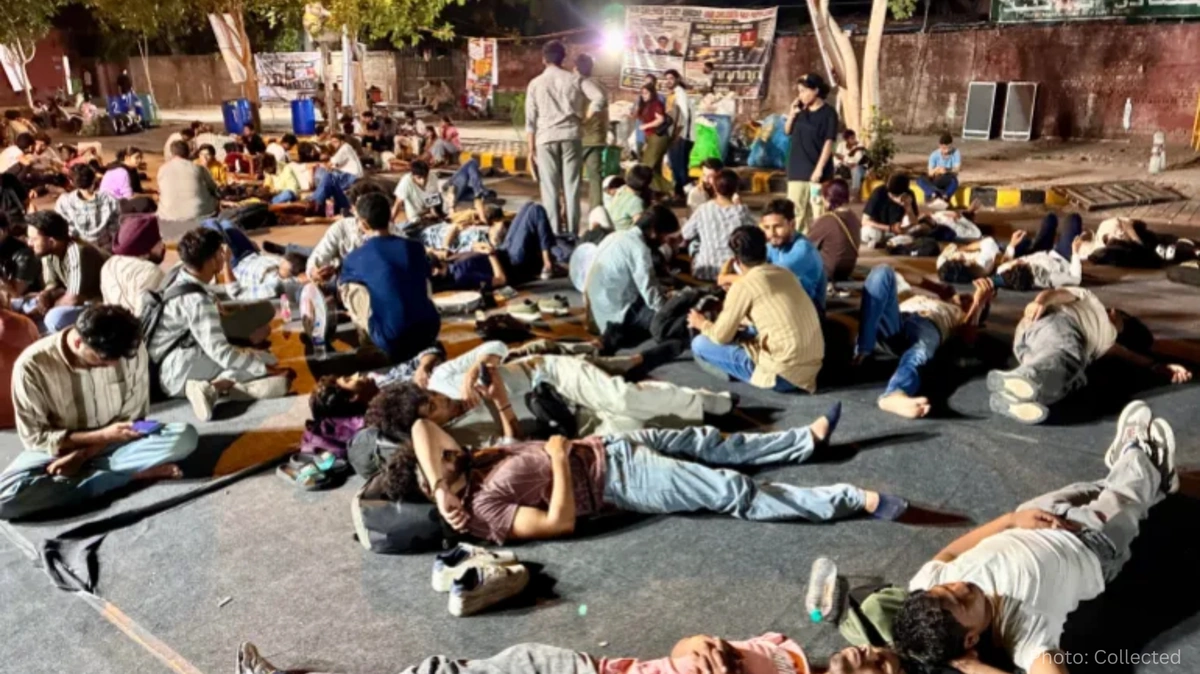
A youth-led movement that began as an online joke has transformed into a nationwide protest campaign, with supporters camping in New Delhi and refusing to leave until India’s education minister steps down over examination controversies.
A rapidly growing youth movement in India has escalated its campaign against the government, with supporters of the self-styled “Cockroach Janta Party” (CJP) launching an indefinite protest in the capital, New Delhi, and demanding the resignation of Education Minister Dharmendra Pradhan.
The demonstration, centered at Jantar Mantar, one of the city’s designated protest sites, has drawn students and young activists from across the country. Despite police pressure and restrictions, protesters have vowed to maintain a round-the-clock presence until their demands are met.
The movement is led by Abhijeet Dipke, a recent graduate of Boston University, who returned to India earlier this month after gaining significant attention online. What began as a satirical response to controversial remarks comparing young people to “cockroaches” has evolved into a broader political and social campaign focused on educational reform and accountability.
The protest reflects growing frustration among India’s younger generation over repeated examination scandals, including allegations of leaked question papers, score discrepancies, and concerns about the integrity of competitive entrance tests. For many students, these incidents have undermined confidence in a system that plays a critical role in determining academic and professional opportunities.
India, home to more than 1.4 billion people, has one of the world’s youngest populations, with a significant share under the age of 25. The pressures of academic competition and employment uncertainty have intensified concerns among students and families, making education-related controversies particularly sensitive.
Dipke’s organization has capitalized on that dissatisfaction through social media, where its message has resonated with millions of young Indians. The movement’s online popularity has translated into real-world demonstrations in several major cities, including Mumbai, Bengaluru, and Nagpur, before culminating in the ongoing protest in New Delhi.
Among those participating are students who say they have been directly affected by examination irregularities. Many have described feelings of disappointment and uncertainty after investing months or years preparing for highly competitive tests that later became the subject of controversy.
Several protesters said they believe systemic reforms are necessary to restore trust in the education system. They argue that repeated incidents involving examination management have damaged the credibility of institutions responsible for conducting some of the country’s most important academic assessments.
The protest has also gained momentum amid wider public debate over student welfare and mental health. Reports of severe emotional distress among students following examination controversies have fueled calls for greater accountability and transparency from authorities.
Throughout the demonstration, police have maintained a heavy presence around the protest site. Participants have alleged that authorities attempted to discourage the gathering through various measures, including restricting access to supplies and increasing security controls around the area. Despite these challenges, organizers insist that the movement remains peaceful and determined.
As night fell over the capital, protesters continued to occupy roads and pavements near the demonstration site. Some gathered in discussion circles to debate politics and education policy, while others rested outdoors, preparing for what they expect could be a prolonged campaign.
The movement’s leaders argue that their demands extend beyond a single resignation and reflect broader concerns about governance, accountability, and the future prospects of young Indians. However, they maintain that the resignation of the education minister remains their immediate objective.
Political analysts note that the protest represents a rare example of a social-media-driven youth movement successfully transitioning into sustained street demonstrations. Whether it can achieve its stated goals remains uncertain, but its rapid rise has highlighted the growing influence of digitally connected young voters in India’s political landscape.
For now, organizers have made their position clear: they intend to remain at the protest site until their demands are addressed. As the standoff continues, the movement is likely to remain a focal point in the national conversation surrounding education, governance, and youth aspirations in India.
Related News




You may like




Tom Holland Says Marvel Has a Plan for the Next Spider-Man
August 1, 2026
Elected News
-
Bangladesh Seeks UN Women Support on Digital Harassment and Women’s Empowerment
-
Bangladesh, Australia Discuss Human Trafficking, Irregular Migration and Rohingya Crisis
-
Bangladesh Plans Internet-Free Access to Mobile Banking and Financial Apps
-
DU to Open Undergraduate Admission Applications on 11 November, Tests Begin 5 December


