Bangladeshi Scientist Develops Rapid Cancer Detection Technology with Results in Just 10 Minutes
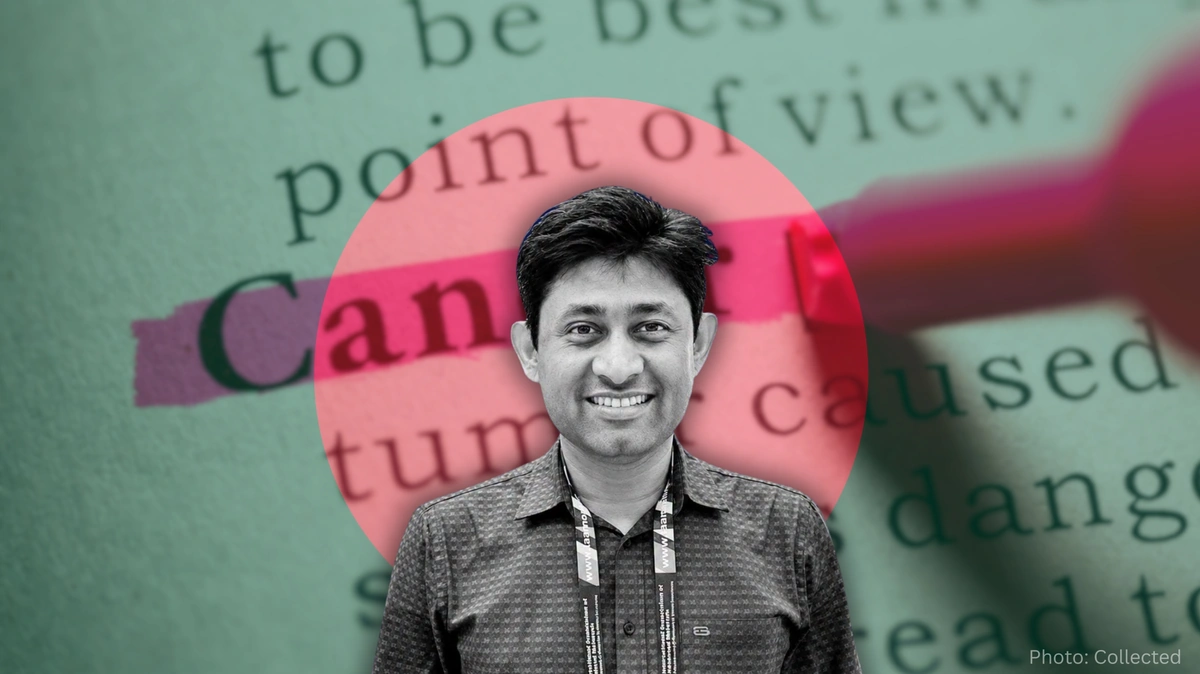
A groundbreaking biosensing technology developed by Bangladeshi researcher Dr. Abu Ali Ibn Sina could enable cancer detection within minutes, offering a faster and highly accurate screening method.
A Bangladeshi scientist has developed an innovative technology that could significantly transform the early detection of cancer, allowing the disease to be identified in as little as 10 minutes through a simple blood sample.
Dr. Abu Ali Ibn Sina, a Bangladeshi researcher currently serving as a Senior Lecturer in Biomedical Sciences at the University of New South Wales in Australia, has pioneered the advanced detection method by combining nanotechnology with modern biosensing techniques. The innovation has attracted international attention for its potential to simplify and accelerate cancer screening.
According to researchers involved in the project, cancer cells leave behind unique biological signatures that can be detected throughout the human body. Even when a tumor is located in a specific organ or tissue, traces of its genetic and molecular information can often be found circulating in the bloodstream.
Dr. Ibn Sina’s technology utilizes nanotechnology to identify these cancer-related signatures from blood samples. By analyzing the interaction between biological materials and specially designed sensing surfaces, the system can determine whether cancer-associated markers are present in the body.
One of the most remarkable aspects of the technology is its speed. Researchers say the test can provide results in approximately 10 minutes, dramatically reducing the waiting time associated with many conventional diagnostic procedures. Preliminary findings indicate that the method can achieve an accuracy rate of around 90 percent, making it a promising tool for future cancer screening programs.
The scientist has described the approach as “Interfacial Biosensing,” a technique designed to detect subtle biological changes linked to the presence of cancer. The method aims to offer a less invasive and more accessible alternative to traditional diagnostic pathways, which often require multiple tests, imaging procedures, and laboratory analyses.
Experts believe that faster cancer detection could improve patient outcomes by enabling earlier diagnosis and treatment. Early-stage identification remains one of the most important factors in increasing survival rates for many forms of cancer, making advances in diagnostic technology a major focus of global medical research.
The project has already achieved a significant milestone, successfully completing an initial stage of testing. Following these encouraging results, the device has been sent to the United States for larger-scale clinical trials, where researchers will further evaluate its effectiveness across a broader range of patient groups and cancer types.
The technology has also attracted commercial interest from the international scientific community. A Harvard University-affiliated organization has reportedly invested a substantial amount of funding to support the device’s development and commercialization. The investment is expected to help accelerate research efforts and move the technology closer to real-world medical applications.
Researchers involved in the project say the goal is to create a practical diagnostic tool that can be used in hospitals, clinics, and healthcare facilities worldwide. If future clinical trials confirm the technology’s effectiveness, it could become a valuable addition to existing cancer detection methods.
The achievement highlights the growing contribution of Bangladeshi scientists to global scientific innovation. Dr. Abu Ali Ibn Sina’s work demonstrates how cutting-edge research in nanotechnology and biomedical science can address some of the world’s most pressing healthcare challenges.
As further trials and evaluations continue, the technology offers hope for a future where cancer screening becomes faster, more accessible, and more efficient, potentially benefiting millions of people around the world through earlier and more accurate diagnosis.
Related News





You may like



Tom Holland Says Marvel Has a Plan for the Next Spider-Man
August 1, 2026
Elected News
-
Bangladesh Seeks UN Women Support on Digital Harassment and Women’s Empowerment
-
Bangladesh, Australia Discuss Human Trafficking, Irregular Migration and Rohingya Crisis
-
Bangladesh Plans Internet-Free Access to Mobile Banking and Financial Apps
-
DU to Open Undergraduate Admission Applications on 11 November, Tests Begin 5 December


