Dhaka Airport’s High-Tech E-Gates That Can’t Even Check Visas
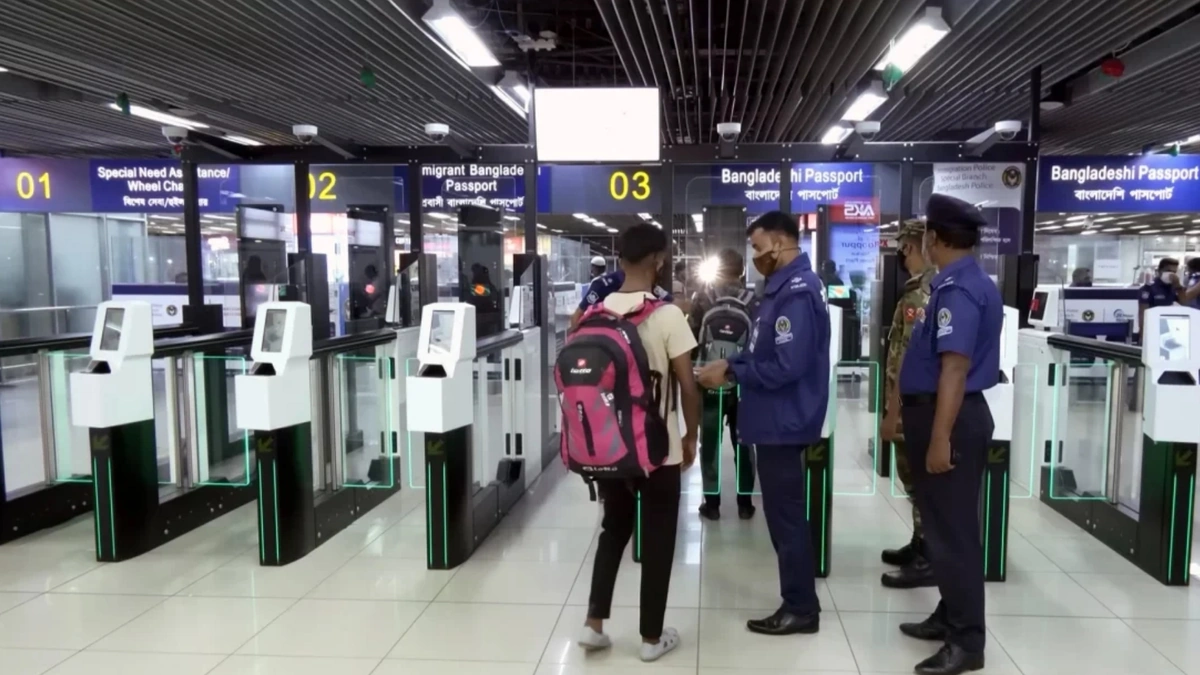
Despite costing Tk34.5 crore, automated e-gates installed at Bangladesh’s major airports remain largely non-functional for departing passengers. The shutdown has pushed travelers back into manual queues, raising concerns over planning, accountability and public spending.
Despite heavy public investment and ambitious promises, the automated e-gates installed at Bangladesh’s major airports and land ports are lying largely unused, exposing serious flaws in planning and execution.
A total of 44 e-gates were installed under the “Bangladesh e-passport and automated border control management introduction” project, with the aim of reducing immigration clearance time to just 18 seconds per passenger. The installation cost alone amounted to Tk34.5 crore.
However, the system has been shut down at departure points, forcing outbound passengers to go through manual immigration procedures. Travelers report longer waiting times, congestion and increased harassment compared to the period before the e-gates were introduced.
The broader project was initially approved at Tk4,635 crore, but its cost was later revised upward to Tk9,380 crore, a sharp increase that officials have yet to clearly justify. The project timeline spans July 2018 to June 2028.
E-gates installed, but unused
According to immigration sources, the 44 e-gates were installed at five locations: 26 at Hazrat Shahjalal International Airport, six at Shah Amanat International Airport in Chattogram, six at Osmani International Airport in Sylhet, four at Benapole Land Port, and two at Banglabandha Land Port.
The system was supplied and installed by Veridos GmbH, a German firm that secured the contract in July 2018. Airport officials also received operational training after installation in 2019.
Despite intermittent trial runs, the e-gates remain closed for outbound passengers at major airports. A recent visit to Hazrat Shahjalal International Airport showed that all departing travelers were required to complete immigration manually, including visa verification and document checks - often taking longer than before the e-gates existed.
The continued non-use of the system has intensified questions over value for money, technical readiness and administrative accountability, as passengers continue to face delays at one of the country’s busiest international gateways.
A total of 44 e-gates were installed under the “Bangladesh e-passport and automated border control management introduction” project, with the aim of reducing immigration clearance time to just 18 seconds per passenger. The installation cost alone amounted to Tk34.5 crore.
However, the system has been shut down at departure points, forcing outbound passengers to go through manual immigration procedures. Travelers report longer waiting times, congestion and increased harassment compared to the period before the e-gates were introduced.
The broader project was initially approved at Tk4,635 crore, but its cost was later revised upward to Tk9,380 crore, a sharp increase that officials have yet to clearly justify. The project timeline spans July 2018 to June 2028.
E-gates installed, but unused
According to immigration sources, the 44 e-gates were installed at five locations: 26 at Hazrat Shahjalal International Airport, six at Shah Amanat International Airport in Chattogram, six at Osmani International Airport in Sylhet, four at Benapole Land Port, and two at Banglabandha Land Port.
The system was supplied and installed by Veridos GmbH, a German firm that secured the contract in July 2018. Airport officials also received operational training after installation in 2019.
Despite intermittent trial runs, the e-gates remain closed for outbound passengers at major airports. A recent visit to Hazrat Shahjalal International Airport showed that all departing travelers were required to complete immigration manually, including visa verification and document checks - often taking longer than before the e-gates existed.
The continued non-use of the system has intensified questions over value for money, technical readiness and administrative accountability, as passengers continue to face delays at one of the country’s busiest international gateways.
Related News




You may like




Tom Holland Says Marvel Has a Plan for the Next Spider-Man
August 1, 2026
Elected News
-

Bangladesh Seeks UN Women Support on Digital Harassment and Women’s Empowerment
-

Bangladesh, Australia Discuss Human Trafficking, Irregular Migration and Rohingya Crisis
-

Bangladesh Plans Internet-Free Access to Mobile Banking and Financial Apps
-

DU to Open Undergraduate Admission Applications on 11 November, Tests Begin 5 December


