PM Tarique Rahman says 3,500 hospital beds added in recent months
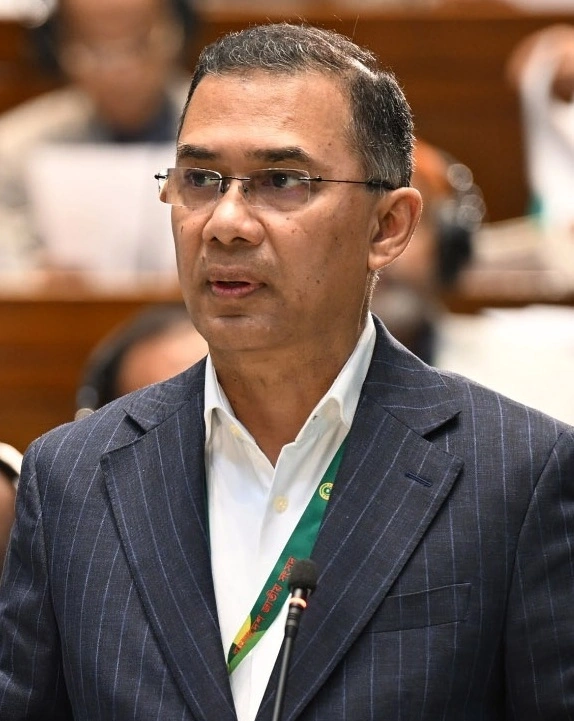
Prime Minister Tarique Rahman told Parliament that 3,500 hospital beds have been added recently. He also committed to directing the health minister to address the lack of a government hospital in Rangabali.
Prime Minister Tarique Rahman stated on Wednesday that approximately 3,500 beds have been added to hospitals across Bangladesh in recent months. He made the remarks during a question-and-answer session in the Jatiya Sangsad, the country's parliament, on the concluding day of its fourth session.
The Prime Minister addressed the issue while replying to a starred question from Syed Joynul Abedin, the Member of Parliament for Dhaka-4. In his response, Rahman acknowledged the ongoing challenges within the healthcare system, noting that the country's economy is currently facing various difficulties.
Despite these economic constraints and limited resources, the Prime Minister said the government is continuing its efforts to improve and expand healthcare services. He highlighted that the addition of the new beds is part of a broader initiative to strengthen the capacity of the national healthcare system.
Rahman also acknowledged the severity of the current situation, stating that nearly 40 lakh patients are still receiving treatment on hospital floors and in corridors due to a shortage of beds. He described this condition as deeply distressing and emphasized that the government is implementing various initiatives to reduce the suffering of patients in hospitals.
The Prime Minister assured lawmakers that efforts to expand the coverage of healthcare services would continue. He stressed that the government remains committed to ensuring healthcare access for the people, even while navigating the current economic landscape.
Later in the session, the Prime Minister responded to a supplementary question from ABM Mosharrof Hossain, the MP for Patuakhali-4. Hossain raised the issue of Rangabali upazila in Patuakhali district, a region he said is home to around 400,000 people but lacks a government hospital.
Hossain argued that the absence of a local hospital forces residents to face serious difficulties in accessing emergency medical services. He cited the recent death of Prof Mizan Nannu, the joint general secretary of the upazila BNP, who died while being transported to a hospital after suffering a heart attack.
The lawmaker stated that the lack of timely emergency treatment in the area is depriving local people of essential care. He sought the Prime Minister's special intervention to ensure the construction of a hospital in Rangabali without delay.
In reply, Prime Minister Tarique Rahman explained that as the head of government, he cannot directly take action on specific administrative matters. He stated that the issue must be handled through the Ministry of Health and Family Welfare.
However, Rahman said he would instruct the health minister to take necessary steps regarding the construction of a hospital in the upazila. He noted that once the health minister returns to his duties, he will provide instructions to ensure effective and quick action is taken to address the healthcare needs of the people of Rangabali.
The exchange highlighted the ongoing debate in Bangladesh regarding the adequacy of public healthcare infrastructure. While the government points to recent additions in hospital capacity, lawmakers from various constituencies continue to raise concerns about regional disparities in medical access.
The Prime Minister's comments come at a time when the healthcare sector is under scrutiny for its ability to manage patient loads and provide emergency services in underserved areas. The commitment to build a hospital in Rangabali is seen as a response to specific local demands for better medical facilities.
The parliamentary session served as a platform for MPs to raise issues directly with the Prime Minister, allowing for immediate responses to constituency-specific problems. The focus on healthcare reflects the sector's importance in public discourse and political accountability.
The government's stance, as articulated by the Prime Minister, balances the acknowledgment of resource limitations with a pledge to continue expanding services. The addition of 3,500 beds is presented as a tangible step in this direction, even as the overall shortage remains a significant challenge.
The mention of patients treating on floors and in corridors underscores the pressure on existing facilities. The Prime Minister's description of the situation as distressing aligns with the concerns raised by opposition and treasury bench members alike regarding the quality of care available to the public.
The specific case of Rangabali upazila illustrates the gap between population density and medical infrastructure. With a population of 400,000, the lack of a government hospital is cited as a critical failure in providing basic emergency care to residents.
The death of Prof Mizan Nannu was used by MP Hossain to illustrate the real-world consequences of this infrastructure gap. The incident serves as a poignant example of the risks faced by residents who must travel long distances for emergency medical attention.
The Prime Minister's commitment to instruct the health minister signals a procedural step towards addressing the issue. While the timeline for construction was not specified, the assurance of 'effective steps' and 'quick' action was offered to the lawmaker.
This development is part of a broader pattern of parliamentary questions regarding public services in Bangladesh. Lawmakers frequently use the question-and-answer session to highlight deficiencies in sectors such as health, education, and infrastructure.
The government's response to these queries often involves acknowledging the problem and outlining the administrative process through which solutions will be pursued. In this case, the routing of the request through the Ministry of Health and Family Welfare is standard procedure.
The economic context mentioned by the Prime Minister is relevant to understanding the pace of healthcare expansion. Limited resources and economic constraints are cited as factors that influence the speed and scale of new projects, such as hospital construction.
Despite these challenges, the government maintains that its initiatives are yielding results, as evidenced by the recent addition of hospital beds. The balance between acknowledging difficulties and highlighting progress is a common theme in official communications on healthcare.
The parliamentary session concluded with these exchanges, leaving the matter of the Rangabali hospital to be pursued through ministerial channels. The outcome of these administrative steps will be monitored by local stakeholders and lawmakers in the coming months.
The story highlights the intersection of political accountability and public health policy in Bangladesh. It demonstrates how specific local issues can be elevated to the national stage through parliamentary mechanisms, prompting direct responses from the highest levels of government.
You may like

Nurul Afser joins Southeast Bank PLC board as shareholder director
November 18, 2026

Trump calls Venezuela an acquisition in Manila talks
November 18, 2026

Trump's Beast to arrive in Shenzhen for Apec leaders summit
November 18, 2026

CARE Bangladesh launches skills training for 77,000 youths in Khulna
November 18, 2026
Elected News
-
Bangladesh Seeks UN Women Support on Digital Harassment and Women’s Empowerment
-
Bangladesh, Australia Discuss Human Trafficking, Irregular Migration and Rohingya Crisis
-

Bangladesh Plans Internet-Free Access to Mobile Banking and Financial Apps
-
DU to Open Undergraduate Admission Applications on 11 November, Tests Begin 5 December


