5G Rollout Gains Momentum as Bangladesh Prepares for the Next Phase of Digital Connectivity
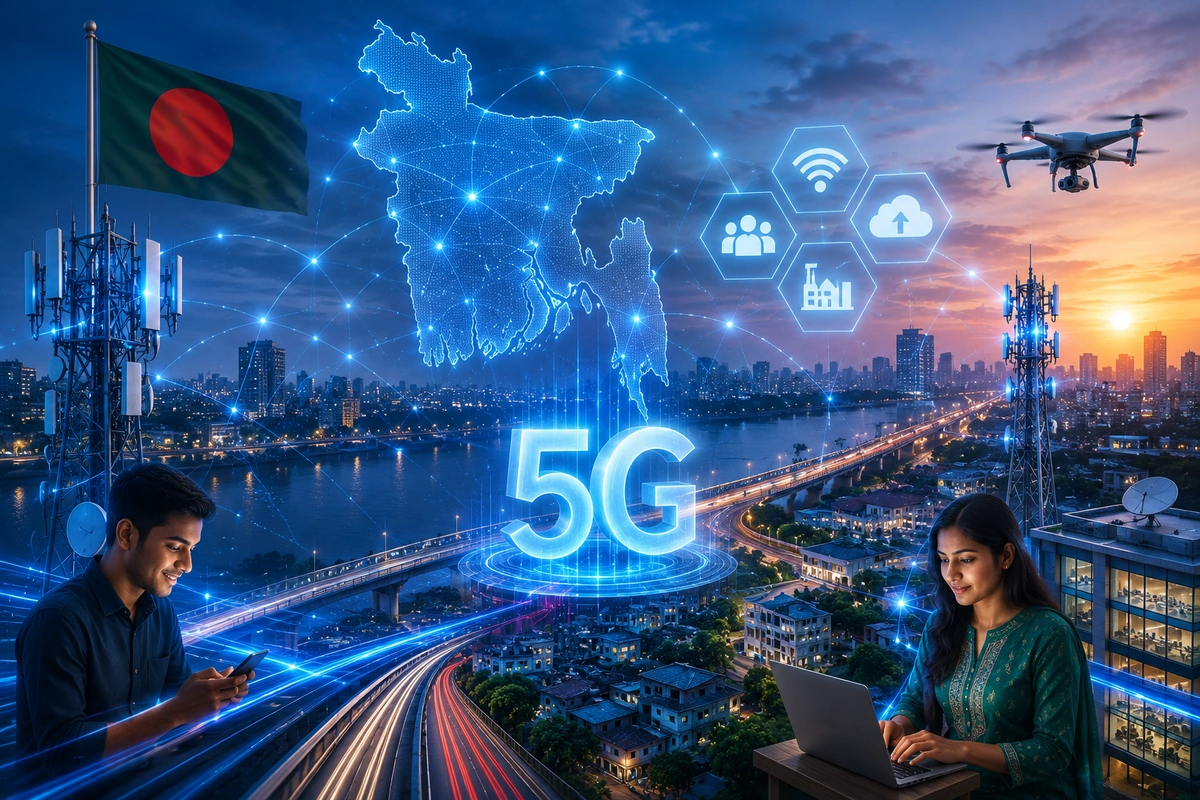
Faster mobile networks are expected to strengthen digital services, smart industries and innovation across Bangladesh, while experts say infrastructure investment, affordability and cybersecurity will determine the pace of adoption.
The global rollout of fifth generation mobile technology, commonly known as 5G, is reshaping digital connectivity by offering significantly faster internet speeds, lower latency and greater network capacity than previous generations. In Bangladesh, policymakers, telecommunications operators and technology experts view 5G as a key driver of the country's digital transformation, although large scale deployment will depend on continued investment, affordable devices and supporting infrastructure.
According to the GSM Association (GSMA), 5G adoption continues to accelerate worldwide, with billions of connections expected by the end of the decade. The technology is forecast to become the dominant mobile broadband standard in many regions as governments and network operators expand coverage and modernize telecommunications infrastructure.
Unlike earlier mobile technologies that primarily improved internet speed, 5G is designed to support a much wider range of digital applications. Experts say the technology enables ultra low latency communication, allowing devices to exchange information almost instantly. This capability is expected to support autonomous systems, smart manufacturing, remote healthcare, advanced logistics and the expanding Internet of Things (IoT).
Bangladesh has already taken initial steps toward introducing 5G services. State owned operator Teletalk launched limited trial services, while private mobile operators have continued upgrading their networks in preparation for broader commercial deployment. The Bangladesh Telecommunication Regulatory Commission (BTRC) has also identified spectrum management and infrastructure development as important priorities for future expansion.
Industry analysts note that widespread 5G adoption will require additional spectrum allocation, expansion of fiber optic backhaul networks and the installation of more base stations to ensure reliable coverage. Compared with previous mobile technologies, 5G requires denser network infrastructure to deliver its full performance.
The economic impact of 5G is expected to extend beyond telecommunications. According to the World Economic Forum, faster and more reliable mobile networks have the potential to improve productivity across manufacturing, agriculture, transportation, healthcare and financial services. Smart factories using connected machines, precision farming through real time sensors and intelligent traffic management systems are among the applications expected to benefit from advanced mobile connectivity.
Healthcare professionals also see opportunities for digital medicine. High speed networks support higher quality telemedicine consultations, rapid transmission of medical images and improved connectivity between hospitals and remote healthcare centers. The World Health Organization (WHO) has identified digital technologies as important tools for strengthening healthcare systems when supported by reliable infrastructure and strong data protection.
Education is another sector expected to benefit. Faster internet speeds and lower latency improve access to virtual classrooms, interactive educational platforms and digital learning resources. UNESCO says reliable broadband connectivity is becoming increasingly important for expanding access to quality education and supporting lifelong learning.
Businesses are also preparing for the transition. Financial institutions, technology companies and manufacturers are investing in cloud computing, artificial intelligence and automation systems that rely on high speed mobile networks. Industry experts believe 5G will help accelerate digital commerce, remote work and innovation across multiple sectors.
Cybersecurity specialists caution that expanding digital connectivity also increases the importance of protecting communication networks. As more devices become connected through the Internet of Things, organizations will need stronger cybersecurity measures to defend against data breaches, cyberattacks and network vulnerabilities. The International Telecommunication Union (ITU) recommends integrating cybersecurity into network planning from the earliest stages of deployment.
Affordability remains one of the key challenges for developing economies. Many consumers will need compatible smartphones to access 5G services, while mobile operators face substantial costs associated with building new infrastructure and acquiring additional spectrum. Analysts say competitive pricing and gradual network expansion will be essential for encouraging widespread adoption.
Environmental considerations are also receiving greater attention. Telecommunications companies are investing in more energy efficient network equipment and renewable energy solutions to reduce the environmental impact of expanding digital infrastructure. Industry researchers say modern 5G equipment is generally more energy efficient per unit of transmitted data than previous mobile generations, although overall electricity demand may rise as data traffic continues to grow.
The Government of Bangladesh has identified advanced digital infrastructure as a central component of its Smart Bangladesh vision. Ongoing investments in broadband connectivity, digital public services, information technology and innovation are intended to strengthen the country's competitiveness in the global digital economy.
Experts believe the long term success of 5G in Bangladesh will depend on coordinated efforts among government agencies, mobile network operators, technology companies and educational institutions. Continued investment in infrastructure, affordable devices, digital literacy and cybersecurity, they say, will help ensure that the benefits of next generation mobile technology reach businesses, public services and communities across the country.
According to the GSM Association (GSMA), 5G adoption continues to accelerate worldwide, with billions of connections expected by the end of the decade. The technology is forecast to become the dominant mobile broadband standard in many regions as governments and network operators expand coverage and modernize telecommunications infrastructure.
Unlike earlier mobile technologies that primarily improved internet speed, 5G is designed to support a much wider range of digital applications. Experts say the technology enables ultra low latency communication, allowing devices to exchange information almost instantly. This capability is expected to support autonomous systems, smart manufacturing, remote healthcare, advanced logistics and the expanding Internet of Things (IoT).
Bangladesh has already taken initial steps toward introducing 5G services. State owned operator Teletalk launched limited trial services, while private mobile operators have continued upgrading their networks in preparation for broader commercial deployment. The Bangladesh Telecommunication Regulatory Commission (BTRC) has also identified spectrum management and infrastructure development as important priorities for future expansion.
Industry analysts note that widespread 5G adoption will require additional spectrum allocation, expansion of fiber optic backhaul networks and the installation of more base stations to ensure reliable coverage. Compared with previous mobile technologies, 5G requires denser network infrastructure to deliver its full performance.
The economic impact of 5G is expected to extend beyond telecommunications. According to the World Economic Forum, faster and more reliable mobile networks have the potential to improve productivity across manufacturing, agriculture, transportation, healthcare and financial services. Smart factories using connected machines, precision farming through real time sensors and intelligent traffic management systems are among the applications expected to benefit from advanced mobile connectivity.
Healthcare professionals also see opportunities for digital medicine. High speed networks support higher quality telemedicine consultations, rapid transmission of medical images and improved connectivity between hospitals and remote healthcare centers. The World Health Organization (WHO) has identified digital technologies as important tools for strengthening healthcare systems when supported by reliable infrastructure and strong data protection.
Education is another sector expected to benefit. Faster internet speeds and lower latency improve access to virtual classrooms, interactive educational platforms and digital learning resources. UNESCO says reliable broadband connectivity is becoming increasingly important for expanding access to quality education and supporting lifelong learning.
Businesses are also preparing for the transition. Financial institutions, technology companies and manufacturers are investing in cloud computing, artificial intelligence and automation systems that rely on high speed mobile networks. Industry experts believe 5G will help accelerate digital commerce, remote work and innovation across multiple sectors.
Cybersecurity specialists caution that expanding digital connectivity also increases the importance of protecting communication networks. As more devices become connected through the Internet of Things, organizations will need stronger cybersecurity measures to defend against data breaches, cyberattacks and network vulnerabilities. The International Telecommunication Union (ITU) recommends integrating cybersecurity into network planning from the earliest stages of deployment.
Affordability remains one of the key challenges for developing economies. Many consumers will need compatible smartphones to access 5G services, while mobile operators face substantial costs associated with building new infrastructure and acquiring additional spectrum. Analysts say competitive pricing and gradual network expansion will be essential for encouraging widespread adoption.
Environmental considerations are also receiving greater attention. Telecommunications companies are investing in more energy efficient network equipment and renewable energy solutions to reduce the environmental impact of expanding digital infrastructure. Industry researchers say modern 5G equipment is generally more energy efficient per unit of transmitted data than previous mobile generations, although overall electricity demand may rise as data traffic continues to grow.
The Government of Bangladesh has identified advanced digital infrastructure as a central component of its Smart Bangladesh vision. Ongoing investments in broadband connectivity, digital public services, information technology and innovation are intended to strengthen the country's competitiveness in the global digital economy.
Experts believe the long term success of 5G in Bangladesh will depend on coordinated efforts among government agencies, mobile network operators, technology companies and educational institutions. Continued investment in infrastructure, affordable devices, digital literacy and cybersecurity, they say, will help ensure that the benefits of next generation mobile technology reach businesses, public services and communities across the country.
Related News




You may like




Tom Holland Says Marvel Has a Plan for the Next Spider-Man
August 1, 2026
Elected News
-
Bangladesh Seeks UN Women Support on Digital Harassment and Women’s Empowerment
-
Bangladesh, Australia Discuss Human Trafficking, Irregular Migration and Rohingya Crisis
-
Bangladesh Plans Internet-Free Access to Mobile Banking and Financial Apps
-
DU to Open Undergraduate Admission Applications on 11 November, Tests Begin 5 December


