Arunachal Tribal Group Alleges Chinese Military Has Expanded Presence Across Border Areas
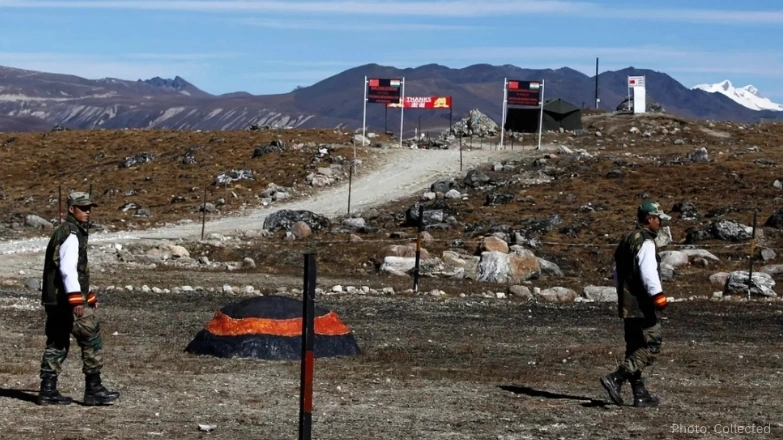
A tribal organization in India’s Arunachal Pradesh has alleged that Chinese troops have gradually occupied traditional grazing, hunting, and farming areas near the disputed frontier over the past six years. The claims have prompted calls for an official investigation, although Indian authorities have not yet publicly verified the allegations.
A tribal community in India's northeastern state of Arunachal Pradesh has raised fresh concerns over alleged Chinese military encroachment along the disputed border, claiming that significant portions of its traditional land have gradually come under the control of China's People's Liberation Army (PLA).
The allegations were made by the Nah Welfare Society, which represents members of the Nah tribal community living in the Upper Subansiri district near the India-China frontier. According to the organization, areas that were historically used for grazing livestock, hunting, farming, and collecting forest resources have become inaccessible due to the reported expansion of Chinese military activity.
The concerns were formally presented in a memorandum submitted to the Deputy Commissioner of Upper Subansiri. In the document, Nah Welfare Society President Keru Chader stated that community members have steadily lost access to ancestral lands that they had freely used for generations.
According to the memorandum, at least five strategically important locations within the Taksing revenue circle have allegedly come under Chinese control. The organization claims that the situation has gradually changed over recent years, with Chinese forces increasing their activities in the region and establishing a stronger presence along the frontier.
Community representatives also alleged that infrastructure development by Chinese forces has accelerated in recent years. They claimed that roads and permanent military facilities have been constructed inside areas they consider part of Indian territory, further restricting local residents from accessing traditional grazing fields, hunting grounds, and culturally significant sites.
Among the locations highlighted in the memorandum are Oying in the Asaphila region, Paniyar in Chuzarta, Marpan in Marnafe, Potrang Lake, and Tindingtang. Local residents describe several of these places as sacred sites with deep cultural and historical importance to the Nah community.
The organization said that many of these areas remained under the community's traditional use until around 2020, but they now claim that access has become increasingly limited. Community leaders argue that Chinese activities in the border region have intensified over the past decade, gradually altering the situation on the ground.
Despite expressing concern over the reported developments, the Nah Welfare Society emphasized that it continues to have confidence in the Indian Armed Forces and acknowledged their longstanding role in protecting the border. However, the organization argued that the current pace and scale of the alleged Chinese advance require stronger government attention and additional measures.
The issue has also drawn the attention of local political leaders. Nacho legislator Nakap Nalo called for an official verification of the claims, stating that any allegations involving the international border should be treated as a matter of national security. He urged the administration to conduct a comprehensive investigation to determine the facts and assess the situation.
As of now, neither the Deputy Commissioner of Upper Subansiri nor senior officials from the Arunachal Pradesh government have issued an official response to the memorandum. Likewise, there has been no immediate public statement from the Indian central government or the military regarding the specific allegations.
The India-China border remains one of the world's longest unresolved territorial disputes, with both countries holding differing perceptions of the Line of Actual Control (LAC). Tensions have periodically surfaced in several sectors over recent years, leading to military deployments and diplomatic efforts aimed at maintaining stability.
At present, the allegations made by the Nah Welfare Society remain unverified by Indian authorities. Whether an official investigation will be launched or further information will emerge from government agencies remains to be seen as local residents continue to seek clarification over the reported situation along the disputed frontier.
Related News



You may like




Tom Holland Says Marvel Has a Plan for the Next Spider-Man
August 1, 2026
Elected News
-
Bangladesh Seeks UN Women Support on Digital Harassment and Women’s Empowerment
-
Bangladesh, Australia Discuss Human Trafficking, Irregular Migration and Rohingya Crisis
-
Bangladesh Plans Internet-Free Access to Mobile Banking and Financial Apps
-
DU to Open Undergraduate Admission Applications on 11 November, Tests Begin 5 December


