Indian Policeman Suspended After Firing AK-47 During Student Protest in Bihar
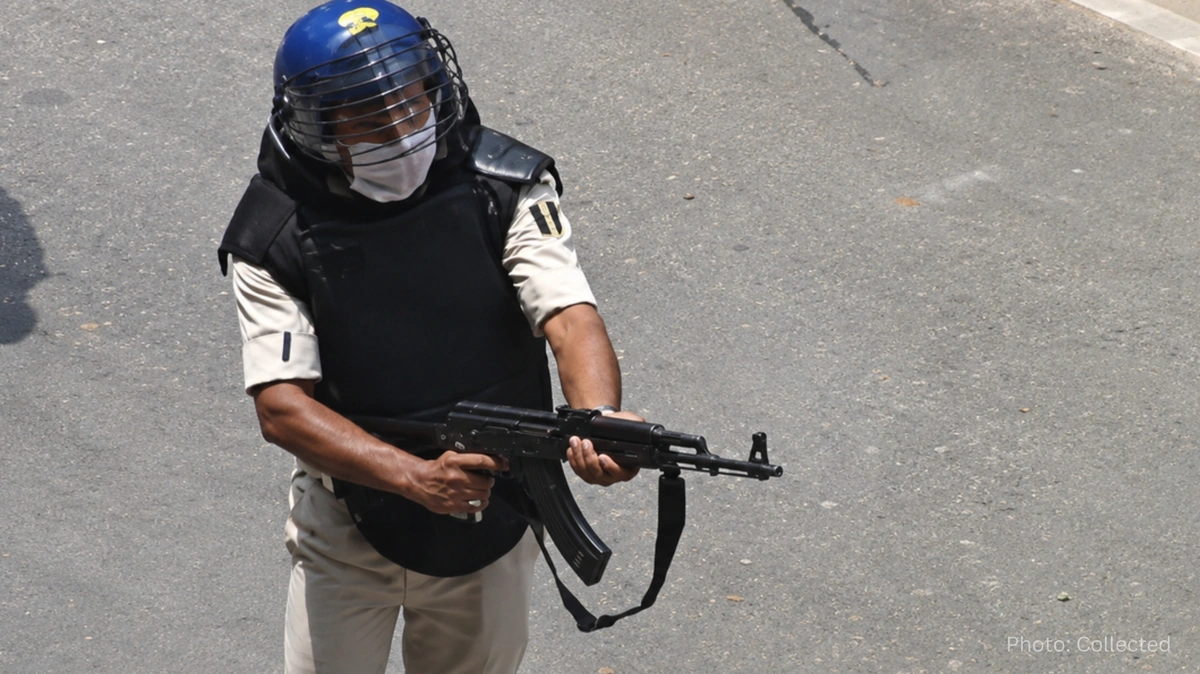
Authorities have suspended a police constable after he fired an assault rifle into the air to disperse student protesters in Bihar, intensifying scrutiny over police conduct as nationwide youth demonstrations continue over examination paper leaks and unemployment concerns.
Indian authorities have suspended a police constable after he fired multiple rounds from an AK-47 rifle during a student protest in the eastern state of Bihar, an incident that has sparked widespread criticism and intensified concerns over the handling of ongoing youth demonstrations across the country.
The incident occurred in Siwan district on Saturday, where student protesters had gathered as part of a broader movement demanding accountability over the alleged leak of question papers for a national medical entrance examination. Videos circulating on social media showed the officer running toward protesters while carrying an assault rifle before firing several shots into the air.
Police later confirmed the authenticity of the footage and acknowledged that the officer's actions violated operational protocols. Officials said no injuries were reported during the incident.
Deputy Inspector General of Police Nilesh Kumar said the constable had been suspended immediately pending further investigation. He explained that the officer belonged to an intelligence unit that typically handles operations involving dangerous criminal suspects, which is why he had been issued the assault rifle.
However, Kumar said there was no justification for using such a weapon during a demonstration involving unarmed students.
He stated that the constable had acted improperly and confirmed that disciplinary proceedings, along with other appropriate actions, would be taken following the investigation.
The suspension comes amid mounting criticism of police tactics used during weeks of nationwide student protests. Demonstrators have accused law enforcement agencies of employing excessive force, including baton charges, tear gas and physical assaults while attempting to disperse crowds.
Large demonstrations have taken place in New Delhi and several other cities after allegations emerged that question papers for India's highly competitive National Eligibility cum Entrance Test (NEET) had been leaked before the examination. More than two million students reportedly sat for the exam, and authorities later ordered a retest following the controversy.
The protests have since expanded beyond the examination scandal, with many young people voicing frustration over unemployment, limited career opportunities and growing concerns about the future impact of artificial intelligence on entry-level jobs, particularly in India's technology and business process outsourcing sectors.
Political pressure over the issue intensified after India's federal education minister stepped down following weeks of demonstrations and criticism from opposition parties.
The latest incident in Bihar quickly became a subject of heated debate in the Indian Parliament.
Congress Party president Mallikarjun Kharge strongly criticized the police response, describing the treatment of protesting students as a serious assault on democratic values. Referring to reports of an AK-47 being used during the protest, he argued that those responsible should be held fully accountable.
Parliamentary proceedings were repeatedly disrupted as opposition lawmakers demanded explanations from the government regarding both the police action and the broader handling of the student movement.
Government ministers did not immediately issue a detailed public response before parliamentary sessions were adjourned amid continued protests and political disagreements.
The controversy has also prompted concern within India's legal community.
Supreme Court Justice Ujjal Bhuyan, speaking at a public event over the weekend, warned that the space for citizens to peacefully express differing opinions appeared to be shrinking. Without directly commenting on the Bihar incident, he emphasized that the right to peaceful protest and freedom of expression are fundamental constitutional rights that must be protected.
His remarks were widely interpreted as a broader reflection on the country's handling of public demonstrations and civil liberties.
Civil society groups and student organizations have also renewed calls for an independent review of policing methods during protests, arguing that law enforcement should prioritize restraint and dialogue when dealing with peaceful demonstrators.
The Bihar incident has added further momentum to an already volatile national debate surrounding education reforms, employment opportunities and democratic rights. As investigations into both the constable's conduct and the examination paper leak continue, the protests are expected to remain a significant political and social challenge for the Indian government in the coming weeks.
Related News


You may like




Tom Holland Says Marvel Has a Plan for the Next Spider-Man
August 1, 2026
Elected News
-
Bangladesh Seeks UN Women Support on Digital Harassment and Women’s Empowerment
-
Bangladesh, Australia Discuss Human Trafficking, Irregular Migration and Rohingya Crisis
-
Bangladesh Plans Internet-Free Access to Mobile Banking and Financial Apps
-
DU to Open Undergraduate Admission Applications on 11 November, Tests Begin 5 December


