Former Nanjing Official Sentenced to Death in China Over $325 Million Bribery Case
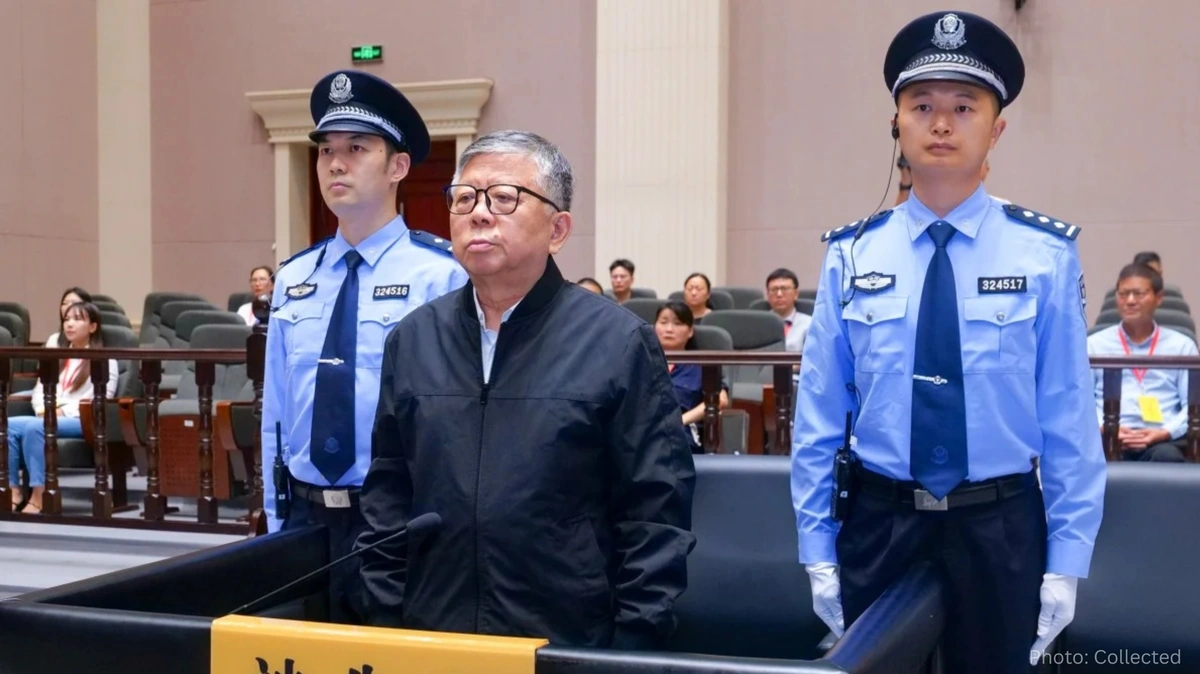
A Chinese court has sentenced former Nanjing official Yang Youlin to death after convicting him of accepting more than 2.2 billion yuan in bribes, describing the case as one of the country's most significant corruption scandals in recent years.
A court in eastern China has sentenced former senior government official Yang Youlin to death after finding him guilty of accepting more than 2.2 billion yuan (approximately $325 million) in bribes over a period spanning three decades, in one of the country's largest corruption cases in recent years.
The verdict was delivered by the Changzhou Intermediate People's Court following an extensive investigation into Yang's activities while serving in a series of influential public positions in the city of Nanjing between 1993 and 2023.
According to Chinese authorities, the 69-year-old former official was convicted on multiple criminal charges, including bribery, embezzlement, abuse of power, and money laundering. Prosecutors said his actions resulted in significant financial losses to the state while undermining public confidence in government institutions.
Court documents stated that Yang used the authority and influence of his public offices to benefit individuals and businesses seeking engineering contracts, land transfers, financing approvals, and other administrative advantages. In return, he allegedly accepted enormous sums of money along with valuable gifts over many years.
Investigators concluded that the total value of the illegal benefits exceeded 2.2 billion yuan, making the case one of the largest financial corruption scandals uncovered under China's ongoing anti-corruption campaign.
In announcing its decision, the Changzhou court described Yang's offences as "extremely serious" and said they had caused "exceptionally heavy losses" to both the state and the public interest.
Although Yang reportedly cooperated with investigators during the legal process and admitted his crimes in court, judges ruled that the scale and severity of the offences outweighed any mitigating factors.
According to state media, Yang expressed remorse during his final statement before sentencing and pleaded guilty to the charges brought against him. However, the court determined that his cooperation did not justify a reduced punishment given the magnitude of the corruption involved.
The case emerged as part of Chinese President Xi Jinping's long-running anti-corruption drive, which has become one of the defining features of his administration since taking office. The campaign has led to investigations and prosecutions involving thousands of government officials, military personnel, executives of state-owned enterprises, and financial sector leaders.
Chinese authorities have consistently maintained that the anti-graft campaign is aimed at strengthening governance, improving public accountability, and restoring confidence in government institutions by eliminating corruption at all levels.
At the same time, some international observers and critics have argued that certain high-profile investigations have also served broader political objectives by targeting influential figures within the country's political establishment.
China maintains some of the world's toughest penalties for corruption-related crimes. While lengthy prison terms and suspended death sentences are more common outcomes in major bribery cases, courts may impose capital punishment in exceptionally serious cases involving enormous financial losses or particularly grave abuse of public office.
Legal experts note that suspended death sentences are frequently commuted to life imprisonment after a designated period if the convicted individual demonstrates good behaviour and meets other legal requirements. Immediate death sentences, however, are comparatively rare and are generally reserved for the most severe corruption cases.
Several high-profile convictions in recent years have reflected China's increasingly strict approach toward financial crimes involving senior officials. In 2021, former financial executive Lai Xiaomin was executed after being convicted of accepting approximately 1.8 billion yuan in bribes. In another major case, former Inner Mongolia official Li Jianping was executed in 2024 after being found guilty of corruption offences involving more than three billion yuan.
The sentencing of Yang Youlin adds another prominent case to China's expanding anti-corruption campaign and reinforces the government's message that large-scale abuse of public office will continue to face severe legal consequences.
Chinese authorities have indicated that efforts to combat corruption across government departments, financial institutions, and state-owned enterprises will remain a central priority as the country continues its broader governance and accountability reforms.
Related News




You may like




Tom Holland Says Marvel Has a Plan for the Next Spider-Man
August 1, 2026
Elected News
-
Bangladesh Seeks UN Women Support on Digital Harassment and Women’s Empowerment
-
Bangladesh, Australia Discuss Human Trafficking, Irregular Migration and Rohingya Crisis
-
Bangladesh Plans Internet-Free Access to Mobile Banking and Financial Apps
-
DU to Open Undergraduate Admission Applications on 11 November, Tests Begin 5 December


