India Closely Monitoring Bangladesh's Reported China Fighter Jet Talks and Regional Corridor Proposal
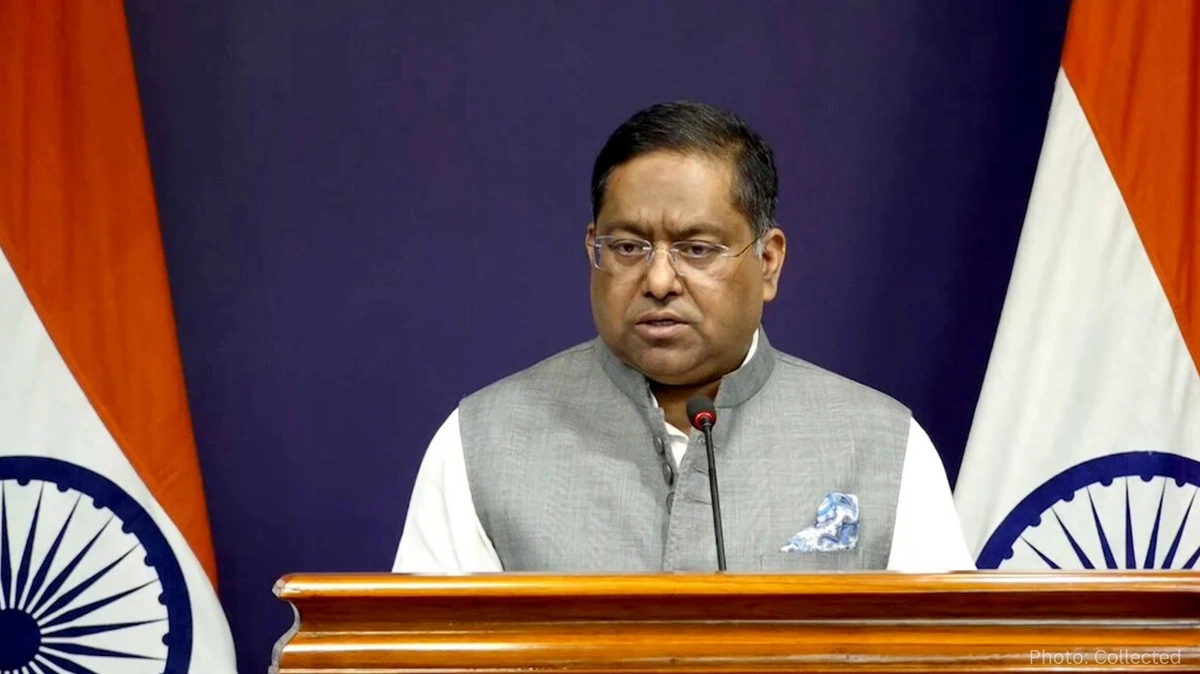
India has said it is closely watching reports of Bangladesh's reported discussions with China over the possible acquisition of J-10CE fighter aircraft, as well as Beijing's proposal for a China-Myanmar-Bangladesh economic corridor. New Delhi also reiterated that its development cooperation with Bangladesh continues under a mutually agreed framework while reaffirming its previously stated position on the Teesta River project.
India has confirmed that it is closely monitoring recent developments surrounding Bangladesh's reported engagement with China on defense cooperation and regional connectivity, signaling that the evolving dynamics will be taken into account as New Delhi shapes its broader policy toward its eastern neighbor.
Speaking at a media briefing in New Delhi on Friday, Ministry of External Affairs spokesperson Randhir Jaiswal said India remains attentive to strategic developments in neighboring countries, including reports suggesting Bangladesh is exploring the possible purchase of Chinese-made J-10CE multirole fighter aircraft and considering Beijing's proposal for a China-Myanmar-Bangladesh economic corridor.
Responding to questions from journalists, Jaiswal said India consistently monitors significant developments across the region and evaluates their implications as part of its foreign policy and security assessment.
"We closely follow all such developments in our neighbourhood and take appropriate measures as required," he said, without providing further details on any specific measures under consideration.
The remarks followed media reports claiming that discussions on military cooperation and regional infrastructure initiatives featured during Bangladesh Prime Minister Tarique Rahman's recent official visit to China. Although no formal agreement has been publicly announced regarding the reported fighter jet negotiations or the proposed economic corridor, the reports have drawn attention due to their potential geopolitical significance in South Asia.
The reported interest in the Chinese J-10CE fighter aircraft comes amid Bangladesh's ongoing efforts to modernize its armed forces and diversify its defense capabilities. The aircraft is regarded as one of China's advanced multirole combat platforms and has attracted interest from several countries seeking to expand their air defense capabilities.
In addition to defense cooperation, questions were also raised during the briefing regarding China's reported willingness to support the long-discussed Teesta River development project, an issue that has remained sensitive in Bangladesh-India relations because of the shared transboundary river.
Addressing the matter, Jaiswal reiterated that India's development partnership with Bangladesh is based on mutually agreed priorities and continues to operate under an established framework.
"Our developmental assistance for projects in Bangladesh is based on a mutually agreed roadmap which is regularly reviewed," he said.
Commenting specifically on the Teesta project, the Indian spokesperson noted that New Delhi had already communicated its position to the Bangladeshi authorities in previous discussions.
"Our views on the Teesta river project have been previously conveyed to the Bangladesh side," Jaiswal said, adding that India would consider all related developments as part of its overall approach toward Bangladesh.
The Teesta River has long been a key issue in bilateral relations between the two countries, with negotiations over water-sharing arrangements continuing for years. While Bangladesh has sought progress on a comprehensive agreement, the issue has remained unresolved due to political and administrative considerations within India.
Meanwhile, China's reported proposal to establish a China-Myanmar-Bangladesh economic corridor has also generated regional interest. Supporters argue that such a corridor could strengthen trade, infrastructure connectivity, and investment opportunities across the region. However, any major connectivity initiative involving multiple countries is expected to receive close scrutiny from neighboring governments because of its potential strategic and economic implications.
India and Bangladesh maintain extensive cooperation across a wide range of sectors, including trade, energy, security, transport, and development. Despite periodic differences on certain bilateral issues, both countries have continued to emphasize the importance of dialogue and collaboration in maintaining regional stability and economic growth.
While New Delhi has not officially commented on the substance of Bangladesh's reported discussions with Beijing, Friday's remarks indicate that India is carefully assessing ongoing developments. Whether the reported proposals ultimately lead to formal agreements remains uncertain, but the evolving regional landscape is expected to remain an important factor in India's diplomatic and strategic engagement with Bangladesh in the months ahead.
Related News




You may like




Tom Holland Says Marvel Has a Plan for the Next Spider-Man
August 1, 2026
Elected News
-
Bangladesh Seeks UN Women Support on Digital Harassment and Women’s Empowerment
-
Bangladesh, Australia Discuss Human Trafficking, Irregular Migration and Rohingya Crisis
-
Bangladesh Plans Internet-Free Access to Mobile Banking and Financial Apps
-
DU to Open Undergraduate Admission Applications on 11 November, Tests Begin 5 December


