India's Education Minister Resigns as Weeks of Student Protests Force Major Government Concession
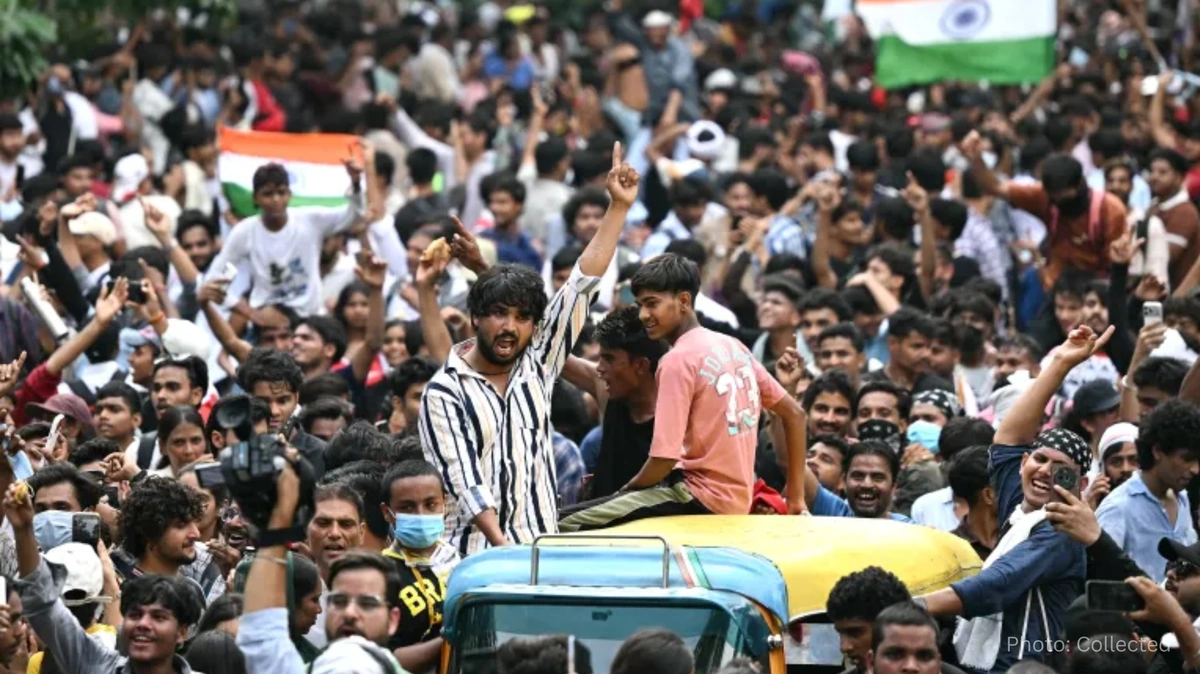
India's Education Minister Dharmendra Pradhan has resigned following weeks of nationwide protests over examination paper leaks, marking the first major political concession by Prime Minister Narendra Modi's government. Protest leaders welcomed the resignation as a victory but vowed to continue demonstrations until their remaining demands are fulfilled.
India's Education Minister Dharmendra Pradhan has stepped down after weeks of nationwide protests demanding accountability over a series of examination paper leak scandals, delivering a significant victory to the country's youth-led protest movement and marking the first major concession by Prime Minister Narendra Modi's government since the demonstrations began.
Pradhan announced his resignation on Saturday through a statement shared on social media, saying he had submitted his resignation to Prime Minister Narendra Modi in the interest of protecting students and preventing the ongoing unrest from being exploited by what he described as "anti-national forces."
In his statement, the minister expressed respect for the aspirations and concerns of India's youth, adding that he did not want students to become entangled in prolonged legal or political conflicts at a critical stage of their education and careers.
The resignation came as security forces used tear gas to disperse demonstrators gathered in New Delhi, where thousands of protesters had assembled ahead of another scheduled round of talks between movement leaders and senior government officials.
The protests have been led by the Cockroach Janta Party (CJP), a youth-driven political satire movement that emerged as the face of public anger over repeated examination paper leaks affecting competitive tests across the country. The movement argues that widespread irregularities have undermined trust in India's education system and damaged the futures of countless students.
Celebrations erupted at protest sites in New Delhi and several other cities immediately after news of Pradhan's resignation spread. Demonstrators waved flags, chanted slogans and described the development as a victory for democracy and public pressure.
Despite welcoming the minister's departure, CJP leaders made it clear that the protests would not end immediately. They reiterated three remaining demands, including financial compensation for families of students who died by suicide following examination controversies, immunity from legal action for those who participated in the demonstrations, and a public apology from security forces over their handling of recent protests.
Movement leaders said the resignation represented only one step toward broader reforms and insisted they would continue peaceful demonstrations until all outstanding demands are addressed.
The protest movement has grown rapidly over recent weeks, drawing support from students, opposition parties and civil society groups frustrated by recurring allegations of corruption and mismanagement in India's examination system. Demonstrators have accused authorities of failing to protect the integrity of competitive examinations, which play a crucial role in university admissions and government recruitment.
The unrest intensified earlier this week after police moved to disperse crowds marching toward Parliament in New Delhi. Protesters alleged that security forces used batons, tear gas and other crowd-control measures that left numerous students injured, further fueling public outrage.
In response to mounting pressure, Modi's government had already announced plans to introduce tougher legislation against examination fraud and establish fast-track courts to prosecute those responsible for paper leaks. Officials argued that these measures would strengthen the integrity of the examination process and restore public confidence.
However, protest organizers maintained that structural reforms remain necessary, insisting that accountability should extend beyond legal changes to include political responsibility for the failures that allowed repeated examination scandals to occur.
Government representatives and CJP leaders had held an initial round of negotiations on Friday, with another meeting expected following the minister's resignation. It remains uncertain whether those talks will proceed as originally planned or if new negotiations will be arranged under different leadership.
The weeks-long demonstrations have become one of the most significant public challenges facing Prime Minister Modi's administration in recent years, highlighting growing frustration among young people over employment opportunities, education, governance and institutional accountability.
With Pradhan's resignation now confirmed, attention is shifting toward the government's next steps, including the appointment of a new education minister and whether additional reforms or concessions will be introduced to calm the nationwide movement. Protest organizers, meanwhile, say they will continue mobilizing supporters until they believe meaningful justice has been delivered.
Related News

You may like



Tom Holland Says Marvel Has a Plan for the Next Spider-Man
August 1, 2026
Elected News
-
Bangladesh Seeks UN Women Support on Digital Harassment and Women’s Empowerment
-
Bangladesh, Australia Discuss Human Trafficking, Irregular Migration and Rohingya Crisis
-
Bangladesh Plans Internet-Free Access to Mobile Banking and Financial Apps
-
DU to Open Undergraduate Admission Applications on 11 November, Tests Begin 5 December


