Syrian President Ahmed al-Sharaa Says Damascus Pursuing Security Agreement with Israel
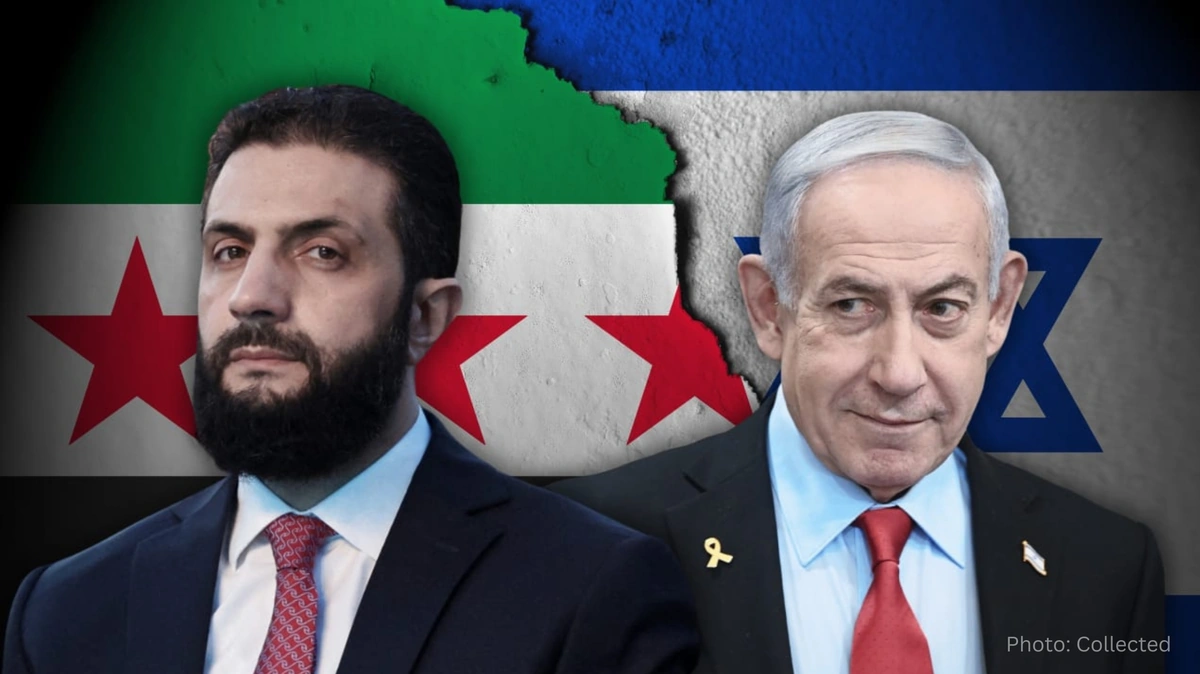
In an exclusive interview, Syrian President Ahmed al-Sharaa says Damascus is working toward a security arrangement with Israel while reaffirming Syria’s claim to the occupied Golan Heights and outlining his government’s approach to regional stability, Lebanon and domestic reforms.
Syrian President Ahmed al-Sharaa has revealed that his government is actively pursuing a security agreement with Israel, describing the initiative as a potential first step toward broader regional peace while insisting that Syria's longstanding claim to the occupied Golan Heights remains unchanged.
Speaking in an exclusive interview with Al Jazeera, al-Sharaa said discussions involving several international partners are underway to establish a security framework aimed at reducing tensions between the two countries. He expressed hope that such an arrangement could eventually create the conditions for a more comprehensive political settlement.
The Syrian leader emphasized that the proposed agreement would not affect Damascus's position regarding the Golan Heights, a territory captured and occupied by Israel during the 1967 Middle East war and later annexed in a move that has not been widely recognized internationally. Syria continues to regard the area as occupied territory.
Al-Sharaa said his administration is seeking to avoid direct military confrontation with Israel despite repeated Israeli military operations in southern Syria since the change of government in late 2024. According to the president, a security understanding could help prevent further escalation while opening the door to wider diplomatic engagement.
The comments come as regional tensions remain high following months of Israeli military activity inside Syria and ongoing instability across the Middle East.
During the interview, al-Sharaa also addressed neighbouring Lebanon, rejecting speculation that Syria intends to intervene militarily in the country. Instead, he said Damascus is focused on supporting efforts that would help Lebanon overcome its prolonged political, economic and security challenges.
He stressed that Syria supports strengthening Lebanese state institutions and believes decisions concerning war, peace and national security should remain exclusively under the authority of the Lebanese government.
The president argued that resolving Lebanon's crisis requires more than security measures alone, calling for a comprehensive political and economic approach to address the country's longstanding structural problems.
Al-Sharaa also warned that any further deterioration in Lebanon's security situation would have immediate consequences for Syria because of the close geographical, economic and humanitarian ties between the two countries.
He further cautioned that a wider regional conflict involving Israel, Iran or other regional actors could have severe consequences for stability throughout the Middle East.
On domestic affairs, the Syrian president discussed efforts to rebuild the country's economy after years of conflict. While welcoming the easing of international sanctions, he said meaningful economic recovery would require Syria's removal from international terrorism-related designation lists in addition to sanctions relief.
According to al-Sharaa, lifting economic restrictions alone would not be sufficient to attract investment, restore financial confidence or accelerate reconstruction unless broader international political measures accompany those steps.
The president also addressed the implementation of an agreement reached with the Kurdish-led Syrian Democratic Forces (SDF), which controls large areas of northern and eastern Syria. He acknowledged that progress has been slower than expected but reaffirmed his government's commitment to fully implementing the agreement through continued dialogue.
Humanitarian issues also featured prominently during the interview.
Al-Sharaa announced that Syrian authorities have established a dedicated committee to investigate the fate of people who disappeared during the country's civil war, which lasted from 2011 until the political transition in 2024.
He said the committee would operate in accordance with internationally recognized standards and cooperate closely with countries and organizations possessing expertise in documenting missing persons and conducting identification efforts.
International estimates suggest that tens of thousands of Syrians disappeared during the conflict, while some Syrian institutions believe the actual number could be significantly higher.
The president said addressing the issue of missing persons is essential both for delivering justice to affected families and for supporting Syria's long-term national reconciliation efforts.
Al-Sharaa's remarks offer one of the clearest indications yet of his administration's foreign policy priorities following the country's political transition. While significant diplomatic and security challenges remain, his government appears to be pursuing a strategy centered on reducing regional tensions, strengthening state institutions and advancing reconstruction efforts after more than a decade of conflict.
Related News

You may like




Tom Holland Says Marvel Has a Plan for the Next Spider-Man
August 1, 2026
Elected News
-
Bangladesh Seeks UN Women Support on Digital Harassment and Women’s Empowerment
-
Bangladesh, Australia Discuss Human Trafficking, Irregular Migration and Rohingya Crisis
-
Bangladesh Plans Internet-Free Access to Mobile Banking and Financial Apps
-
DU to Open Undergraduate Admission Applications on 11 November, Tests Begin 5 December


