China Opposes External Interference in Bangladesh’s Internal Affairs, Envoy Reaffirms Support for Teesta Project
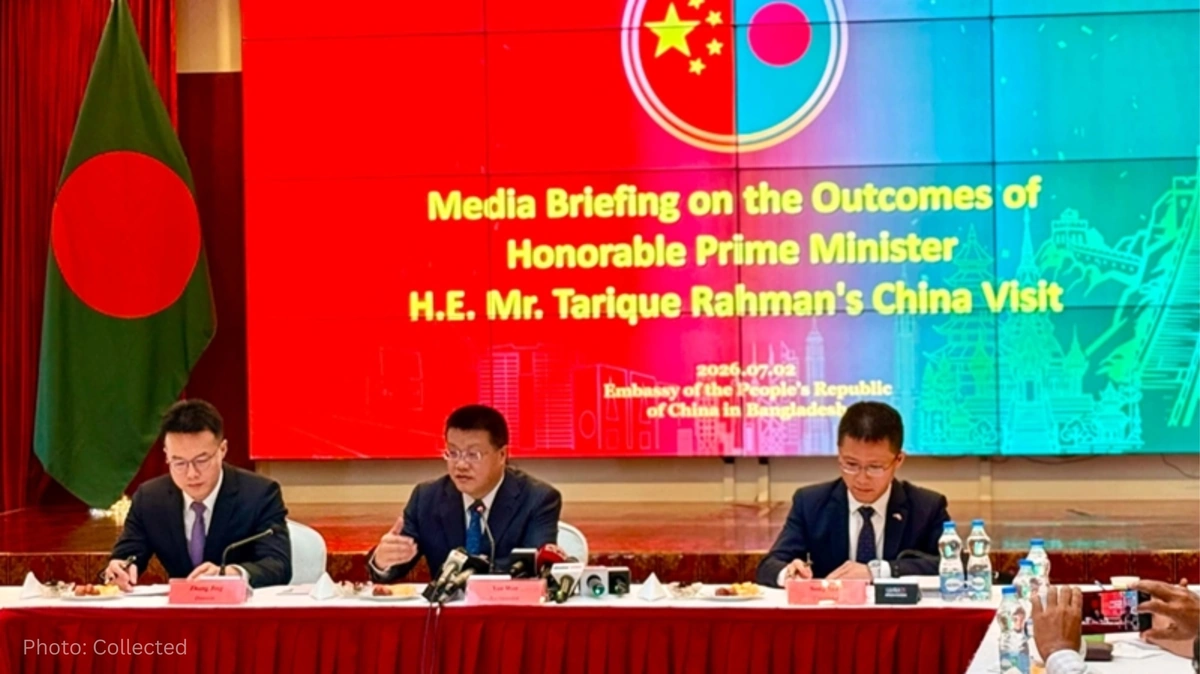
Chinese Ambassador Yao Wen says Beijing remains committed to supporting Bangladesh’s development priorities, including the Teesta River project, while describing Prime Minister Tarique Rahman’s recent visit to China as a significant step toward strengthening bilateral strategic ties.
China has reiterated its opposition to any external interference in Bangladesh’s internal affairs, with Chinese Ambassador to Bangladesh Yao Wen reaffirming Beijing’s longstanding position during a press conference held at the Chinese Embassy in Dhaka on Thursday.
Addressing journalists following Prime Minister Tarique Rahman’s recent official visit to China, the ambassador said Beijing respects Bangladesh’s sovereignty and believes matters concerning the country’s domestic affairs should be resolved without outside intervention.
Yao Wen stated that China would not accept interference by any external party in Bangladesh’s internal issues, emphasizing Beijing’s commitment to maintaining its policy of mutual respect, non-interference, and cooperation with Dhaka.
The ambassador also reiterated China’s willingness to continue supporting the proposed Teesta River project at Bangladesh’s request. He said China’s position on the project has remained unchanged and that Beijing would continue providing assistance within its capabilities if the initiative moves forward.
According to Yao, China’s involvement in the Teesta project is based on Bangladesh’s development priorities, adding that Beijing remains focused on expanding practical cooperation rather than becoming involved in unrelated political matters.
Speaking about Prime Minister Tarique Rahman’s visit to China, the envoy described the trip as highly successful and said it had elevated bilateral relations to a new strategic level. He noted that discussions between the two sides had strengthened political trust and reinforced the foundation for broader cooperation in multiple sectors.
The ambassador said the visit helped create a new level of confidence between Bangladesh and China, opening additional opportunities for collaboration in trade, infrastructure, investment, technology, and other areas of mutual interest. He added that both countries remain committed to deepening their comprehensive partnership through continued dialogue and practical cooperation.
On the issue of technological collaboration, Yao Wen also addressed China's role in artificial intelligence development. He said there should be no doubts regarding Beijing’s willingness to cooperate with Bangladesh in advancing AI technologies and related innovation. According to the ambassador, China remains prepared to expand knowledge-sharing and technical cooperation to support Bangladesh’s digital transformation and economic development goals.
China has become one of Bangladesh’s largest development partners in recent years, supporting numerous infrastructure, energy, transportation, and industrial projects. Bilateral economic cooperation has continued to expand through investments, trade agreements, and development financing, making China one of Bangladesh’s key strategic partners in Asia.
The Teesta River project has remained a significant topic in Bangladesh’s development agenda due to its potential role in improving irrigation, water management, agriculture, and regional economic activity in the country’s northern districts. China has previously expressed interest in participating in the project if requested by the Bangladeshi government.
The ambassador’s remarks come amid growing cooperation between Dhaka and Beijing across several sectors, including infrastructure development, digital technology, renewable energy, manufacturing, and education. Officials from both countries have repeatedly emphasized their intention to strengthen long-term economic and strategic ties based on mutual benefit and respect for sovereignty.
Observers say the latest statements reflect China’s continued commitment to expanding its partnership with Bangladesh while reinforcing its diplomatic position on non-interference in domestic affairs. As both nations seek to broaden cooperation through high-level engagements and development initiatives, the outcomes of recent bilateral discussions are expected to shape future collaboration in key strategic sectors.
Related News





You may like




Tom Holland Says Marvel Has a Plan for the Next Spider-Man
August 1, 2026
Elected News
-
Bangladesh Seeks UN Women Support on Digital Harassment and Women’s Empowerment
-
Bangladesh, Australia Discuss Human Trafficking, Irregular Migration and Rohingya Crisis
-
Bangladesh Plans Internet-Free Access to Mobile Banking and Financial Apps
-
DU to Open Undergraduate Admission Applications on 11 November, Tests Begin 5 December


