Pilkhana Massacre: Shocking new clues of foreign involvement
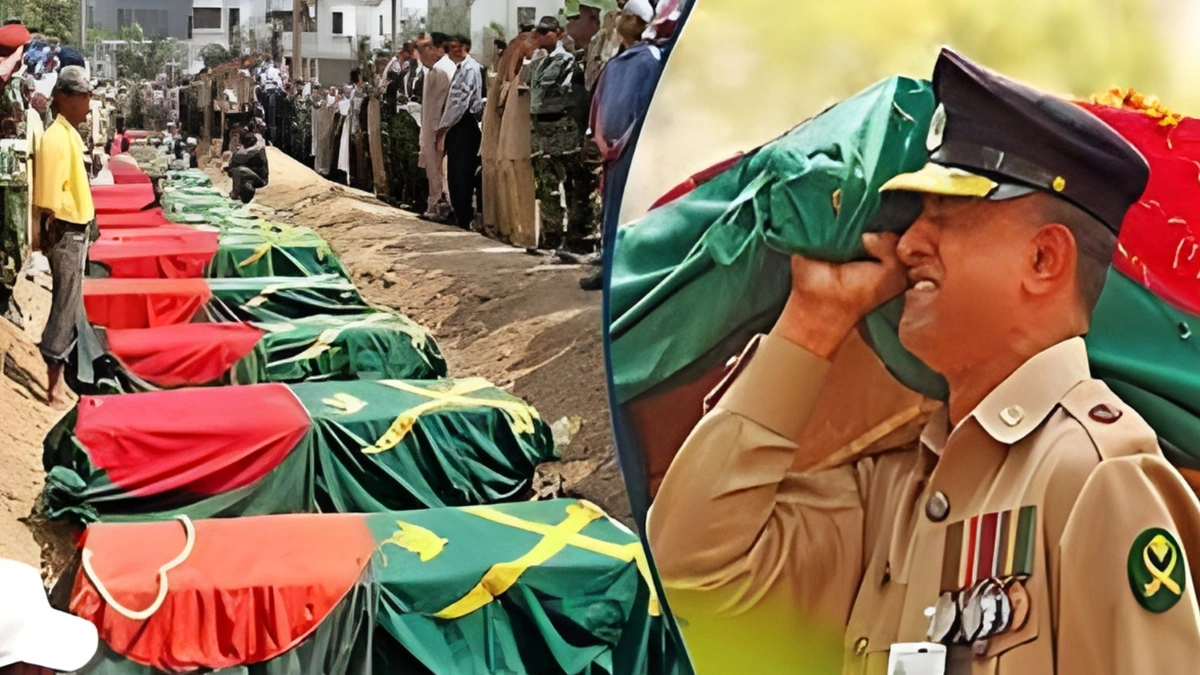
The Pilkhana killings, carried out under the guise of a BDR mutiny, were pre-planned. Evidence has emerged of direct involvement by foreign forces. The then ruling party, the Awami League, was linked to those forces.
According to the findings, the Pilkhana killings-carried out in the name of a BDR mutiny-were planned in advance. Evidence has been found of direct involvement by foreign forces. The then ruling party, the Awami League, is said to have been linked to those forces.
The principal coordinator behind the event was reportedly Sheikh Fazle Noor Taposh, who was then a Member of Parliament and later became the Mayor of Dhaka South City Corporation. The report states that the incident had the “green signal” of Sheikh Hasina.
Local Awami League leaders allegedly protected those involved after the killings. Right after the incident, a procession of 20–25 people entered Pilkhana, but more than 200 came out. The then Army Chief, General Moeen U Ahmed, is also mentioned as bearing responsibility. Many individuals allegedly linked to the event left the country. Why the army remained passive and did not take action has also been described as mysterious.
These serious points were presented in the report of the National Independent Investigation Commission, formed to investigate the 2009 Pilkhana massacre-the deadliest incident in the country’s history. The report says strong evidence has been found against the accused.
On Sunday, the commission’s head, Major General (Retd.) A. L. M. Fazlur Rahman, submitted the report to Chief Adviser Professor Dr. Muhammad Yunus at the state guest house Jamuna. Other commission members were also present. The Chief Adviser said the nation had long remained in the dark about the BDR killings and had many unanswered questions. He said the report would help resolve those questions and serve as a valuable national resource.
According to a press release from the Chief Adviser’s Press Wing, Commission Chairman Fazlur Rahman spoke after submitting the report. He said the investigation tried to answer every question the public had regarding the BDR killings-clarifying who played what role, including why the army did not intervene at the time.
He said the investigation found direct involvement of foreign forces. He added that strong evidence indicated the direct involvement of the then ruling Awami League. He claimed the investigation was conducted with maximum professionalism to keep it fair, neutral, and error-free.
Because the incident occurred 16 years ago, many pieces of evidence had already been destroyed, he said. Many individuals allegedly linked to the event have gone abroad. The commission followed two main processes: They called witnesses-listening to some testimonies for up to eight hours-and they spoke to those who were involved in earlier investigations, collecting their reports and other remaining evidence.
Commission member Jahangir Kabir Talukder said the commission uncovered the external factors behind the incident. He said the killing was planned and that Sheikh Fazle Noor Taposh played the role of chief coordinator. Local Awami League actors allegedly helped protect those involved. They entered Pilkhana with a procession of 20–25 people and came out with more than 200. The entire incident, he said, took place with the “green signal” of the then Prime Minister Sheikh Hasina.
Regarding responsibility, he said it extended from the then head of government to the army chief. A political solution had been chosen for the situation. Police, RAB, and intelligence agencies also reportedly failed heavily. Some print and electronic media outlets, along with a few journalists, acted unprofessionally at the time.
Another commission member stated that the identities and background records of the BDR soldiers who met Sheikh Hasina at the Prime Minister’s residence during the incident were not preserved properly. The commission has included several recommendations in the report to prevent similar incidents in the future and ensure justice for the victims.
Commission members include Major General (Retd.) Md. Jahangir Kabir Talukder, Brigadier General (Retd.) Md. Saidur Rahman Bir Pratik, former Joint Secretary Munsi Alauddin Al Azad, former DIG Dr. M. Akbar Ali, Associate Professor Md. Shariful Islam of Dhaka University’s Department of Political Science, and Assistant Professor Md. Shahnewaz Khan Chandan of Jagannath University’s Institute of Education and Research. Also present at Sunday’s meeting were National Security Adviser Dr. Khalilur Rahman, Special Assistant on Defence and National Cohesion Lt. General (Retd.) Abdul Hafiz, and Home Secretary Nasimul Gani.
Notably, on 25–26 February 2009, 57 army officers were killed in an attack by mutinous BDR soldiers at Pilkhana, the headquarters of what was then Bangladesh Rifles. A committee was formed at the time to investigate the incident, but its report was never released. After the mass uprising that toppled the previous government, families of the victims filed complaints on 17 December last year with the Chief Prosecutor’s Office of the International Crimes Tribunal against Sheikh Hasina, Moeen U Ahmed, and 58 others. The government formed a new investigation committee on 23 December. Its responsibilities included identifying perpetrators, collaborators, conspirators, evidence destroyers, and instigators-both domestic and foreign individuals, groups, institutions, and organizations.
Related News


You may like




Tom Holland Says Marvel Has a Plan for the Next Spider-Man
August 1, 2026
Elected News
-
Bangladesh Seeks UN Women Support on Digital Harassment and Women’s Empowerment
-
Bangladesh, Australia Discuss Human Trafficking, Irregular Migration and Rohingya Crisis
-

Bangladesh Plans Internet-Free Access to Mobile Banking and Financial Apps
-
DU to Open Undergraduate Admission Applications on 11 November, Tests Begin 5 December


