In Islam, voting is a trust and testimony

In the modern world, the importance of voting is immense. In democratic countries, elections are the only means of decentralizing power. Islam evaluates the act of voting in three ways.First: From an Islamic perspective, when a voter casts his valuable vote, he is essentially giving testimony that the candidate is a qualified person. By voting, he testifies that this candidate is, in his judgment, the best, honest, and suitable individual. But if this testimony is false or baseless, then according to Islamic teachings, false testimony is a grave sin. It is a heinous act that can ruin both worldly life and the Hereafter.
Therefore, if a person casts his vote for someone while knowing that another candidate is more just and more qualified, then the voter has given false testimony through his vote. For this, he will bear the punishment of false testimony. On the other hand, the one who votes for a qualified candidate has fulfilled his responsibility properly, given true testimony, and earned great reward. Allah the Almighty declares: “Stand out firmly for justice, as witnesses to Allah.” (Surah An-Nisa 4:135).
Second: Another dimension of voting is recommendation. By voting, a voter recommends the candidate for the position he seeks. In this regard, the Qur’an says: “Whoever intercedes for a good cause will have a share in it, and whoever intercedes for an evil cause will have a share in it.” (Surah An-Nisa 4:85).
Third: Through voting, representation is granted. Those who win through people’s votes and run the parliament are representatives of the people. The one who wins is the representative of those who voted for him. Therefore, voters must think carefully when choosing their representatives, because all the good or bad deeds carried out through those representatives will also be shared by the voters who appointed them. Moreover, voting does not only appoint a personal representative, but it selects representatives for the entire nation and country. The welfare or harm of the whole people depends on those elected representatives. Thus, anyone who uses his vote to place an unworthy person in leadership will also bear responsibility for the consequences, and one day will face the results of this action.
Those who are aware of the instructions of the Qur’an and Hadith know well that testifying, recommending, and entrusting authority for representation hold immense importance in Islamic Shari’ah. Therefore, in today’s flawed electoral system, in order to resist falsehood, fraud, and corruption in governance, to stand with the oppressed against the oppressor, and to build a peaceful and just society, one must take an oath to vote in the right place. Giving true testimony, voting for a qualified candidate, and granting representation to a virtuous person must be firm steps taken by every believer. In any election, voters must exercise their voting right with wisdom and sound judgment, being conscious to select the best or, at least, the better among the candidates.
The guardian of society, state, and nation must be a symbol of trust and faith guided by justice, generosity, and God-consciousness. Human dignity, life, and property should remain safe under his care. He must embody knowledge, wisdom, skill, experience, justice, honesty, public service, and a welfare-oriented mindset. From an Islamic viewpoint, a voter must be able to evaluate the candidate’s qualifications before voting. One must ensure that through his vote, he is discharging the trust properly, giving testimony truthfully, and recommending the right person for representation.
However, in today’s much-discussed PR (Proportional Representation) electoral system, voters do not get the chance to evaluate or directly vote for an individual candidate. Votes are cast for parties, and seats are distributed proportionally. The party then decides who will occupy the seats. In such a system, truly qualified candidates may be left out, including the very candidate a voter considers best. For party interests, unworthy individuals may be nominated. As a result, a person may cast his vote in Chouddagram, but the MP might be chosen from Kurigram. Thus, in this system, the trust (amanah) of the voter cannot be properly entrusted to the rightful person.
Writer: Researcher, Islamic Research Center, Bashundhara, Dhaka
Related News
You may like




Tom Holland Says Marvel Has a Plan for the Next Spider-Man
August 1, 2026
Elected News
-
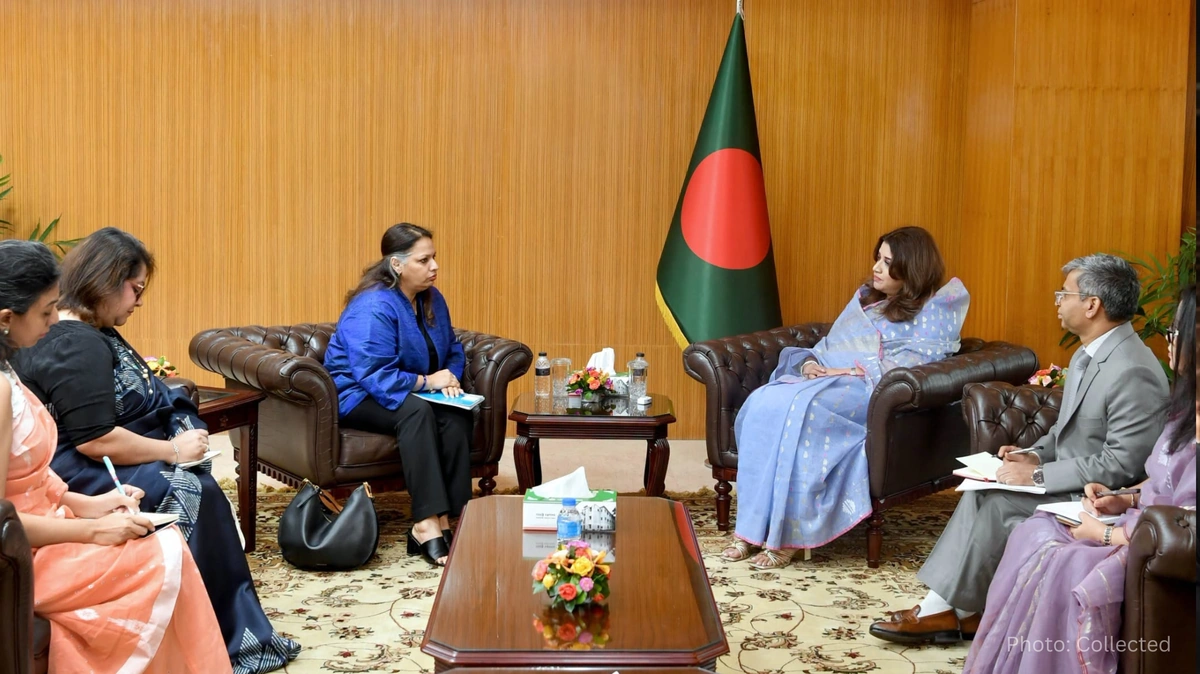
Bangladesh Seeks UN Women Support on Digital Harassment and Women’s Empowerment
-

Bangladesh, Australia Discuss Human Trafficking, Irregular Migration and Rohingya Crisis
-

Bangladesh Plans Internet-Free Access to Mobile Banking and Financial Apps
-

DU to Open Undergraduate Admission Applications on 11 November, Tests Begin 5 December


