Changing Family Structure in Bangladesh Reflects Social and Economic Transformation
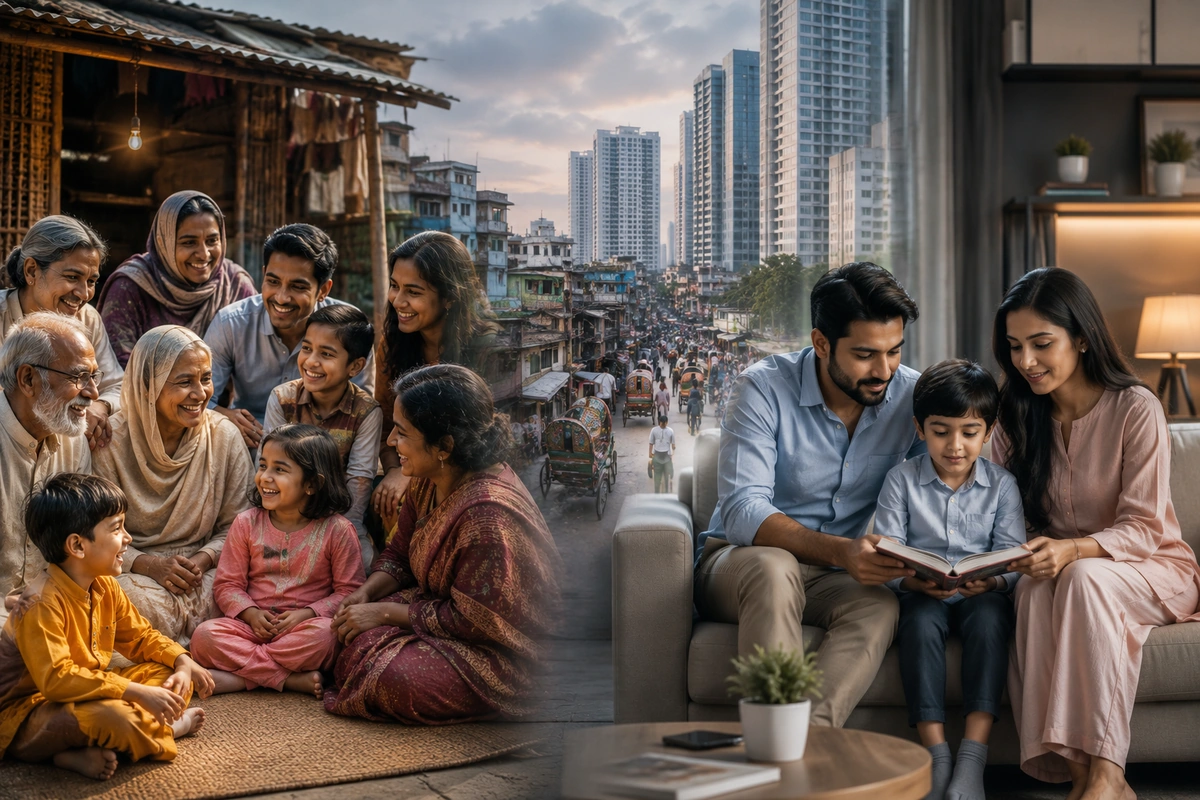
Urbanization, migration, rising education levels and changing workforce participation are reshaping family life in Bangladesh, bringing new opportunities alongside emerging social challenges.
Bangladesh is witnessing a significant shift in its family structure as rapid urbanization, economic development and changing social norms transform the way people live and interact. Researchers and international organizations say the traditional joint family system is gradually giving way to smaller nuclear households, reflecting broader demographic and economic changes across the country.
According to the United Nations Population Fund (UNFPA) and the Bangladesh Bureau of Statistics (BBS), household sizes have steadily declined over the past two decades as families move to urban areas in search of employment, education and improved living standards. The trend mirrors changes seen across many developing economies where industrialization and urban growth have altered traditional living arrangements.
The World Bank reports that Bangladesh has experienced one of the fastest rates of urbanization in South Asia. Millions of people have migrated from rural communities to cities such as Dhaka and Chattogram, where limited housing space and higher living costs have encouraged smaller family units. As a result, young couples increasingly choose to establish independent households rather than living with extended family members.
Education has also played a major role in reshaping family dynamics. According to UNESCO and UNICEF, increased school enrollment, higher literacy rates and greater participation of women in higher education have influenced decisions regarding marriage, family planning and child upbringing. Women are entering the workforce in larger numbers, contributing to household incomes while also changing traditional caregiving roles within families.
International media outlets, including Reuters and BBC News, have highlighted how Bangladesh's growing economy and expanding garment industry have created employment opportunities for millions of women. This economic participation has strengthened financial independence for many families while encouraging more equal decision making between spouses.
Experts say declining fertility rates are another important factor. Data from the United Nations indicates that Bangladesh has made substantial progress in family planning and maternal healthcare over recent decades, leading to smaller family sizes compared with previous generations. Health professionals note that smaller families often enable parents to invest more in children's education and healthcare.
At the same time, social researchers warn that changing family structures have introduced new challenges. Older adults who once relied on extended family support may face greater risks of loneliness and inadequate care as younger family members migrate for work. Childcare has also become a growing concern for working parents in urban areas, increasing demand for affordable daycare services and flexible workplace policies.
Mental health specialists point to changing lifestyles as another emerging issue. The shift toward nuclear families, combined with busy work schedules and urban living, has reduced daily interaction among extended family members. While digital communication helps families stay connected, experts emphasize that it cannot fully replace regular personal interaction and community support.
Bangladesh has also seen a gradual increase in the use of digital technology within families. Smartphones, social media and online communication platforms have transformed how relatives maintain relationships across different cities and countries. However, researchers caution that excessive screen time and reduced face to face communication may affect family bonding, particularly among younger generations.
Government agencies and development organizations are responding by promoting family welfare programs, maternal and child healthcare, elderly support services and community based social initiatives. Experts argue that future policies should address the evolving needs of modern families while preserving strong social support systems that have traditionally played an important role in Bangladeshi society.
The United Nations Sustainable Development Goals emphasize the importance of inclusive social policies that strengthen families through access to quality healthcare, education, decent work and gender equality. Analysts believe Bangladesh's changing family structure reflects both economic progress and evolving social values, but stress that effective public policy will be essential to ensure these changes improve the well being of all generations.
As Bangladesh continues its journey toward becoming an upper middle income economy, family life is expected to keep evolving. Experts say balancing economic opportunity with social cohesion, intergenerational support and community engagement will remain central to building a resilient and inclusive society.
According to the United Nations Population Fund (UNFPA) and the Bangladesh Bureau of Statistics (BBS), household sizes have steadily declined over the past two decades as families move to urban areas in search of employment, education and improved living standards. The trend mirrors changes seen across many developing economies where industrialization and urban growth have altered traditional living arrangements.
The World Bank reports that Bangladesh has experienced one of the fastest rates of urbanization in South Asia. Millions of people have migrated from rural communities to cities such as Dhaka and Chattogram, where limited housing space and higher living costs have encouraged smaller family units. As a result, young couples increasingly choose to establish independent households rather than living with extended family members.
Education has also played a major role in reshaping family dynamics. According to UNESCO and UNICEF, increased school enrollment, higher literacy rates and greater participation of women in higher education have influenced decisions regarding marriage, family planning and child upbringing. Women are entering the workforce in larger numbers, contributing to household incomes while also changing traditional caregiving roles within families.
International media outlets, including Reuters and BBC News, have highlighted how Bangladesh's growing economy and expanding garment industry have created employment opportunities for millions of women. This economic participation has strengthened financial independence for many families while encouraging more equal decision making between spouses.
Experts say declining fertility rates are another important factor. Data from the United Nations indicates that Bangladesh has made substantial progress in family planning and maternal healthcare over recent decades, leading to smaller family sizes compared with previous generations. Health professionals note that smaller families often enable parents to invest more in children's education and healthcare.
At the same time, social researchers warn that changing family structures have introduced new challenges. Older adults who once relied on extended family support may face greater risks of loneliness and inadequate care as younger family members migrate for work. Childcare has also become a growing concern for working parents in urban areas, increasing demand for affordable daycare services and flexible workplace policies.
Mental health specialists point to changing lifestyles as another emerging issue. The shift toward nuclear families, combined with busy work schedules and urban living, has reduced daily interaction among extended family members. While digital communication helps families stay connected, experts emphasize that it cannot fully replace regular personal interaction and community support.
Bangladesh has also seen a gradual increase in the use of digital technology within families. Smartphones, social media and online communication platforms have transformed how relatives maintain relationships across different cities and countries. However, researchers caution that excessive screen time and reduced face to face communication may affect family bonding, particularly among younger generations.
Government agencies and development organizations are responding by promoting family welfare programs, maternal and child healthcare, elderly support services and community based social initiatives. Experts argue that future policies should address the evolving needs of modern families while preserving strong social support systems that have traditionally played an important role in Bangladeshi society.
The United Nations Sustainable Development Goals emphasize the importance of inclusive social policies that strengthen families through access to quality healthcare, education, decent work and gender equality. Analysts believe Bangladesh's changing family structure reflects both economic progress and evolving social values, but stress that effective public policy will be essential to ensure these changes improve the well being of all generations.
As Bangladesh continues its journey toward becoming an upper middle income economy, family life is expected to keep evolving. Experts say balancing economic opportunity with social cohesion, intergenerational support and community engagement will remain central to building a resilient and inclusive society.
🏷️ Tags:
#Bangladesh
Related News
You may like




Tom Holland Says Marvel Has a Plan for the Next Spider-Man
August 1, 2026
Elected News
-
Bangladesh Seeks UN Women Support on Digital Harassment and Women’s Empowerment
-

Bangladesh, Australia Discuss Human Trafficking, Irregular Migration and Rohingya Crisis
-

Bangladesh Plans Internet-Free Access to Mobile Banking and Financial Apps
-

DU to Open Undergraduate Admission Applications on 11 November, Tests Begin 5 December


