LGBTQ+ Discourse in Bangladesh Reflects Ongoing Debate Over Rights, Law and Social Acceptance
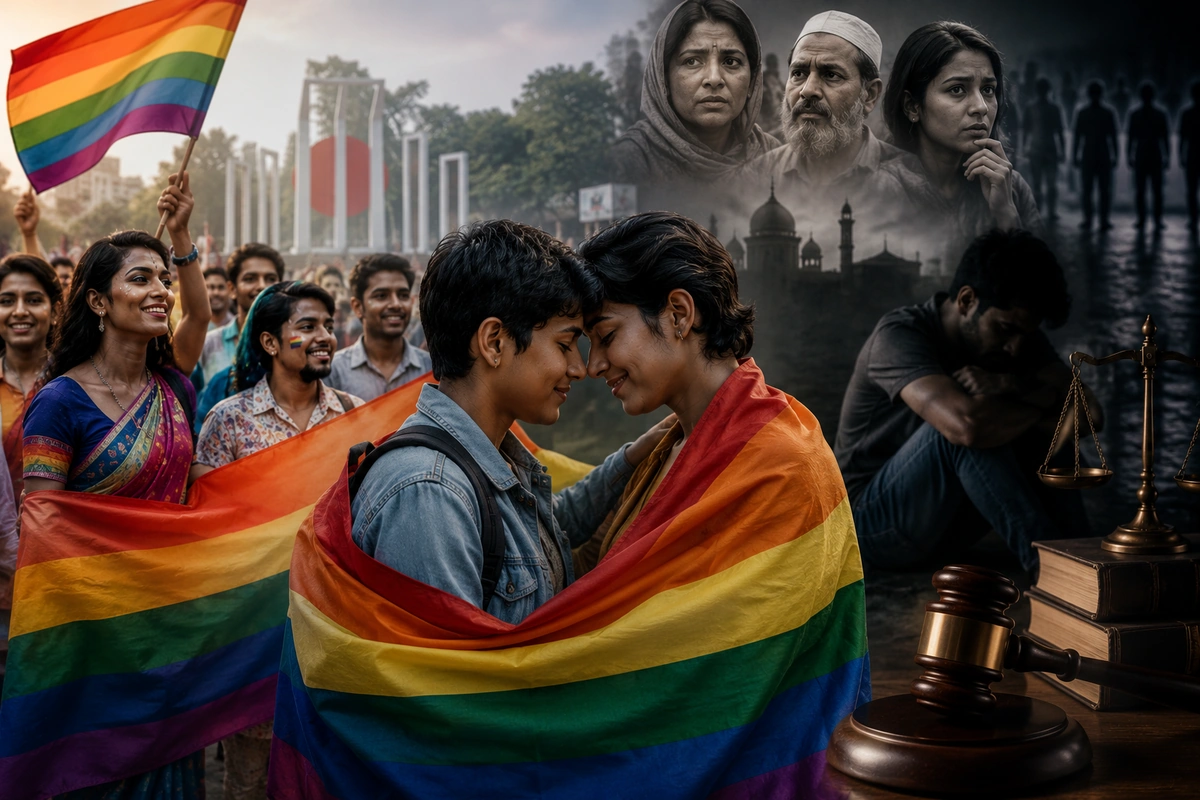
Public discussions on sexual orientation and gender identity remain limited in Bangladesh, where legal restrictions, conservative social attitudes and human rights concerns continue to shape national and international conversations.
Public discussion surrounding LGBTQ+ issues in Bangladesh continues to evolve against a backdrop of legal restrictions, conservative social values and growing international attention to human rights. While advocacy for equality and protection from violence has increased globally, public discourse in Bangladesh remains cautious, reflecting the country's unique cultural, religious and legal landscape.
Bangladesh retains Section 377 of the Penal Code, a colonial era law that criminalizes sexual relations between men. Although the provision has rarely been enforced in recent years, international human rights organizations state that its existence contributes to stigma and discourages many people from openly discussing or expressing their sexual orientation. Bangladesh does not currently recognize same sex unions or provide explicit anti discrimination protections based on sexual orientation or gender identity.
At the same time, Bangladesh officially recognized the hijra community as a third gender in 2013, a move widely viewed as an important step toward legal recognition for that community. The government has since introduced measures allowing third gender identification on certain official documents and expanded access to some social welfare programs. Rights advocates, however, argue that implementation remains uneven and that many members of the hijra community continue to face barriers in education, healthcare, employment and housing.
International media outlets including Reuters, BBC News and The Associated Press have periodically reported on LGBTQ+ issues in Bangladesh, often highlighting the balance between international human rights standards and the country's prevailing social and religious norms. Coverage has also focused on challenges faced by activists, as well as broader discussions on freedom of expression and personal safety.
According to the United Nations, every person is entitled to fundamental human rights without discrimination. International human rights bodies continue to encourage all countries to protect individuals from violence, harassment and discrimination while respecting national legal systems and democratic processes. These discussions have become increasingly prominent as governments around the world debate policies related to equality, public safety and civil rights.
Researchers note that public opinion in Bangladesh remains largely conservative regarding LGBTQ+ issues. Social attitudes are strongly influenced by religious beliefs, family traditions and cultural values, resulting in limited public discussion and low visibility for LGBTQ+ communities. Many people avoid speaking openly about sexual orientation or gender identity because of concerns over social stigma or personal safety.
Human rights organizations have documented cases of discrimination, harassment and violence affecting LGBTQ+ individuals and have called for stronger protections and better access to justice. They also emphasize the importance of mental health services, community support and equal access to education and healthcare.
Within Bangladesh, discussions around LGBTQ+ topics increasingly take place on social media, in academic circles and among civil society organizations. These conversations often reflect differing perspectives, with some emphasizing human rights and protection from violence, while others express concerns rooted in religious or cultural beliefs. Analysts say this diversity of opinion illustrates the complexity of the issue within Bangladeshi society.
Legal experts note that any significant changes to laws or public policy would require legislative action and broad public engagement. They argue that discussions involving policymakers, religious leaders, educators, healthcare professionals and civil society organizations are essential to addressing questions related to rights, public policy and social cohesion.
As Bangladesh continues its social and economic development, observers say the national conversation surrounding LGBTQ+ issues is likely to remain an area of public interest. International organizations continue to encourage dialogue that promotes dignity, safety and respect for all individuals while acknowledging the country's legal framework and cultural context.
Bangladesh retains Section 377 of the Penal Code, a colonial era law that criminalizes sexual relations between men. Although the provision has rarely been enforced in recent years, international human rights organizations state that its existence contributes to stigma and discourages many people from openly discussing or expressing their sexual orientation. Bangladesh does not currently recognize same sex unions or provide explicit anti discrimination protections based on sexual orientation or gender identity.
At the same time, Bangladesh officially recognized the hijra community as a third gender in 2013, a move widely viewed as an important step toward legal recognition for that community. The government has since introduced measures allowing third gender identification on certain official documents and expanded access to some social welfare programs. Rights advocates, however, argue that implementation remains uneven and that many members of the hijra community continue to face barriers in education, healthcare, employment and housing.
International media outlets including Reuters, BBC News and The Associated Press have periodically reported on LGBTQ+ issues in Bangladesh, often highlighting the balance between international human rights standards and the country's prevailing social and religious norms. Coverage has also focused on challenges faced by activists, as well as broader discussions on freedom of expression and personal safety.
According to the United Nations, every person is entitled to fundamental human rights without discrimination. International human rights bodies continue to encourage all countries to protect individuals from violence, harassment and discrimination while respecting national legal systems and democratic processes. These discussions have become increasingly prominent as governments around the world debate policies related to equality, public safety and civil rights.
Researchers note that public opinion in Bangladesh remains largely conservative regarding LGBTQ+ issues. Social attitudes are strongly influenced by religious beliefs, family traditions and cultural values, resulting in limited public discussion and low visibility for LGBTQ+ communities. Many people avoid speaking openly about sexual orientation or gender identity because of concerns over social stigma or personal safety.
Human rights organizations have documented cases of discrimination, harassment and violence affecting LGBTQ+ individuals and have called for stronger protections and better access to justice. They also emphasize the importance of mental health services, community support and equal access to education and healthcare.
Within Bangladesh, discussions around LGBTQ+ topics increasingly take place on social media, in academic circles and among civil society organizations. These conversations often reflect differing perspectives, with some emphasizing human rights and protection from violence, while others express concerns rooted in religious or cultural beliefs. Analysts say this diversity of opinion illustrates the complexity of the issue within Bangladeshi society.
Legal experts note that any significant changes to laws or public policy would require legislative action and broad public engagement. They argue that discussions involving policymakers, religious leaders, educators, healthcare professionals and civil society organizations are essential to addressing questions related to rights, public policy and social cohesion.
As Bangladesh continues its social and economic development, observers say the national conversation surrounding LGBTQ+ issues is likely to remain an area of public interest. International organizations continue to encourage dialogue that promotes dignity, safety and respect for all individuals while acknowledging the country's legal framework and cultural context.
🏷️ Tags:
#Bangladesh
Related News
You may like



Tom Holland Says Marvel Has a Plan for the Next Spider-Man
August 1, 2026
Elected News
-
Bangladesh Seeks UN Women Support on Digital Harassment and Women’s Empowerment
-
Bangladesh, Australia Discuss Human Trafficking, Irregular Migration and Rohingya Crisis
-
Bangladesh Plans Internet-Free Access to Mobile Banking and Financial Apps
-
DU to Open Undergraduate Admission Applications on 11 November, Tests Begin 5 December


