Costs, Careers and Changing Priorities: Why More Indians Are Choosing to Have Fewer Children
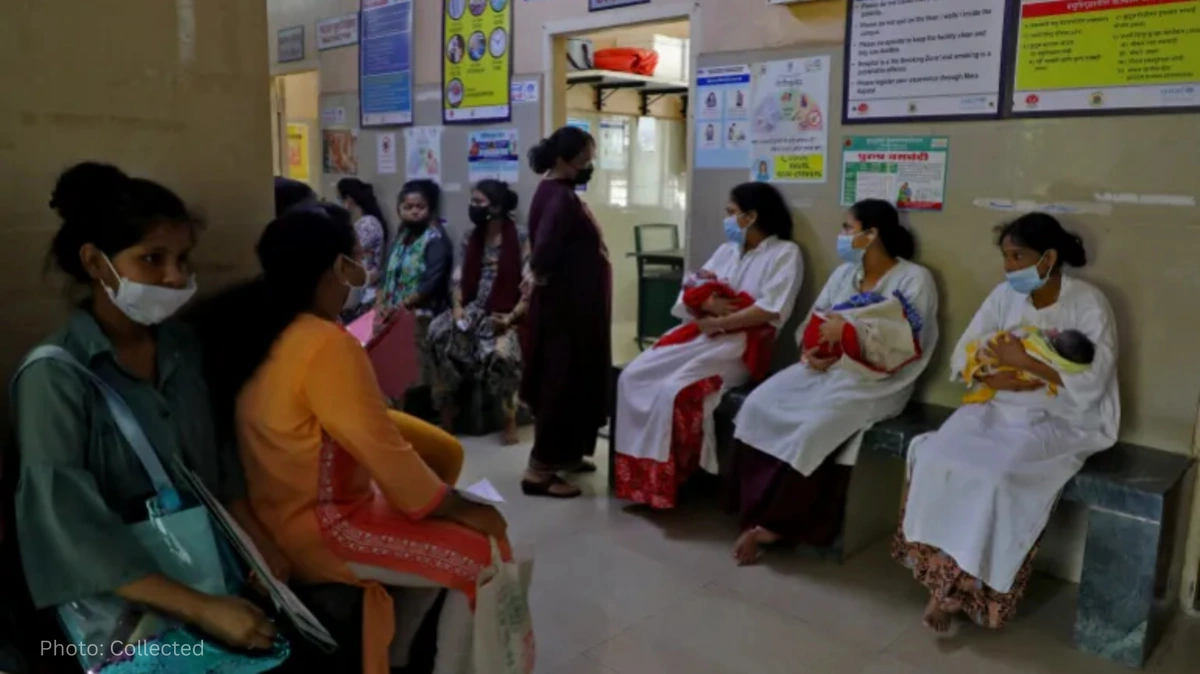
India's fertility rate has fallen below replacement level for the first time, reflecting profound shifts in social attitudes, economic realities and personal aspirations among a new generation redefining family life.
For decades, India was synonymous with rapid population growth and large families. Today, however, a quiet demographic transformation is reshaping the world's most populous nation as increasing numbers of Indians choose to delay parenthood, have fewer children, or avoid having children altogether.
According to the latest Sample Registration System (SRS) report released by India's Office of the Registrar General and Census Commissioner, the country's Total Fertility Rate (TFR) has declined to 1.9 children per woman, falling below the replacement level of 2.1 needed to maintain a stable population without migration.
The figure marks a dramatic shift from the early 2000s, when Indian women gave birth to an average of 3.3 children during their lifetimes.
Behind the statistical decline lies a complex story of changing aspirations, economic pressures and evolving definitions of fulfillment.
For 41-year-old Bengaluru entrepreneur Nidhi Agarwal, the decision not to have children was neither impulsive nor accidental. After marrying nearly a decade ago, she and her husband gradually concluded that parenthood did not align with the lives they envisioned.
Instead, they prioritised building their careers and creating businesses they believed could generate a broader social impact.
The decision, however, came with emotional costs.
Family members questioned their choice, while societal expectations often placed them under pressure to conform to traditional norms surrounding marriage and motherhood.
Their experience reflects a growing trend across urban India, where younger generations increasingly view parenthood as a personal choice rather than a social obligation.
Healthcare professionals say greater access to education and financial independence has empowered women to challenge long-standing beliefs that marriage and motherhood are the only pathways to a complete life.
Consultant gynaecologists report that many couples now evaluate parenthood through practical considerations, weighing its emotional rewards against professional ambitions and lifestyle preferences.
Career planning has become a central factor in family decisions.
Many women delay childbirth until they have established themselves professionally, while others pursue leadership positions before considering parenthood. Some choose to become mothers earlier and return to career development later.
Advances in reproductive healthcare have further expanded these options. Egg freezing, once considered inaccessible and socially taboo, is increasingly accepted among urban professionals seeking greater control over their reproductive timelines. India now hosts thousands of fertility centres offering such services.
Economic realities are equally influential.
Although India's inflation rate remains moderate by historical standards, rising living costs continue to strain household budgets. Housing expenses, healthcare costs, childcare services and education fees have significantly altered perceptions about the affordability of raising children.
For many young Indians, ensuring financial security before starting a family has become a necessity rather than a preference.
Some couples openly acknowledge choosing travel, personal experiences and improved lifestyles over the long-term responsibilities associated with parenthood.
Demographic patterns also reveal sharp regional differences.
States with lower educational attainment and higher infant mortality rates continue to record relatively high fertility levels. Bihar, for example, reported one of the country's highest fertility rates at 2.9 children per woman.
In contrast, metropolitan regions and southern states with stronger healthcare systems and better educational outcomes have witnessed some of India's lowest fertility rates. New Delhi recorded approximately 1.2 births per woman, while Tamil Nadu and Kerala reported rates of around 1.3.
Experts note that declining infant mortality has historically been associated with reduced fertility. As confidence grows that children will survive into adulthood due to improved healthcare, families often choose to have fewer children.
Government initiatives promoting institutional deliveries, immunisation programmes and expanded healthcare access have contributed to this trend.
At the same time, improved access to contraception has enabled women across both urban and rural communities to make informed reproductive decisions.
Social support structures, however, remain critical.
Traditionally, Indian families relied heavily on grandparents to assist with childcare. As couples postpone parenthood until later in life, these support systems may no longer be available, increasing dependence on paid caregivers and daycare facilities.
Workplace policies also shape family choices.
While Indian law grants women up to 26 weeks of paid maternity leave for their first two children, paternity leave remains limited outside government employment. Many working couples argue that insufficient support for fathers reinforces the perception that childcare responsibilities fall disproportionately on women.
Another emerging challenge is infertility.
Studies indicate that infertility rates in India have risen significantly over recent decades, influenced by factors including obesity, hormonal disorders and changing lifestyles. Although fertility treatments have become more widely available, their high costs place them beyond the reach of many families.
Concerned by falling birth rates, some state governments have begun introducing incentives to encourage larger families. Measures include financial assistance for additional children and the establishment of publicly funded fertility centres.
Yet specialists caution that demographic trends cannot be reversed solely through incentives.
They argue that reproductive decisions are deeply personal, shaped by education, economics, health, workplace conditions and individual aspirations.
For many Indians, the debate extends beyond population statistics.
It concerns the right to determine what constitutes a meaningful life.
As India navigates this demographic transition, one message increasingly resonates among younger generations: parenthood should remain a matter of choice, not social expectation.
Whether individuals decide to raise children, postpone the decision or remain child-free altogether, many believe society must evolve to respect those choices.
India's declining fertility rate may therefore represent more than a demographic milestone. It signals a broader transformation in values, reflecting a society where personal autonomy, financial stability and individual aspirations are reshaping the traditional idea of family.
Related News





You may like




Tom Holland Says Marvel Has a Plan for the Next Spider-Man
August 1, 2026
Elected News
-
Bangladesh Seeks UN Women Support on Digital Harassment and Women’s Empowerment
-

Bangladesh, Australia Discuss Human Trafficking, Irregular Migration and Rohingya Crisis
-

Bangladesh Plans Internet-Free Access to Mobile Banking and Financial Apps
-

DU to Open Undergraduate Admission Applications on 11 November, Tests Begin 5 December


