Scientists Discover Promising New Material for Ultra-Efficient Solar Cells
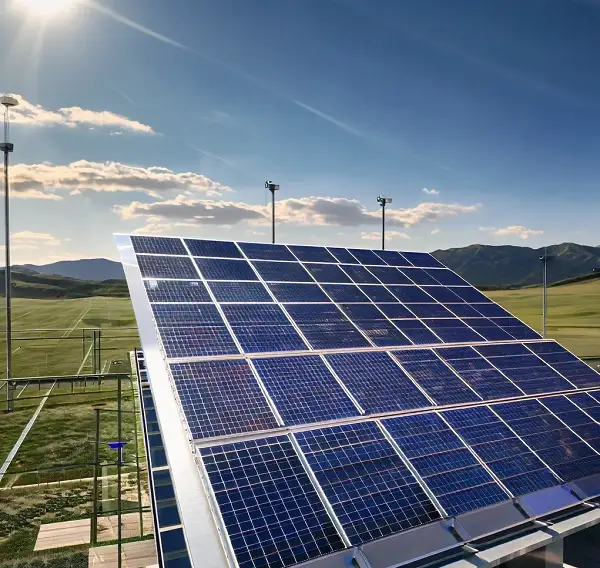
A collaborative team of researchers has announced a breakthrough in renewable energy, identifying a novel compound that significantly boosts the efficiency of photovoltaic devices, potentially revolutionizing solar power generation worldwide.
DHAKA, Bangladesh – July 9, 2025 – In a significant development for sustainable energy, an international consortium of scientists, including leading experts from the University of Dhaka, has unveiled a new semiconductor material that promises to drastically improve the performance of solar cells. The discovery, detailed in a paper published today in the journal Nature Energy, could accelerate the global transition to clean energy.
The newly identified compound, provisionally named "Solaronium-X," exhibits exceptional light-absorbing properties and a remarkable ability to convert solar radiation into electricity with minimal energy loss. Early laboratory tests indicate that solar cells incorporating Solaronium-X can achieve efficiencies upwards of 35% under standard conditions, a substantial leap from the typical 20-25% efficiency of conventional silicon-based cells currently dominating the market.
"This is a game-changer," stated Dr. Aliyah Rahman, head of the Photovoltaics Research Lab at the University of Dhaka and a co-lead author of the study. "For years, we've been pushing the boundaries of material science to find something that can offer both high efficiency and scalability. Solaronium-X appears to meet these critical criteria."
The research team credits the breakthrough to a novel synthesis process that allows for the precise control of the material's atomic structure, optimizing its electronic band gap for solar energy conversion. Unlike some experimental materials, Solaronium-X is composed of readily available and non-toxic elements, which could streamline its production and deployment on a large scale.
Initial economic analyses suggest that the increased efficiency of Solaronium-X cells could drive down the overall cost of solar electricity, making it more competitive with fossil fuels even in regions with lower sunlight intensity. The reduced footprint required for solar farms to generate the same amount of power would also free up valuable land resources.
While the discovery is still in its early stages, with prototypes currently limited to laboratory settings, the researchers are optimistic about commercialization within the next five to seven years. Partnerships with major renewable energy companies are already being explored to scale up production and integrate Solaronium-X into next-generation solar panels. This advancement offers a beacon of hope in the ongoing global efforts to combat climate change and secure a sustainable energy future.
Related News





You may like




Tom Holland Says Marvel Has a Plan for the Next Spider-Man
August 1, 2026
Elected News
-

Bangladesh Seeks UN Women Support on Digital Harassment and Women’s Empowerment
-

Bangladesh, Australia Discuss Human Trafficking, Irregular Migration and Rohingya Crisis
-

Bangladesh Plans Internet-Free Access to Mobile Banking and Financial Apps
-

DU to Open Undergraduate Admission Applications on 11 November, Tests Begin 5 December


